


In January, a plant manager approves a new technical training programme.
By March, the curriculum is finalised. By June, employees attend their first sessions. By the time the programme ends, the software it teaches has already changed.
For decades, that lag was tolerable. By 2026, it becomes a liability.
Skill lifecycles are compressing faster than organisational learning systems can respond. Capabilities that once remained relevant for years now age in months. The gap between identifying a need and closing it is widening — and it is beginning to show up in productivity, quality and innovation.
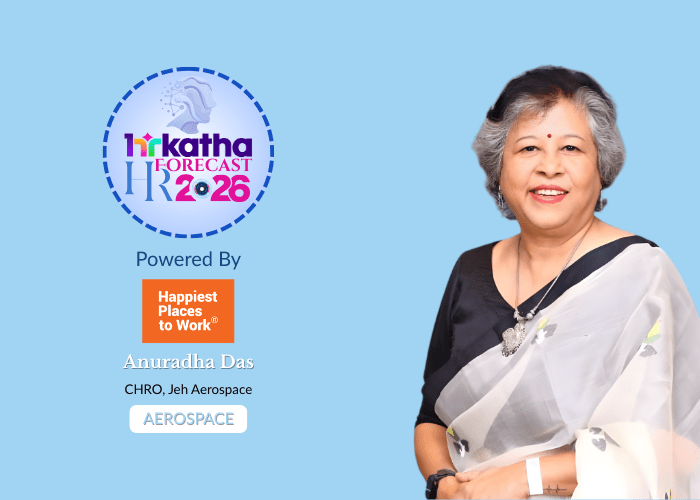
Anuradha Das, Chief Human Resources Officer at Jeh Aerospace, where she leads people strategy for a workforce spanning manufacturing, engineering and technical operations, sees this as a structural inflection point. “The centre of gravity of learning is shifting into the flow of work,” she says. “It has to become continuous, problem-driven and embedded in daily operations.”
This is not a refinement of corporate training. It is a structural replacement. The programme-based model that dominated organisational learning for decades is giving way to a different architecture: continuous capability infrastructure.
Three signals point to what replaces the traditional training cycle.
Signal 1: The training calendar loses relevance
Corporate learning was built for predictability. Organisations conducted periodic needs assessments, designed centralised programmes and delivered them in waves. The model assumed relative stability in roles and required skills.
That stability is eroding.
By 2026, a growing share of work will involve hybrid human–AI collaboration and rapidly evolving tools. Static training calendars cannot keep pace with dynamic capability requirements. Organisations that continue to rely on episodic programmes will learn more slowly than the environments they operate in.
Early signs of a different model are already visible. At Jeh Aerospace, digital nudges tied to production quality and safety checkpoints are turning routine execution into continuous learning loops. Employees receive feedback at the moment of action, reinforcing judgement in real time rather than after the fact.
The boundary between working and learning is dissolving.
Das expects the shift to accelerate. Learning will increasingly manifest as prompts embedded in daily tasks, simulations triggered by specific challenges and peer consultations woven into project workflows. The episodic training session — scheduled months in advance, delivered to groups and measured by attendance — will not disappear entirely. But it will lose primacy.
What matters is speed to proficiency, not hours trained.
Signal 2: Measurement shifts from participation to performance
The training model created a specific measurement architecture: completion rates, assessment scores, hours per employee. These metrics tracked activity. They said little about whether capability actually improved.
As learning moves into workflows, measurement must change with it.
Das advocates tracking different indicators: speed to proficiency through digitalised competency scorecards, behaviour change observable on the job (particularly in safety and accountability), impact on business outcomes such as quality and productivity, and skills currency rather than credential accumulation.
“Learning effectiveness will increasingly be judged by performance lift,” Das notes. Organisations unable to connect development directly to business outcomes risk underestimating the cost of slow learning — and overestimating the value of traditional training.
This creates pressure on HR functions. Leaders preparing for 2026 should evaluate their organisations across three dimensions:
Speed — How quickly can emerging capability gaps be identified and addressed? Systems measured in quarters already lag behind business cycles.
Proximity — Does development occur inside workflows or outside them? Learning detached from real tasks rarely translates into performance.
Measurement — Are outcomes tracked through operational improvement or participation metrics? Completion rates measure activity, not capability.
Weakness in any area slows organisational adaptation.
Signal 3: Personalisation becomes operational infrastructure
As learning systems accelerate, employee expectations are shifting just as quickly.
Consumer technologies have normalised personalised experiences. Employees increasingly expect organisational systems to demonstrate similar responsiveness. But unlimited customisation introduces operational fragility and perceived inequity.
The emerging model is what Das calls “choice without chaos” — disciplined flexibility delivered through structured frameworks.
Leading organisations are converging around a layered architecture:
At the foundation sit non-negotiables: shared values, compliance standards and core performance expectations that apply uniformly.
Above that comes structured choice: curated options in benefits, learning pathways and work arrangements that offer flexibility without fragmentation.
Further layers introduce targeted personalisation based on career stage, role type and life circumstances. Different employee groups require different support.
The most intensive personalisation falls on “moments that matter” — onboarding, role transitions and critical assignments where experience has disproportionate impact.
This design increases perceived autonomy without sacrificing organisational coherence. Companies that strike this balance are discovering performance dividends. Personalisation is shifting from perk to capability — directly tied to engagement and retention.
Leaders should ask:
- Where are we standardising in ways that suppress engagement?
- Where are we customising in ways that create inconsistency?
- Are we concentrating resources on high-impact transitions?
The answers increasingly determine whether personalisation becomes a strategic asset or an administrative burden.
A new capability architecture
These shifts are interconnected. Together, they form a capability flywheel.
Continuous learning accelerates skill development. Performance-based measurement tightens feedback loops. Personalisation increases engagement and reduces friction.
High-performing organisations link four elements in a continuous cycle: capability sensing ? rapid development ? performance feedback ? system refinement.
When this flywheel accelerates, organisations outlearn competitors. When it slows, even well-designed initiatives lose momentum.
Leaders should test the integrity of each link:
- Do we have real-time visibility into emerging skill gaps?
- Can development interventions be deployed immediately?
- Does performance data reshape system design?
Weakness in any connection slows the entire system.
Das frames the broader shift as a transition from activity metrics to capability metrics. The deeper implication: HR performance will increasingly be judged by its contribution to organisational resilience rather than programme administration.
By 2026, competitive advantage will hinge on organisational adaptability — the ability to update skills rapidly, redeploy talent effectively and absorb technological change. HR functions centred on programme delivery risk operating at the margins. Those that engineer capability systems move to the strategic core.
Three Strategic Imperatives
Learning: Transition from episodic training programmes to embedded capability infrastructure measured by performance acceleration, not participation.
Measurement: Replace activity metrics (hours trained, completion rates) with capability indicators tied directly to business outcomes.
Personalisation: Design structured flexibility that delivers meaningful choice at scale without fragmenting organisational coherence.
The Adaptation Advantage
The compression of skill lifecycles, integration of AI into workflows and rising expectations for personalised experiences are converging into a single inflection point.
This is not a gradual adjustment. It is a structural reset in how organisations build capability.
Those that redesign their learning architectures will operate with faster adaptation cycles and stronger performance feedback loops. Those that delay will rely on slower systems in faster markets.
The long dominance of the training programme is ending. What replaces it will determine how organisations compete in the second half of the decade.
By 2026, organisations that have made this transition will be visibly more adaptive, more capable and more resilient than those that haven’t. The gap will not emerge gradually. It will appear suddenly — and prove difficult to close.
#HRForecast2026 is powered by ‘Happiest Places to Work’