



Some organisational transformations happen by design. Others happen because circumstances demand it. Livpure’s journey involved both—a post-COVID realisation about adaptability combined with professionalisation and generational transition. That confluence created natural pressure to rethink fundamental assumptions about talent: what to hire for, how to build capability, and whether traditional metrics actually predict future performance.
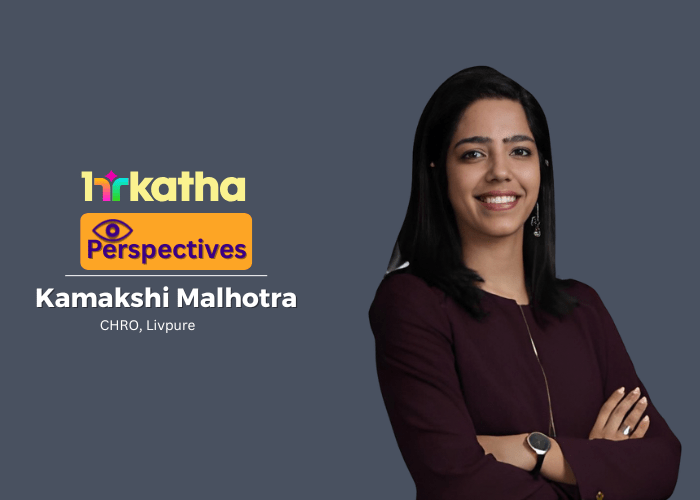
Kamakshi Malhotra, CHRO, Livpure, operates within these realities daily. In conversation, she articulates why organisations started consciously optimising for adaptability and learning velocity rather than technical expertise alone, why psychological safety in India shifts responsibility from junior employees being braver to senior leaders listening without defensiveness, and why data creates one source of truth but cannot replace human judgement shaped by experience and context.
“One culture does not mean one experience”
Learning velocity over static skills
Are you hiring for today’s skills or tomorrow’s learning capacity? What does future-ready talent mean?
We started consciously rethinking how and what we hire for about two to three years ago. Part of it was a post-COVID realisation that organisations need much higher adaptability. Part of it was unique to where we were as a group—going through professionalisation and generational transition. Adaptability was constantly front and centre.
There’s obviously no question that we cannot hire only for today’s skills. Technical skills, in many roles, are table stakes. What we started consciously optimising for instead was adaptability and learning velocity.
Adaptability, for us, is about how quickly someone can learn and unlearn—without too much ego, baggage of experience, or attachment to a particular stage in life. Learning velocity is not just about solving what’s put in front of you, but about asking the right questions, framing problems correctly and understanding context.
The third dimension, which is critical in any organisation, is value alignment. At the end of the day, that’s what drives decisions.
So in our talent acquisition, mapping and development processes, we test how somebody learns—not just what they know or what they’ve delivered in the past. We’re hiring for capability, curiosity and adaptability far more than static skills.
“Psychological safety is created by training leaders to listen”
One culture, customised experiences
Can one culture truly serve five generations simultaneously, or is fragmentation inevitable?
When we talk about managing five generations simultaneously, I don’t see culture and personalisation as mutually exclusive. One culture does not mean one experience.
Every organisation has one culture, and it must have one. What that culture really means to me is a set of non-negotiables. These non-negotiables don’t change based on who’s experiencing the culture. They could be respect, integrity, customer obsession, service orientation—whatever is core to that organisation.
Everyone—across generations, roles, partners or vendors—experiences the organisation through that lens.
What changes is the experience. How people work, how they’re rewarded, how they’re given flexibility, how they learn—these absolutely need to be personalised. A Gen Z employee might be moved across roles faster and given broader exposure. A baby boomer who’s a deep subject-matter expert may value stability and predictability, and we want to support that differently.
So yes, there has to be one culture. Without that, decision-making becomes inconsistent and values become diluted. But how that culture shows up in everyday work and how people experience it should—and must—be customised.
“Data still needs context, experience and understanding”
Leaders must listen better
How do you build cultures where junior employees can challenge senior leaders without it being perceived as disrespectful?
There’s no playbook that can be copy-pasted from Western management literature into the Indian context. Authority is respected here. Hierarchy exists. Open disagreement is not always culturally encouraged. So simply telling people to “speak up” doesn’t work.
We realised early on that the onus cannot be on junior employees to be braver. The responsibility has to shift to senior leaders—to listen without defensiveness. Psychological safety is not created by asking people to speak. It’s created by training leaders to listen.
One way we started was at the very top. We introduced specific exit interview questions for people leaving the organisation. People who are exiting inevitably feel more psychological safety than those still inside the system. We asked pointed questions—one piece of constructive feedback and one thing they’d like to say directly to the CEO or managing director. That feedback was shared openly with the leadership team, in front of the CEO, to spark dialogue.
Once leaders started receiving feedback openly and discussions became healthier, we took the same approach one level down. That shift—putting responsibility on managers to invite feedback and respond to it maturely—changed how we thought about psychological safety.
And yes, it’s absolutely worth pursuing. Businesses are changing too fast. Silence can be dangerous.
“Execution strength differentiates great HR leaders”
Confidence, not fear
How are you helping employees see AI as a tool that amplifies capabilities rather than threatens jobs?
We’re not where our ambitions are yet in terms of being digitally savvy or AI-enabled. But we also don’t see massive resistance. In our case, resistance is less about fear of job loss and more about lack of confidence—people not knowing how AI applies to their role.
So we started with very small, very clear asks. The first year wasn’t about efficiency. It was simply about asking people to show how they used AI to save time, improve productivity or improve outcomes. Once people saw how it could make their work easier, we gradually introduced expectations around improved productivity, process efficiency and better results.
The way we talk about AI internally matters. We don’t frame it as a replacement. We frame it as a tool. A supply chain planner needs AI to manage inventory better. An HR business partner needs AI to improve hiring speed, quality, succession planning. A customer service agent needs AI fluency to manage volumes without increasing cost.
Our focus has always been on training people to work with AI, not on using AI purely as a cost-efficiency lever. That framing has helped reduce resistance.
Data needs context and judgement
Are we making better decisions with people analytics, or just faster ones with better dashboards? Where has data genuinely helped?
Data has helped us first and foremost by creating one source of truth. Everyone’s looking at the same information instead of debating numbers from different sources.
Where it’s genuinely helped decision-making is early detection. Data helps us identify attrition hotspots, early signs of skill gaps, leadership issues or brand challenges at a very granular level. That allows us to ask better questions and manage issues predictively.
Where it’s been oversold is behaviour prediction. I haven’t seen any tool that can replace judgement. Data still needs context, experience and understanding of the situation. What we’ve managed to do is make judgement collective rather than individual—but it remains human.
Dashboards are useful. Decisions still need leaders who understand the business beyond metrics.
“Learning velocity is about asking the right questions, not just solving what’s in front of you”
Execution strength differentiates
For young HR professionals, what’s most misunderstood about the function? What genuinely differentiates a strong people leader?
What differentiates HR leaders who stand out is not just process knowledge or empathy. It’s execution strength.
And beyond that, exposure to ground reality—where the rubber hits the road. We’ve consistently preferred HR leaders who’ve worked across levels: frontline employees, blue-collar workers, unions and senior leadership. That breadth builds judgement, credibility and resilience.
If I had to give one piece of advice, it would be to seek that full expanse of experience. Different contexts demand different instincts, and that’s what ultimately shapes strong people leaders.