Close Menu
    Facebook X (Twitter) Instagram
    • Our Story
    • Partner with us
    • Reach Us
    • Career
    Subscribe Newsletter
    HR KathaHR Katha
    • Exclusive
      • Exclusive Features
      • Perspectives
      • Friday Features
      • herSTORY
      • Case-In-Point
      • Point Of View
      • Research
      • HR Pops
      • Dialogue
      • Movement
      • Profile
      • Beyond Work
      • Rising Star
      • By Invitation
    • News
      • Global HR News
      • Compensation & Benefits
      • Diversity
      • Events
      • Gen Y
      • Hiring & Firing
      • HR & Labour Laws
      • Learning & Development
      • Merger & Acquisition
      • Performance Management & Productivity
      • Talent Management
      • Tools & Technology
      • Work-Life Balance
    • Special
      • HR Forecast 2026
      • Cover Story
      • Editorial
      • HR Forecast 2024
      • HR Forecast 2023
      • HR Forecast 2022
      • HR Forecast 2021
      • HR Forecast 2020
      • HR Forecast 2019
      • New Age Learning
      • Coaching and Training
      • Learn-Engage-Transform
    • Magazine
    • Reports
      • Whitepaper
        • HR Forecast 2024 e-mag
        • Future-proofing Manufacturing Through Digital Transformation
        • Employee Healthcare & Wellness Benefits: A Guide for Indian MSMEs
        • Build a Future Ready Organisation For The Road Ahead
        • Employee Experience Strategy
        • HRKatha 2019 Forecast
        • Decoding and Driving Employee Engagement
        • One Platform, Infinite Possibilities
      • Survey Reports
        • Happiness at Work
        • Upskilling for Jobs of the Future
        • The Labour Code 2020
    • Conferences
      • Leadership Summit 2025
      • Rising Star Leadership Awards
      • HRKatha Futurecast
      • Automation.NXT
      • The Great HR Debate
    • HR Jobs
    WhatsApp LinkedIn X (Twitter) Facebook Instagram
    HR KathaHR Katha
    Home»Exclusive Features»How ‘catfish’ help ‘sardines’ perform better
    Exclusive Features

    How ‘catfish’ help ‘sardines’ perform better

    mmBy Kartikay Kashyap | HRKathaFebruary 6, 2019Updated:February 27, 20194 Mins Read46758 Views
    Share LinkedIn Twitter Facebook WhatsApp
    Share
    LinkedIn Twitter Facebook WhatsApp

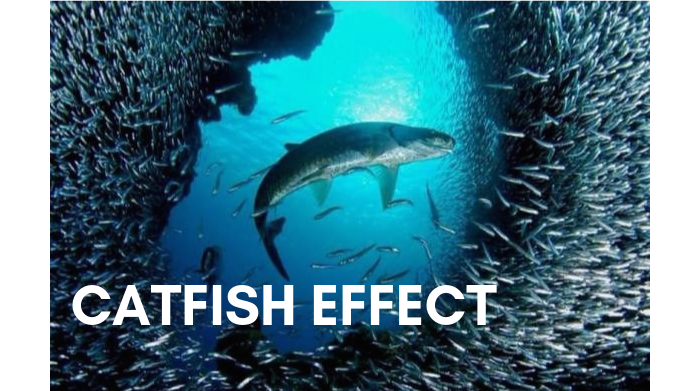
    When the managers put a strong candidate, who possesses remarkable skills, in a low-performance group, then the entire group feels motivated to perform better. This is called the catfish effect— a term used commonly in human resource management.

    Origin of the concept

    zoha

    The origin of this concept can be traced to a fable, perhaps apocryphal. It is said that long ago, sailors carried sardines in a water tank to the port of Norway. Some of these fish would die in the tank before reaching the shore. One sailor devised a unique strategy— he kept a catfish in the same tank. The sardines stayed active during the entire journey for fear of being eaten by the catfish. Their constant activity kept them alive, till the sailor reached the port. In this case, the sailor got a better price for his catch.

    In the context of human resource management, the sardines and catfish can be equated to active and inactive employees with the following characteristics: –

    Sardines: They are passive performers who need a nudge to get into action. They tend to switch off during meetings, lack involvement and do not contribute to processes.

    Catfish: They are motivated to perform and have the potential and skill to execute complex actions. Highly competitive, they are quick thinkers and problem solvers. Very active and strategic thinkers by nature, they are the ones in the organisation who are willing high on energy and are willing to learn more, take initiatives, and give results all the time.

    According to Ganesh Chandan, CHRO, Tata Projects, in their organisation they try and analyse the projects which are not going anywhere, and where the morale and the motivation level of the team can cause underperformance. They then introduce highly talented and motivated people into those projects from outside or within the organisation.

    Ganesh Chandan

    “There is a catch in this process. The HR team has to hand-hold the highly skilled and motivated person because it may be difficult for that person to take the whole team home all by himself” 

    zoha

    However, he warns that HR has to be very careful with this kind of a strategy. The highly motivated person will need to be given support so that she/he does not feel left alone, which can be a de-motivating factor for the person.

    “There is a catch in this process. The HR team has to hand-hold the highly skilled and motivated person because it may be difficult for that person to take the whole team home all by himself. The HR needs to provide continuous support in this case and remove the de-motivating barriers,” says Chandan.

    At Apollo Munich Health Insurance, this practice is commonly used for the new hires. The newly-hired employees are placed with the experienced ones causing a sort of cross pollination of skills and experience. As per Paramjit Singh Nayyar, CHRO and member, EXCO, this strategy may or may not work with the experienced people who are not performing because of low morale.

    Paramjit Singh

    “It totally depends on the attitude of the members— whether they are willing to learn and make efforts to produce results for the company” 

    “It totally depends on the attitude of the members— whether they are willing to learn and make efforts to produce results for the company,” opines Nayyar.

    One of the senior HR professionals in the industry mentions that such a practice may give you results, but may also end up putting more work on the highly skilled people because the weaker members of the team may still not perform.

    Vijay Singh

    “It may be difficult for just one person to bring about a difference in the whole team. We can have two or three highly motivated people, so that they can at least support each other in the whole process” 

    “It may be difficult for just one person to bring about a difference in the whole team. We can have two or three highly motivated people, so that they can at least support each other in the whole process,” suggests Vijay Singh, VP-HR, JK Cement.

    Singh adds, “In our organisation, we believe that there can be different motivating factors for different people so it is very important for the managers to understand the pulse of the team members and produce results.”

    Share. LinkedIn Twitter Facebook WhatsApp
    mm
    Kartikay Kashyap | HRKatha

    A mass communication graduate Kartikay is a quick learner. A fresh bake, yet a prolific writer, he is always keen to learn and discover new things. He is an easy going gallivanted and just likes to chill out when he is not chasing news. He loves watching movies as well.


    Leave A Reply Cancel Reply

    Related Posts

    HR Perspectives by Ravi Mishra: “People don’t leave managers—they leave systems that don’t work for them”

    April 1, 2026

    India’s students score just 57 out of 100 on readiness for work. Their professors think they are fine

    April 1, 2026

    How DS Group is rewiring talent for a future it can’t fully predict

    March 31, 2026

    Lily padding: When career loyalty means hopping, not staying

    March 31, 2026
    Editorial

    The certainty tax: Why uncertainty makes bad decisions inevitable

    The conflict in West Asia has introduced real uncertainty into global markets. Oil supply routes…

    Companies say retention matters. Their budgets say otherwise

    Every company declares that retaining talent is a strategic priority. Annual reports emphasise culture and…

    EDITOR'S PICKS

    HR Perspectives by Ravi Mishra: “People don’t leave managers—they leave systems that don’t work for them”

    April 1, 2026

    India’s students score just 57 out of 100 on readiness for work. Their professors think they are fine

    April 1, 2026

    How DS Group is rewiring talent for a future it can’t fully predict

    March 31, 2026

    Lily padding: When career loyalty means hopping, not staying

    March 31, 2026
    Latest Post

    Unilever halts global hiring for three months

    News April 1, 2026

    Unilever has announced a temporary pause on hiring across all levels worldwide, as it navigates…

    Women’s workforce participation in UP sees sharp rise over nine years

    News April 1, 2026

    Uttar Pradesh has recorded a significant increase in women’s participation in the workforce over the…

    Punjab and Haryana HC orders quarterly DPC meetings to safeguard promotion rights

    News April 1, 2026

    The Punjab and Haryana High Court has directed the state to hold Departmental Promotion Committee…

    Viral post on sudden layoff sparks debate on workplace loyalty

    News April 1, 2026

    A viral post on X has reignited conversations around job security and corporate loyalty after…

    Asia's No.1 HR Platform

    Facebook X (Twitter) Instagram LinkedIn WhatsApp Bluesky
    • Our Story
    • Partner with us
    • Career
    • Reach Us
    • Exclusive Features
    • Cover Story
    • Editorial
    • Dive into the Future of Work: Download HRForecast 2024 Now!
    © 2026 HRKatha.com
    • Disclaimer
    • Refunds & Cancellation Policy
    • Terms of Service

    Type above and press Enter to search. Press Esc to cancel.