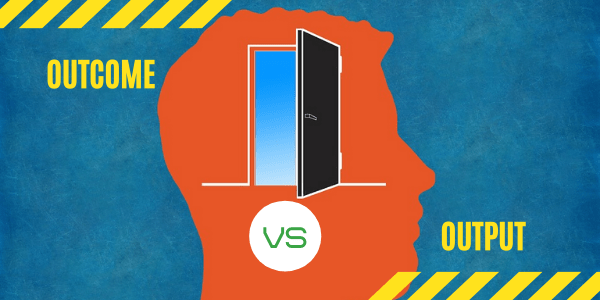
What is productivity? Is it output or outcome? In the Indian market, the focus tends to be more on the output than the outcome. The mindset here, in terms of productivity, dates back to many years ago — to the Industrial Revolution — when industries were mostly focused on output-driven activities.
Ravi Mishra, Sr. VP- HR, Grasim Industries, says, “Productivity comes with a mindset. Earlier, in India, manufacturing companies used to have a time and motion strategy where they focused on the number of employees required to run a company. That used to be the achievement for manufacturing plants and production managers. Today, more than the output, these industries are focused on how to increase productivity.”
Sunil Ranjhan
“In the past decade, the salaries in India have gone up by 8-10 per cent, and while companies are spending huge amounts on employee benefits, productivity has become the talk of the town.”
In developed countries, Mishra continues, “Productivity increases with the right use of smart technology, and it has nothing to do with manpower. It is solely driven by the outcome, and not the output.”
Likewise, Mishra states the example of Nokia, the phone manufacturer that was producing mobile phones with almost 74 per cent market share. By capturing the Indian market, it was able to increase productivity for five years. However, with the rapid development in technology, some other high-end brands overtook the market and when Nokia wasn’t able to fulfil the market demand, it fell like a house of cards.
In Mishra’s view, organisations should start using relevant and smart technology, which will change the manner of working and thus, help productivity grow. Slowly, with the input coming, the quality of productivity improves.
“Productivity is a state of mind, which is hindering the growth of developing nations,” he adds.
Given the way we are as a country, we typically have lower wage costs as compared to other countries. Productivity, as a concept, has never been that important.
If you look at manufacturing companies in developed countries, manpower costs will be as high as 20 per cent. In India, manufacturing companies work at lower costs.
Ravi Mishra
“Productivity increases with the right use of smart technology, and it has nothing to do with manpower. It is solely driven by the outcome, and not the output.”
As the uncertainties caused by COVID-19 continue to disrupt work environments, business leaders must be mindful of how they can improve employees’ mental health and morale, which tend to impact productivity.
But, the scenario was not always the same.
Sunil Ranjhan, SVP-HR, Maruti Suzuki, opines, “Typically and historically, we had not been focusing on productivity very seriously. However, in the past decade, the salaries in India have gone up by 8-10 per cent, which changed this situation slightly. While companies are spending huge amounts on employee benefits, productivity has become the talk of the town.”
After COVID, with businesses having experienced a slump, productivity has reached a point where the management is questioning it. It has taken centrestage, and will probably continue to stay there.
Ranjhan believes that productivity was a state of mind till now; it was never given consideration from an organisational perspective. Today, however, whether the activities are adding value to the top line or to the bottom line of an organisation, have become important matters of consideration.
Moreover, he also stresses on the fact that nothing becomes bad or worse overnight. “Something which you have not focused on, keeps on deteriorating and later becomes a critical factor requiring attention,” he explains.
“Productivity is a state of mind that requires the management’s bandwidth, in good times as well as bad. It is nothing but output divided by input. If there is a deduction in the input, but output remains the same, that is productivity. ”
Nonetheless, in order to measure productivity, a leader has to look at a few things in particular.
First, it is important to figure out whether the activities, processes or the daily operations are adding value to the top line or the bottom line.
Second, if the work done is giving the employees emotional and motivational value, productivity will follow naturally. Third, the concern is about adding value to the stakeholders. Questions will arise when these three aspects do not fall in place.
Whatever we do should be done with the objective of sustaining it for a very long time.
Ranjhan cites the example of demonetisation, when people had shifted to the digital mode. “So, when there was a free flow of currency and everything went digital, it was believed that there would be no turning back after this,” he points out.
Currently, the pandemic that has hit our lives and organisations, has shifted the focus to working from home and getting the desired productivity from the employees. However, it is also feared that once the businesses start running smoothly, things would go back to the olden days.
As Ranjhan rightly says, “Very often, while moving towards something better, we are forced to fall back to the old ways.”
“We need to change and there is a lot of traction in the minds of the people. Right now, there exists an environment that gives significant importance to productivity. Therefore, the timing and the business need is just right to focus on productivity,” suggests Ranjhan.
Presently, the time is perfect, the management is more open to ideas, and the employees are more willing to change, as they have been readily adaptive to the new environment.
From being an athlete to an avid writer, she has found a happy space in discovering new places and exploring new cuisines. An English graduate from Delhi University, she is a hungry rover, who has a passion for food and travel, and likes to maintain a healthy work-life balance.