


Close Menu
    Facebook X (Twitter) Instagram
    • Our Story
    • Partner with us
    • Reach Us
    • Career
    Subscribe Newsletter
    HR KathaHR Katha
    • Exclusive
      • Exclusive Features
      • Perspectives
      • Friday Features
      • herSTORY
      • Rising Stars
      • Case-In-Point
      • Point Of View
      • Research
      • HR Pops
      • Dialogue
      • Movement
      • Profile
      • Beyond Work
      • By Invitation
    • Brief News
      • Global HR News
      • Compensation & Benefits
      • Diversity
      • Events
      • Gen Y
      • Hiring & Firing
      • HR & Labour Laws
      • Learning & Development
      • Merger & Acquisition
      • Performance Management & Productivity
      • Talent Management
      • Tools & Technology
      • Work-Life Balance
    • Special
      • Editorial
      • HR Forecast 2026
      • Cover Story
      • HR Forecast 2024
      • HR Forecast 2023
      • HR Forecast 2022
      • HR Forecast 2021
      • HR Forecast 2020
      • HR Forecast 2019
      • New Age Learning
      • Coaching and Training
      • Learn-Engage-Transform
    • Studio
      • The CHRO Playbook
      • Quick HR Insights
      • The Corner Office
    • Reports
      • Whitepaper
        • HR Forecast 2024 e-mag
        • Future-proofing Manufacturing Through Digital Transformation
        • Employee Healthcare & Wellness Benefits: A Guide for Indian MSMEs
        • Build a Future Ready Organisation For The Road Ahead
        • Employee Experience Strategy
        • HRKatha 2019 Forecast
        • Decoding and Driving Employee Engagement
        • One Platform, Infinite Possibilities
      • Survey Reports
        • Happiness at Work
        • Upskilling for Jobs of the Future
        • The Labour Code 2020
    • Forums
      • HRKatha Inner Circle
      • HRKatha Futurecast
      • Leadership Summit 2025
      • Rising Star Leadership Awards
      • HRKatha Futurecast 2025
      • Automation.NXT
      • The Great HR Debate
    WhatsApp LinkedIn X (Twitter) Facebook Instagram
    HR KathaHR Katha
    Home»Brief News»41 of 197 allowances abolished for Central government employees
    Brief News

    41 of 197 allowances abolished for Central government employees

    mmBy Dr. Prajjal Saha | HRKathaJune 30, 20175 Mins Read4380 Views
    Share LinkedIn Twitter Facebook WhatsApp
    Share
    LinkedIn Twitter Facebook WhatsApp

    The CoA had undertaken extensive stakeholder consultations such as Joint Consultative Machinery (Staff side) and representatives from various staff associations before finalising its recommendations.

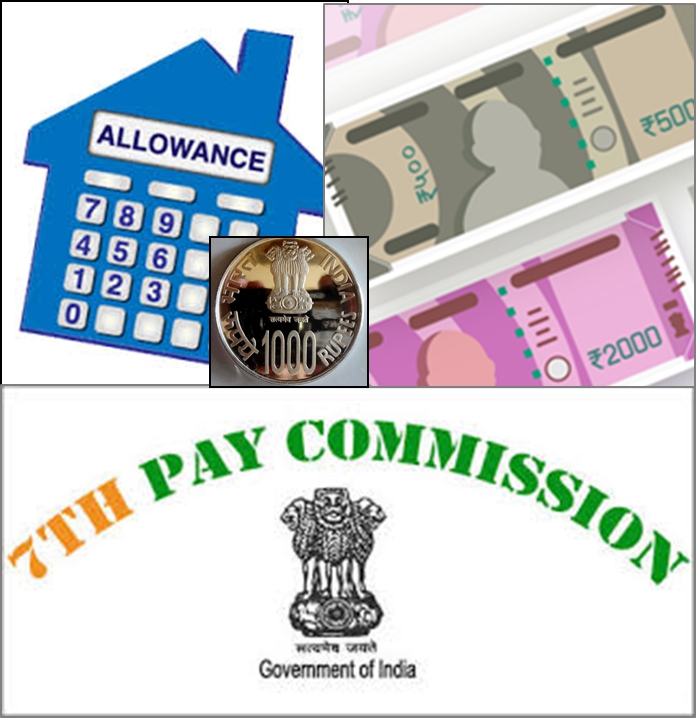
    The 7th Central Pay Commission (CPC) had recommended 53 of 197 allowances for central government employees to be abolished and 37 allowances be subsumed in an existing or a newly proposed allowance.

    The Government had set up a Committee on Allowances (CoA), which recommended retaining 12 of 53 allowances and the cabinet has approved the same.

    Besides, 3 of the 37 allowances recommended to be subsumed by the 7th CPC will also continue as separate identities due to the unique nature of these allowances. The rates of these allowances have also been enhanced as per the formula adopted by the 7th CPC. This will benefit over one lakh employees belonging to specific categories in Railways, Posts, Defence and Scientific Departments such as Space and Atomic Energy.

    The CoA had undertaken extensive stakeholder consultations such as Joint Consultative Machinery (Staff side) and representatives from various staff associations before finalising its recommendations.

    House Rent Allowance
    As the per current structure, House Rent Allowance (HRA) is currently paid at the rate of 30 per cent, 20 per cent and 10 per cent depending on the category of city (X,Y & Z), the employee resides in. The cities are segmented as per population. For instance, cities with population of 50 lakh plus are X cities, while cities with 5 to 50 lakhs population fall under Y category and cities with population of less than 5 lakh are called Z cities.     

    The existing rate of HRA has been revised to 24 per cent for X, 16 per cent for Y and 8 per cent for Z category of cities. However, the government has ensured a minimum HRA of Rs 5,400, Rs 3,600 and Rs1,800 for X, Y and Z category, respectively keeping in mind that the reduced rates may not be sufficient for employees falling in lower pay bracket. This will benefit more than 7.5 lakh employees belonging to Levels 1 to 3.

    HRA will be further revised upwards in two slabs as per the increase in DA. For instance, when the DA crosses 25 per cent, the HRA rate will be revised to 27, 18 & 9 per cent for X, Y & Z category, respectively and the same will revised to 30, 20 & 10 per cent per cent when the DA crosses 50 per cent. This will benefit all employees who do not reside in government accommodation and get HRA.

    Siachen Allowance
    Armed personnel posted in Siachen face extreme nature of risk and hardship which is why they receive a special allowance. The same has now been doubled. For Jawans & JCOs (Level 8 and below), Siachen allowance has been increased from Rs 14,000 to Rs 30,000 per month and for officers (Level 9 and above), it has been increased from Rs 21,000 to Rs 42,500.

    Dress Allowance
    At present, various types of allowances are paid for provisioning and maintenance of uniforms/outfits such as Washing Allowance, Uniform Allowance, Kit Maintenance Allowance, Outfit Allowance etc. These have been rationalised and subsumed in newly proposed Dress Allowance to be paid annually in four slabs – Rs 5,000, Rs 10,000, Rs 15,000 and Rs 20,000 per annum for various category of employees. This allowance will continue to be paid to Nurses on a monthly basis in view of high maintenance and hygiene requirements. Government has decided to pay higher rate of Dress Allowance to SPG personnel keeping in view the existing rates of Uniform Allowance paid to them as also their specific requirements. The rates for specific clothing for different categories of employees will be governed separately.

    Tough Location Allowance
    Some allowances based on geographical location such as Special Compensatory (Remote Locality) Allowance (SCRLA), Sunderban Allowance & Tribal Area Allowance have been subsumed in Tough Location Allowance. The areas under TLA have been classified into three categories and the rates will be governed as per different cells of R&H Matrix and will be in the range of Rs 1,000 – Rs 5,300 per month.

    Other Key Allowances
    Rate of Children Education Allowance (CEA) has been increased from Rs 1,500 per month per child (maximum of 2) to Rs 2,250 per month per child (maximum of 2). Hostel Subsidy will also go up from Rs 4,500 per month to Rs 6,750 per month.

    Existing rates of Special Allowance for Child Care for Women with Disabilities has been doubled from Rs 1,500 per month to Rs 3,000 per month.

    Higher Qualification Incentive for Civilians has been increased from Rs 2,000 – Rs 10,000 (Grant) to Rs 10,000 – Rs 30,000 (Grant).

    For Nurses
    The existing rate of Nursing Allowance has been increased from Rs 4,800 per month to Rs 7,200 per
    month. In addition, the rate of Operation Theatre (OT) Allowance has been increased from Rs 360 per month to Rs 540 per month.

    Rates of Patient Care Allowance have also been increased from Rs 2,070 – Rs 2,100 per month to Rs 4,100 – Rs 5,300 per month.

    For Pensioners
    Fixed Medical Allowance (FMA) for Pensioners has been increased from Rs 500 p.m to Rs 1,000 p.m and this will benefit more than 5 lakh central government pensioners who do not avail CGHS facilities. The rate of Constant Attendance Allowance granted on 100 per cent disablement has been increased from Rs 4,500 per month to Rs 6,750 per month.

    The financial implication of the revised rate of allowance will be Rs 30748.23 crore per annum.

    7th Pay Commission Allowances for Central Government Employees Central Government Employees Committee on Allowances
    Share. LinkedIn Twitter Facebook WhatsApp
    mm
    Dr. Prajjal Saha | HRKatha

    Dr. Prajjal Saha is a business journalist and the editor-publisher of HRKatha. He writes on the realities of work and organisations, offering a clear-eyed view of how companies translate intent into action—often revealing the gap between the two. With over 25 years of experience, he focuses on interpreting workplace trends and leadership decisions in a way that is both insightful and accessible. He founded HRKatha in 2015 to create a platform for credible, insight-driven analysis of the evolving workplace.

    Leave A Reply Cancel Reply

    Related Posts

    Spotify sticks to work-from-anywhere policy, citing flexibility and workforce benefits

    November 23, 2026

    Canva layoffs: Is the real workforce reduction bigger than reported?

    November 23, 2026

    EPFO’s new retirement plan: More choice, less pressure

    November 22, 2026

    P&G plans to cut manufacturing and logistics workforce by up to 30% by 2030

    November 20, 2026
    zoha
    Editorial

    Can Nvidia remain Nvidia without Jensen Huang?

    Jensen Huang co-founded Nvidia in 1993. For thirty-three years, he was its chief executive and,…

    Companies owe their people more than what is legal

    When Canva announced a restructuring affecting 1,271 employees, or 22 per cent of its workforce,…

    EDITOR'S PICKS

    POV: Is AI making work better, or simply raising productivity expectations?

    November 23, 2026

    Can Nvidia remain Nvidia without Jensen Huang?

    November 22, 2026

    The career mistakes that don’t look like mistakes

    November 20, 2026

    herSTORY: Surbhi Gupta, Chief Talent Officer, South Asia, Publicis Groupe

    November 19, 2026
    Latest Post

    Srijan STYLE ropes in Anindita Ghosh as head-HR

    Movement November 23, 2026

    Anindita Ghosh has joined Srijan STYLE as head of human resources, taking charge of the…

    Reshmi Prakash joins Zapcom Group as director-HR

    Movement November 23, 2026

    Reshmi Prakash has joined Zapcom Group Inc. as director of HR, bringing 14 years of…

    Spotify sticks to work-from-anywhere policy, citing flexibility and workforce benefits

    Brief News November 23, 2026

    While several companies have tightened office attendance requirements, Spotify continues to support its Work From…

    POV: Is AI making work better, or simply raising productivity expectations?

    Point Of View November 23, 2026

    AI is taking some of the drudgery out of work, but it is also changing…

    Asia's No.1 HR Platform

    Facebook X (Twitter) Instagram LinkedIn WhatsApp Bluesky
    • Our Story
    • Partner with us
    • Career
    • Reach Us
    • Exclusive Features
    • Cover Story
    • Editorial
    • Dive into the Future of Work: Download HRForecast 2024 Now!
    © 2026 HRKatha.com
    • Disclaimer
    • Refunds & Cancellation Policy
    • Terms of Service

    Type above and press Enter to search. Press Esc to cancel.