



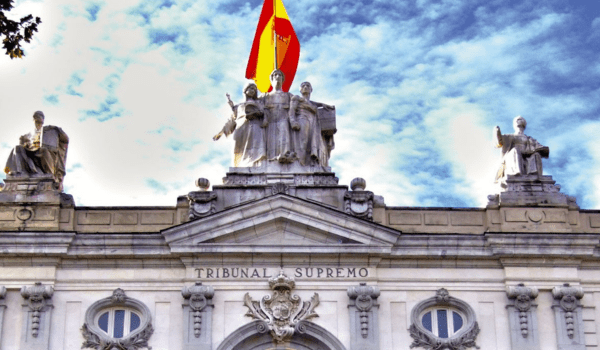
In a recent ruling, the Supreme Court of Spain declared that the duration of a morning coffee break and the time employees take to settle into their workday must be included in their total hours worked. This decision grants workers a grace period of up to 15 minutes at the commencement of their shift, provided such an arrangement has been mutually agreed upon by the company and its employees.
The ruling originates from a disagreement involving Caixabank’s employees and management. The discussion centred on the latter’s assertion that recorded work hours should accurately reflect actual working time. Specifically, the court addressed a 1991 agreement between the bank and labour unions, which outlined that clock-ins within 15 minutes before or after the scheduled start time should be considered as active work hours.

However, in 2019, Caixabank introduced a new ‘Time Registration Guide’ that contradicted this agreement, sparking outcry from trade unions. The updated guide stated that breakfast breaks would not be considered as work time unless they were dedicated to professional or commercial tasks. Furthermore, it implemented a revised clocking-in system where employees arriving late would be required to compensate by extending their working hours accordingly.
As a result, the unions objected to these changes, arguing that they violated the labour rights established in the 1991 agreement.
The Supreme Court sided with the unions, rejecting the new stringent clocking-in system. It stated that if an employee clocks in within 15 minutes of the designated start time, it should be regarded as the beginning of the shift and thus counted as effective work time.
The Court also highlighted that the omission of breakfast breaks from recorded absences or incidents implies that such breaks are considered part of effective work.
