


Close Menu
    Facebook X (Twitter) Instagram
    • Our Story
    • Partner with us
    • Reach Us
    • Career
    Subscribe Newsletter
    HR KathaHR Katha
    • Exclusive
      • Exclusive Features
      • Perspectives
      • Friday Features
      • herSTORY
      • Rising Stars
      • Case-In-Point
      • Point Of View
      • Research
      • HR Pops
      • Dialogue
      • Movement
      • Profile
      • Beyond Work
      • By Invitation
    • Brief News
      • Global HR News
      • Compensation & Benefits
      • Diversity
      • Events
      • Gen Y
      • Hiring & Firing
      • HR & Labour Laws
      • Learning & Development
      • Merger & Acquisition
      • Performance Management & Productivity
      • Talent Management
      • Tools & Technology
      • Work-Life Balance
    • Special
      • Editorial
      • HR Forecast 2026
      • Cover Story
      • HR Forecast 2024
      • HR Forecast 2023
      • HR Forecast 2022
      • HR Forecast 2021
      • HR Forecast 2020
      • HR Forecast 2019
      • New Age Learning
      • Coaching and Training
      • Learn-Engage-Transform
    • Studio
      • The CHRO Playbook
      • Quick HR Insights
      • The Corner Office
    • Reports
      • Whitepaper
        • HR Forecast 2024 e-mag
        • Future-proofing Manufacturing Through Digital Transformation
        • Employee Healthcare & Wellness Benefits: A Guide for Indian MSMEs
        • Build a Future Ready Organisation For The Road Ahead
        • Employee Experience Strategy
        • HRKatha 2019 Forecast
        • Decoding and Driving Employee Engagement
        • One Platform, Infinite Possibilities
      • Survey Reports
        • Happiness at Work
        • Upskilling for Jobs of the Future
        • The Labour Code 2020
    • Forums
      • HRKatha Inner Circle
      • HRKatha Futurecast
      • Leadership Summit 2025
      • Rising Star Leadership Awards
      • HRKatha Futurecast 2025
      • Automation.NXT
      • The Great HR Debate
    WhatsApp LinkedIn X (Twitter) Facebook Instagram
    HR KathaHR Katha
    Home»Brief News»Singapore to halve workplace fatality rate by 2028: Is India even talking about it?
    Brief News

    Singapore to halve workplace fatality rate by 2028: Is India even talking about it?

    mmBy Dr. Prajjal Saha | HRKathaSeptember 4, 20173 Mins Read4500 Views
    Share LinkedIn Twitter Facebook WhatsApp
    Share
    LinkedIn Twitter Facebook WhatsApp

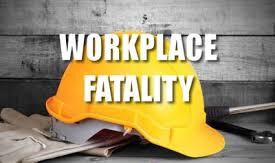
    Prime Minister Lee Hsien Loong announced that the country is targeting a 50 per cent reduction in workplace fatality rate, to under 1.0, in a decade.

    At the recently-held opening of the World Congress on Safety & Health at Work at the Sands Expo and Convention Centre in Singapore on Sunday, Prime Minister Lee Hsien Loong announced that the country has set a new target— to cut its workplace fatality rate by about half, to under 1.0, before 2028. Singapore is already on track to reaching its target of 1.8 workplace deaths per 100,000 workers by next year.

    Loong also mentioned that other countries have made the same journey and succeeded, noting that Finland had halved its rate from 1.8 to 0.9 in 11 years, between 2002 and 2013. Last year, Singapore’s workplace fatality rate was 1.9 per 100,000 workers, and though it is on track to meeting its previous target set in 2008, PM Loong acknowledged this was still not the best that can be achieved.

    Noting that Organisation for Economic Cooperation and Development countries, such as the United Kingdom (0.8), Sweden (0.7) and the Netherlands (0.5) have rates below 1.0, the Prime Minister also added that Singapore can achieve its new target by having employers, workers and the Government keeping at its work.

    For firms, ensuring a safe and healthy workplace is ‘sound business policy’. He advised employers to take good care of their employees, make sure that they’re well-rested and train them well in safety procedures, so that they are more productive. He also said that good companies will set issues right quickly and ensure they do not recur.

    Workers too can contribute by raising the alarm when they spot potential work hazards or by being more aware and attending courses on workplace safety and health.

    While the Government will take the lead by putting in place rules and incentives to urge firms to emphasise a safe and healthy workplace, Loong said imposing more regulations alone will not solve the problem.

    In 2004, Singapore’s workplace fatality rate was 5 per 100,000 workers. To enhance workplace safety and health comprehensively, the Government took steps including rolling out a new Workplace Safety and Health Act in 2006.

    The Government will work with sectors with higher accident rates, such as construction, marine and logistics, and continue pushing efforts in other industries to build an ‘economy-wide’ safety and health culture.

    On the other hand, in India, although the government does not keep centralised records on construction workers, death and injury from accidents in the Indian building sector are widespread. It has also been noted by labour experts that India lags behind in terms of workplace security.

    As per a 2001, International Labour Organisation (ILO) data, India had a workplace fatality rate of 9.97, while the ILO estimates that globally 2.8 million workers die from work-related injuries and diseases yearly, and close to a million people are injured every day. It also projects that around four per cent of the world’s annual gross domestic product is lost as a consequence of work-related injuries and diseases.

    workplace fatality Workplace Safety
    Share. LinkedIn Twitter Facebook WhatsApp
    mm
    Dr. Prajjal Saha | HRKatha

    Dr. Prajjal Saha is a business journalist and the editor-publisher of HRKatha. He writes on the realities of work and organisations, offering a clear-eyed view of how companies translate intent into action—often revealing the gap between the two. With over 25 years of experience, he focuses on interpreting workplace trends and leadership decisions in a way that is both insightful and accessible. He founded HRKatha in 2015 to create a platform for credible, insight-driven analysis of the evolving workplace.

    Leave A Reply Cancel Reply

    Related Posts

    90% of Indian employers plan to expand tech workforce to tap AI opportunities: Report

    November 23, 2026

    Guidance Tamil Nadu denies mass resignations, says employee exits were routine

    November 23, 2026

    TCS employee alleges denial of office entry over Ayyappa Deeksha attire

    November 23, 2026

    Remote makes AI training mandatory for 2,000 employees

    November 23, 2026
    zoha
    Editorial

    Can Nvidia remain Nvidia without Jensen Huang?

    Jensen Huang co-founded Nvidia in 1993. For thirty-three years, he was its chief executive and,…

    Companies owe their people more than what is legal

    When Canva announced a restructuring affecting 1,271 employees, or 22 per cent of its workforce,…

    EDITOR'S PICKS

    POV: Is AI making work better, or simply raising productivity expectations?

    November 23, 2026

    Can Nvidia remain Nvidia without Jensen Huang?

    November 22, 2026

    The career mistakes that don’t look like mistakes

    November 20, 2026

    herSTORY: Surbhi Gupta, Chief Talent Officer, South Asia, Publicis Groupe

    November 19, 2026
    Latest Post

    90% of Indian employers plan to expand tech workforce to tap AI opportunities: Report

    Brief News November 23, 2026

    Nine out of 10 Indian employers plan to increase their technology workforce to scale services…

    Guidance Tamil Nadu denies mass resignations, says employee exits were routine

    Brief News November 23, 2026

    Guidance Tamil Nadu has denied reports of mass resignations among its employees in July 2026,…

    TCS employee alleges denial of office entry over Ayyappa Deeksha attire

    Brief News November 23, 2026

    Tata Consultancy Services (TCS) is facing scrutiny after an employee at its Adibatla office in…

    Remote makes AI training mandatory for 2,000 employees

    Brief News November 23, 2026

    HR technology company Remote has made artificial intelligence (AI) training mandatory for its approximately 2,000…

    Asia's No.1 HR Platform

    Facebook X (Twitter) Instagram LinkedIn WhatsApp Bluesky
    • Our Story
    • Partner with us
    • Career
    • Reach Us
    • Exclusive Features
    • Cover Story
    • Editorial
    • Dive into the Future of Work: Download HRForecast 2024 Now!
    © 2026 HRKatha.com
    • Disclaimer
    • Refunds & Cancellation Policy
    • Terms of Service

    Type above and press Enter to search. Press Esc to cancel.