


The whole country has come to a standstill because of the coronavirus epidemic, which has badly impacted businesses, work, and most importantly, the lives of the people. While everyone is eagerly waiting for the lockdown to be lifted, there remains a constant dread within some sections of the society. The economic threat to the bottom rungs of the society — the unorganised sector, that constitutes the majority of the population in the country— has developed into a nagging fear.
According to the report of the Economic Survey released in 2019, the unorganised sector accounts for 93 per cent of the total workforce of the country. Although this sector has a big hand in running the country’s economy, there is no concrete provision to protect it.
We look at some of the badly affected professions, where survival after the lockdown is a big question.
Daily-wage workers
The pandemic has robbed the daily-wage workers of their earnings. From contract workers to daily wage earners, each of them have seen a sharp drop in their earnings. To daily wagers, a significant number of them migrants, the lockdown gave little time to prepare for the consequences. It now threatens to take away everything they had managed to build and save.
Urban sociologist, Dr Binti Singh, opines, “The daily-wage earners, construction workers, as well as the peripheral occupations —in and around every pavement, sidewalk, flyover, railway station, bus stop and office location— will come to a halt due to the mounting threat after the lockdown.”
While some of the migrant labourers, who used to work in buildings and garages have migrated due to the shutting down of companies and shops, a bunch of them still remain stranded, jobless and far away from their homes.
Social worker, Avisikta Pal, who is closely associated with the unorganised sector, has been providing basic amenities door to door. She has also been interacting with these workers who have suffered the most in these troubling times.
Pal says, “Due to the unavailability of money and food, some of these workers had to migrate to their own villages. This has escalated the situation as it will be difficult to keep track of the numbers once the lockdown is over.”
Having interacted with a lot of garage workers who have lost their jobs, Pal explains that the owners and landlords of these shops have refused to answer their calls, and hence, they remain stranded at the moment.
Barbers
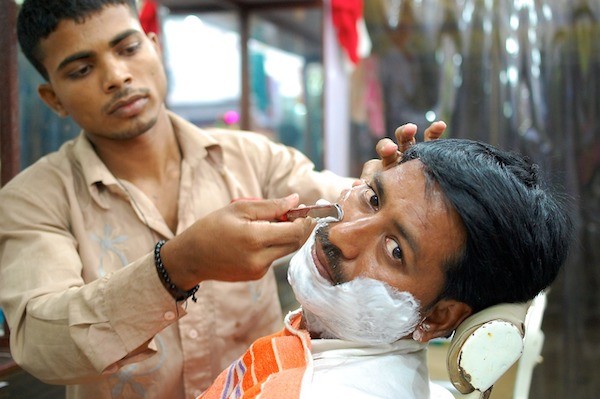
When social distancing will be expected to be maintained even after the lockdown, the barber community, in particular, will suffer the most, as their work is done in close proximity to the customers.
Singh points out that people are making a virtue out of necessity, with many experimenting with hairdressing on their own, as salons and barber shops will remain out of bounds for some time.
Keeping in view the grim situation, people are posting pictures on social media of themselves trimming their hair or getting a haircut at home. This goes to prove that street-side barbers, or the ones in the salons will lose their jobs with no clients turning up for their services.
Vehicle drivers
With the lockdown severely restricting vehicular movement, largely, auto rickshaw pullers, or cab drivers, whose daily incomes are based on picking passengers up on a sharing basis, are likely to lose their jobs, once the lockdown is lifted.
Pal says, “As far as cab or auto drivers are concerned, the crisis makes it clear that it’s much safer to travel in private vehicles rather than sharing cabs or autos. Even after the lockdown is lifted, there will be a psychological impact on people to maintain distance from one another in every spectrum of life.”
Street-food vendors
In a country, where people are hooked onto street food, the pandemic has spoilt the dreams of many people who love to feed off the streets. This has had a huge impact on the street-food vendors. With people confined indoors, the urban poor who earned their livelihood fulfilling the needs of the country’s huge working class, has suddenly found themselves out of work.
Singh points out that the majority of the population, especially the children, will not be allowed to eat from outside— from the street-food vendors— as earlier. The fear of getting infected or maintaining social distance will prevent people from indulging in local delicacies in the streets.
Kolkata, which is known to be the street-food hub of the country, has been witness to street vendors selling delicacies for ages and earning their livelihood. A telephonic survey of informal-sector workers, conducted by various labour unions this March 20-21, highlighted that street vendors would be the worst hit by the lockdown.
Laundry workers
Those who earned their livelihood by offering laundry and ironing services have had no work during the lockdown and will continue to be out of work post the lockdown. These sections of the unorganised sectors are the unwitting victims of the financial crisis triggered by the lockdown.
Due to the panic-stricken situation, Singh says, “This segment of workers who clean, and do laundry are going through a very rough patch, and will eventually lose their jobs at the hands of this calamity. Not only will people refuse to send in their clothes for laundry, the workers themselves will also remain in fear of the mounting threat of infection, once the lockdown is lifted.”
Household helpers
Most of the household help are women, and Singh believes they are one section of the population adversely impacted by the lockdown. “The domestic help who work as cooks, cleaners and babysitters for middle-class residents will face the impact of the pandemic in a big way. Although, for these residents, the services of the domestic helpers are essential and that should keep the ball rolling for them,” she adds.
“These women, who are providers for their families will be hit hard. The longer it takes them to resume work, the harder will be the impact. They do not have reserves to fall back on. Therefore, they will definitely be one of the worst to be affected,” Singh elaborates.