
Close Menu
    Facebook X (Twitter) Instagram
    • Our Story
    • Partner with us
    • Reach Us
    • Career
    Subscribe Newsletter
    HR KathaHR Katha
    • Exclusive
      • Exclusive Features
      • Perspectives
      • Friday Features
      • herSTORY
      • Rising Stars
      • Case-In-Point
      • Point Of View
      • Research
      • HR Pops
      • Dialogue
      • Movement
      • Profile
      • Beyond Work
      • By Invitation
    • Brief News
      • Global HR News
      • Compensation & Benefits
      • Diversity
      • Events
      • Gen Y
      • Hiring & Firing
      • HR & Labour Laws
      • Learning & Development
      • Merger & Acquisition
      • Performance Management & Productivity
      • Talent Management
      • Tools & Technology
      • Work-Life Balance
    • Special
      • Editorial
      • HR Forecast 2026
      • Cover Story
      • HR Forecast 2024
      • HR Forecast 2023
      • HR Forecast 2022
      • HR Forecast 2021
      • HR Forecast 2020
      • HR Forecast 2019
      • New Age Learning
      • Coaching and Training
      • Learn-Engage-Transform
    • Studio
      • The CHRO Playbook
      • Quick HR Insights
      • The Corner Office
    • Reports
      • Whitepaper
        • HR Forecast 2024 e-mag
        • Future-proofing Manufacturing Through Digital Transformation
        • Employee Healthcare & Wellness Benefits: A Guide for Indian MSMEs
        • Build a Future Ready Organisation For The Road Ahead
        • Employee Experience Strategy
        • HRKatha 2019 Forecast
        • Decoding and Driving Employee Engagement
        • One Platform, Infinite Possibilities
      • Survey Reports
        • Happiness at Work
        • Upskilling for Jobs of the Future
        • The Labour Code 2020
    • Forums
      • HRKatha Inner Circle
      • HRKatha Futurecast
      • Leadership Summit 2025
      • Rising Star Leadership Awards
      • HRKatha Futurecast 2025
      • Automation.NXT
      • The Great HR Debate
    WhatsApp LinkedIn X (Twitter) Facebook Instagram
    HR KathaHR Katha
    Home»Brief News»Private sector compensation surpasses public sector: ICICI Securities report
    Brief News

    Private sector compensation surpasses public sector: ICICI Securities report

    HRK News BureauBy HRK News BureauJuly 19, 20233 Mins Read6117 Views
    Share LinkedIn Twitter Facebook WhatsApp
    ICICI
    Share
    LinkedIn Twitter Facebook WhatsApp

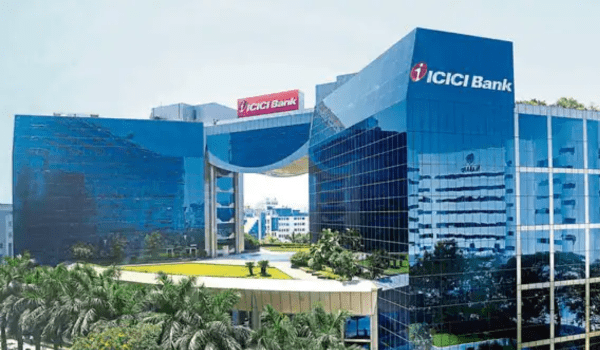
    According to a recent report by ICICI Securities, the compensation of employees (CoE) in the private corporate sector has surpassed that of the public sector for the first time, reaching Rs 30 trillion. 

    In the fiscal year 2022-23, the wage bill for listed private corporate companies grew impressively by 17 per cent, amounting to Rs 11.5 trillion. This growth was driven by sectors such as NBFC, private banks, IT, consumer discretionary, industrial, and auto industries.

    In the previous fiscal year, the aggregate wage bill of the entire private corporate space in the economy recorded a strong 21 per cent year-on-year growth, totaling Rs 30 trillion, surpassing the public sector’s wage bill of Rs 28 trillion, as reported by the National Accounts Statistics. The private corporate wage bill has been on a continuous upward trajectory, showing a structural trend with its share in the GDP rising from 9 percent in FY12 to 13 percent in FY22. This growth can be attributed mainly to the process of formalisation in the economy. This has resulted in a 10-year compound annual growth rate (CAGR) of 14 per cent, outpacing the nominal GDP growth rate of 10 per cent.

    It is worth noting that developed economies like the US have a much higher private sector compensation of employees to GDP ratio at 45 per cent, whereas India’s ratio stands at 13 per cent. This indicates that there is significant potential for further growth in India’s private corporate wage bill.

    The growth of the private corporate wage bill over the past decade can be attributed to two factors: strong wage growth for existing employees (averaging 8-10 per cent, according to salary surveys) and an increase in the formal workforce through new additions.

    The report also highlights that the expansion of the formal workforce is supported by data from the EPFO, which shows a net addition of 14 million employees over the past 12 months, as well as rising collections of personal income tax.

    However, the report also points out some near-term risks to the expansion of the private corporate wage bill. One significant concern is the considerable weight of the IT services sector in India’s private corporate wage bill, accounting for 42 per cent in the listed space. With IT and tech start-up hiring slowing down, and wage increases expected to be modest in the near future, it might impact the overall wage bill growth. Nevertheless, it is essential to note that the IT/BPO sector only accounts for 12 per cent of the organised sector workforce and a mere 1 per cent of the overall workforce.

    employees ICICI Securities private sector public-sector
    Share. LinkedIn Twitter Facebook WhatsApp
    HRK News Bureau

    Leave A Reply Cancel Reply

    Related Posts

    BMW to cut 20% of senior management roles by 2027 as AI reshapes organisation

    October 1, 2026

    Google employees question Gemini 4’s real-world performance despite strong benchmarks

    October 1, 2026

    Zypp Electric grants Rs 11 crore in ESOPs to over 250 employees

    October 1, 2026

    Saudi employees limited to five contracts a year for Nitaqat counting

    October 1, 2026
    zoha
    Editorial

    GCCs are not shrinking, the jobs that made them are

    The numbers that describe India’s GCC story in 2026 are impressive. More than 2,100 centres.…

    The Tata tussle: why employees are distant but not indifferent

    In the space of five weeks, the chairman of one of India’s most storied conglomerates…

    EDITOR'S PICKS

    Case-in-Point: The employee who doesn’t want to become a manager

    October 1, 2026

    herSTORY: Sonal Jain, Global Chief HR & Transformation Officer, EPL

    October 1, 2026

    HR Perspectives by Sharad K. Sharma: “We focus on making people decisions with clarity and fairness”

    September 30, 2026

    20% of managers say AI is cutting their need for empathy. Just 12% see the opposite

    September 30, 2026
    Latest Post

    BMW to cut 20% of senior management roles by 2027 as AI reshapes organisation

    Brief News October 1, 2026

    German luxury carmaker BMW AG plans to eliminate around 20 per cent of its senior…

    Google employees question Gemini 4’s real-world performance despite strong benchmarks

    Brief News October 1, 2026

    Google is facing internal scepticism over the performance of its latest AI model, Gemini 4…

    Zypp Electric grants Rs 11 crore in ESOPs to over 250 employees

    Brief News October 1, 2026

    Zypp Electric has granted employee stock ownership plans (ESOPs) worth Rs 11 crore to more…

    Saudi employees limited to five contracts a year for Nitaqat counting

    Global HR News October 1, 2026

    Saudi employees will be counted under Saudi Arabia’s Nitaqat Saudization programme only if they have…

    Asia's No.1 HR Platform

    Facebook X (Twitter) Instagram LinkedIn WhatsApp Bluesky
    • Our Story
    • Partner with us
    • Career
    • Reach Us
    • Exclusive Features
    • Cover Story
    • Editorial
    • Dive into the Future of Work: Download HRForecast 2024 Now!
    © 2026 HRKatha.com
    • Disclaimer
    • Refunds & Cancellation Policy
    • Terms of Service

    Type above and press Enter to search. Press Esc to cancel.