



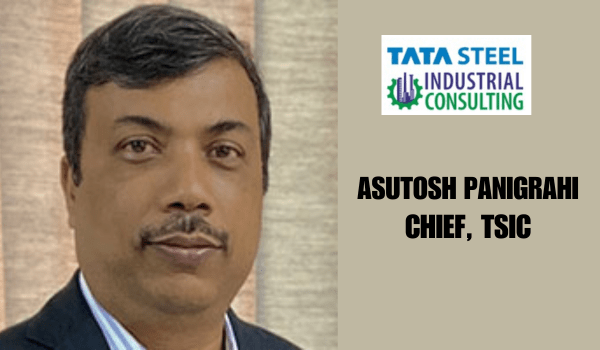
In an exclusive conversation with HRKatha, Asutosh Panigrahi, chief, Tata Steel Industrial Consulting (TSIC), sheds light on the strategic decisions and the vision that motivated Tata Steel to venture into the realm of consultancy.
Here’s a unique perspective from a key figure at the helm of this transformative endeavour:
Q. What initially inspired Tata Steel to venture into the consulting business and establish Tata Steel Industrial Consulting (TSIC)?
A. The creation of this platform is driven by the desire to disseminate information, share benchmarking practices and contribute to the growth of India, aligning with the ‘Made in India’ initiative. It serves as a means for industries to learn from one another, fostering collaboration and mutual improvement.
Our organisation is over a century old, and has undergone a significant transformation in process design as part of our digital roadmap, incorporating benchmark data and practices. Today, we take pride in being among the best in various aspects of steel manufacturing. With such an extensive portfolio, we have developed valuable practices over many years of operation. These practices can be effectively implemented or shared with industrial customers, both in India and internationally.
One such practice involves our comprehensive digital platforms actively contributing to improving our business Key Performance Indicators (KPIs) compared to previous metrics. This requires strategic maximisation of our existing product line and processes through the integration of digital tools and analytics. By transforming these aspects into a cohesive platform, process and knowledge base, we have achieved the intended business results. This represents a crucial development over the past six to seven years, driving our transformation in this domain.
“Our organisation is over a century old, and has undergone a significant transformation in process design as part of our digital roadmap, incorporating benchmark data and practices. Today, we take pride in being among the best in various aspects of steel manufacturing. With such an extensive portfolio, we have developed valuable practices over many years of operation. These practices can be effectively implemented or shared with industrial customers, both in India and internationally.”
Asutosh Panigrahi, chief, Tata Steel Industrial Consulting (TSIC)

Q. In addition to sharing the best practices and experiences, was there any other motivation behind the establishment of TSIC?
A. Given the established foundation of a business-development team primarily dedicated to customer outreach, TSIC introduces a transformative approach that extends beyond the mere exchange of best practices and experiences. It’s crucial to recognise the pivotal role played by subject-matter experts (SME) stationed on the shop floor, actively immersed in the day-to-day operations of their respective businesses. Historically, these experts have been closely aligned with their own units or have gained exposure to multiple units over the course of their professional journey.
With the inception of TSIC, these experts embark on projects that push them beyond their accustomed territories and capabilities, and explore areas they may not have delved into within the confines of Tata Steel. This shift not only enhances their technical expertise but also broadens their overall perspective. The tangible result of this enrichment is the evident pride displayed by these individual SME, who now play a pivotal role in delivering solutions directly to customers.
As a consequence, a notable transformation emerges in the form of increased knowledge, improved communication skills and elevated confidence levels among the shop-floor personnel and officers actively involved in these endeavours. Beyond the immediate impact, this innovative model facilitates a continuous learning process, providing these professionals with valuable insights into the unfolding dynamics of business operations in diverse sectors. In essence, TSIC becomes a catalyst for the ongoing enhancement of their experiences, creating a dynamic and forward-thinking approach within the organisational framework.
Q. How does TSIC ensure effective dissemination of knowledge and best practices to the broader industry?
A. Our business model thrives on delivering knowledge rooted in the lessons learned from failures, providing customers with a wealth of valuable experience.
There is a robust process built on the strong documentation culture at Tata Steel. We follow a structured approach to document processes, which also serves as a solid platform for sharing with external entities through TSIC.
The evolution of these processes and documentation is marked by Plan-Do-Check-Act (PDCA) cycles, where learning is implemented, refined and improved over time. These documents, considered the gold standard resulting from generations of hard work and continuous improvement, play a critical role in knowledge transfer to customer premises.
The benefits of this approach are evident in several ways. First, it significantly reduces the time required for implementation at customer sites, as the documented knowledge eliminates the need for relearning. Second, it enhances the effectiveness and reduces the risks associated with achieving Key Performance Indicators (KPIs) intended for the project. Lastly, the approach results in quicker cost reductions for customers, showcasing the efficiency gained from leveraging years of learning and avoiding the need for external entities to use their premises as a learning platform.
Q. What specific benefits can the industry —large corporates, as well as small and medium companies — expect to gain from utilising TSIC’s expertise and knowledge?
A. TSIC’s expertise and knowledge offer specific benefits to both large corporations and small to medium-sized enterprises (SMEs) across various industries. The focus is on achieving four key performance indicators (KPIs). The first aim is to emphasise on enhancing productivity. The second is to reduce costs or optimise cost structures for product delivery. The third objective is to add value to clients by ensuring that cost reductions translate into increased product recovery and higher net realisation, thus elevating overall value. The fourth KPI involves structuring expertise in specific verticals to cater to the diverse needs of different industries.
Q. How does TSIC address potential concerns about strengthening competitors’ capabilities?
A. TSIC addresses concerns about strengthening competitors’ capabilities by uplifting the entire industry through knowledge dissemination. When providing solutions to customers, TSIC conducts competitive analyses to identify strengths and weaknesses, thereby contributing to the overall improvement of the industry. The sharing of knowledge and advancements encourages healthy competition, prompting competitors to enhance their capabilities and offerings.
While acknowledging the importance of competition, we currently face limited competition due to the comprehensive value chain and unique product offerings, which integrate mining to sales and encompass programme development. Despite the necessity and positive aspects of competition, the specific landscape in India is still evolving.
However, TSIC adheres to certain boundaries, in terms of limiting knowledge. There are defined ‘no go’ areas, such as not entering markets where solutions are unproven. There are also constraints related to intellectual property, with considerations for patented technologies and specific conditions that guide TSIC’s approach and market-entry decisions.
Additionally, we ensure collaboration and mutual benefit within the industry while safeguarding proprietary information through a strategic approach to delineating proprietary and non-proprietary information. We employ a robust process, including market and customer assessments, as well as approval systems, to safeguard proprietary knowledge.
Q. How has the market responded to TSIC’s offerings across various fields?
A. We are actively working to increase our brand awareness in various fields such as safety management, human-resource management, digital transformation, organisation and excellence, manufacturing practices, mining and exploration. Although not yet widely recognised across India, we have made a notable impact in the market through a structured digital approach, including participation in conferences and exhibitions. The strength of TSIC lies in its association with the Tata Steel brand, making product selling relatively easier once introduced into the market. We consider our current status a journey, continually monitoring, improving and setting clear goals, with a focus on expanding our presence in the coming years.
Q. Are there any specific areas where TSIC’s consulting services are in higher demand compared to others?
A. We experience higher demand in specific areas, particularly in safety management, digital platforms and sustainability. Safety is a well-understood and actively sought-after service, with a healthy demand from customers. Digital platforms, including products for connected workforces, have garnered significant interest from many customers. Another emerging area of demand is sustainability, where TSIC receives numerous inquiries due to a relatively low exposure to this concept in India. Additionally, there is a growing interest in addressing cost, operational efficiency and productivity across various industrial belts.
The factors contributing to this disparity in demand are multifaceted. For one, the implementation of mandatory laws and regulations in the last decade has emphasised the need for certain minimum standards in the workplace, with a focus on safety. Secondly, environmental norms and regulations, such as those related to sustainability and the environment, are driving demand in these areas. Thirdly, the natural inclination of businesses to enhance productivity, reduce costs and improve margins contributes to the demand for consulting services. Lastly, the evolving landscape of the industry, particularly the need for increased automation and digitalisation, is expected to drive demand in the coming years.
1 Comment
Too good Asutosh
Fantastic achievement presently I am with IIT KGP giving consultancy to all the leaders of the Adani group in all verticals on Safety, Process Safety and business analytics
Let me know if you need any help
MSSSSharma
Ex Tata Steel
Let me