




The #NewNormal is causing companies to re-balance their sheets. This article offers a detailed description of how leaders can reduce their fixed costs with incentive-based pay.
Blending an incentive-based-pay component into the structured incentive offers is the way forward.
This model carries enough potential to revolutionise business approaches even during the long haul. As a business practice, Performance-Related-Pay (PRP) or ‘incentive-based pay’ started in the UK in the 1980s and is still prevalent today.
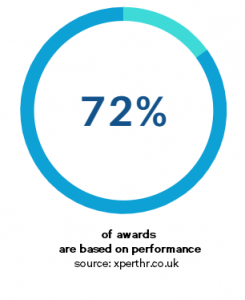
THE BUSINESS CASE FOR VARIABLE PAY
Variable pay schemes can vary – from incentives to bonuses, to profit sharing to ESOPS and to in-kind and a host of innovative ideas.
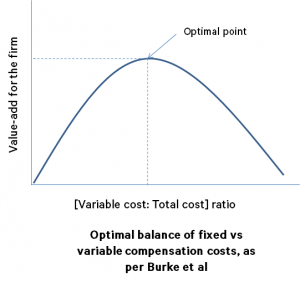
The benefits of an elastic pay scheme first came to light in 2004, when the economic framework of Terry and Burke demonstrated that a reduction in operating leverage essentially translates into a percentage gain in profits.
Variable pay — when deeply integrated with the organisational ethos and purpose — reduces profit volatility and enhances earnings stream for shareholders. The new VUCA is a big push forward — causing even industries and niches that are not traditionally associated with the idea — to give it a serious thought.
“Sectors, such as FMCG, e-commerce, pharma, financial services, IT and fintech will spearhead a ‘near-mass exodus’ to a pay-for-performance paradigm,” Arvind Usretay, director of rewards, Willis Towers Watson
Turning processes to be ‘stretchable and malleable’ helps teams stay agile and adaptable to change.
“The crisis has highlighted the inelasticity in compensation costs and there will be a move towards making these more variable over the coming years,” Anandorup Ghose, partner, Deloitte India
BENEFITS OF ELASTIC PAY
1. Turns mediocre performers into rock stars
Despite having the best resources, it is possible that your organisation is operating at a fraction of its potential. The trick is to turn a ratio of the compensation structure variable – and sync it with a ‘performance loop’.
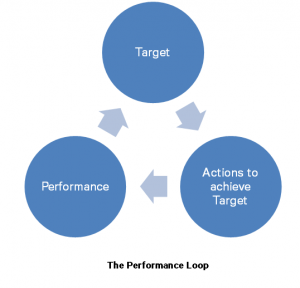
The performance loop is a cycle where performance drives pay, and, equally by extension, pay drives performance. There is no readymade formula for how much variable should be there in a compensation structure and each company needs to find its sweet spot — a ‘signature ratio’.
According to Deloitte, the proportion of fixed to variable will hover around 85:15 in general, touching 50-75 per cent of fixed pay at CXO and senior levels.
2. Stops competition from poaching your best performers
An elastic pay structure not only lets you retain top performers but also gets them to perform ‘miracles’, turning your business into a happy aberration.

No wonder companies across sectors, such as retail, BFSI, chemical, FMCG, IT, e-commerce and telecom are hiking their variable component by up to 25 per cent.
3. Survives on leaner resources, thrives on thinner margins
Variable pay matrices lighten the yoke of fixed costs on the company’s coffers – often significantly.
A strategic, reward-first approach to productivity lets teams take a big step towards the ‘Holy Grail’ of businesses in the #NewNormal age: DOING MORE, WITH LESS.
By footing only those bills that bring in value, leaders can eliminate unnecessary operations, re-channelise resources better and amp up efficiency across the ranks.
WAYS TO BUILD CAPABILITIES FOR AN INCENTIVE-BASED MODEL
Following is a framework to implement and institutionalise a performance-based incentive programme during – and after – the crisis phase:
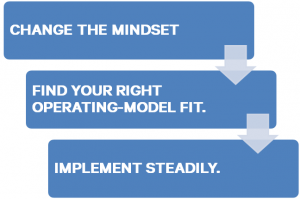
Steps to shifting to a incentive based model
1. CHANGE THE MINDSET
A variable-heavy compensation structure delivers its full benefit only when everyone is aligned with the vision and equally kicked about the possibilities.
‘Memories’ and ‘Inertia’ of the status-quo may pose challenges while implementing a new incentive system.
There will be resistance from a slice of the team that is comfortably settled in the old way. A few ways to ease the transformation are:
a. Workshops and demos of new technologies
b. Practices being introduced to facilitate change
c. Hand-holding during micro-moments at work
d. Testimonies by first-adopters
2. FIND THE RIGHT OPERATING-MODEL FIT
Your business must decide on the right ‘fixed: variable’ pay-out ratio in the accounts books and the WHAT-WHO-WHEN-WHY-WHERE of it. Avoid incentives that are ‘one size fits all’. Instead, map incentives to ability, motivation and personality. Your processes must be sufficiently flexible – especially during the first months of the transition.
Xoxoday’s COMPASS helps engage your in-house as well as extended workforce for higher employee performance via incentives
3. IMPLEMENT SLOWLY, BUT FLAWLESSLY
Ensure that the new system is integrated into existing systems seamlessly, and involves every stakeholder optimally.
Also, consider a Beta Test and Preparation Period for the long haul. An elastic and incentive-inspired style of functioning can help businesses reboot quicker. Future-facing HR leaders expect the current disruptions in payouts and disbursement systems to be long term (if not permanent).
Optimise costs and get more out of your teams (sales workforce, distribution channels, gig and freelancer force, BPO associates and support folks) with the power of rewards and incentives. Manage the entire process with a few clicks. Schedule a Demo for COMPASS today. For details, visit www.xoxoday.com
1 Comment
Convincing employees is a huge factor here, especially in industries like manufacturing