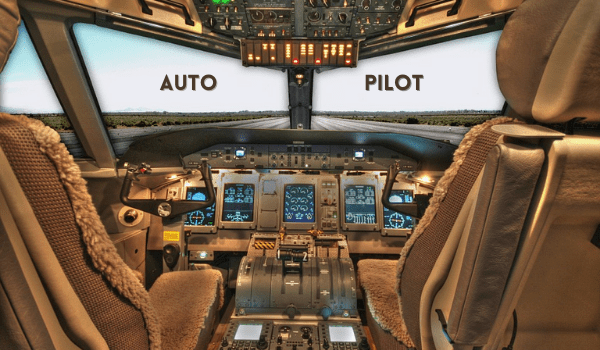
The term ‘autopilot’ brings to mind an electric vehicle (EV). While the autopilot mode is the charm of an EV, when it comes to an employee or an organisation, it may have a more negative connotation.
Employees and their organisations share a symbiotic relationship with each other. While absorbing the corporate values, employees often tend to step on the autopilot mode. In other words, they become so familiar with their routine and tasks, that they begin performing them without any effort and without really thinking. This may not necessarily be unhealthy for companies that manage to match up to the market situation and where the internal processes work in tandem with happy employees.
An organisation, which has been in autopilot mode for a long time, will be left behind and so will its people. They will be more of robots without having anything to look forward to in the future.
Udbhav Ganjoo, head of HR – global operations, India, emerging Asia and access markets, Viatris
However, regularly binging on autopilot mode can be detrimental to the health of the organisation, especially when glaring issues are overlooked and a culture of innovation fails to thrive.
Short-term repercussions
Autopilot mode tends to become a habit if encouraged or not checked. It may lead to a situation where even staying afloat may become a major challenge. It is very common for a person to switch to autopilot, and to some extent the company culture or the existing values act as enablers too. A sense of disconnect settles in as the company grows, and along the way, expectations fail to trickle down.
Lesser short-term repercussions are seen for companies operating in autopilot mode, but the wheels are set in motion starting with the employees themselves. Work loses its challenging edge or appears too difficult to tackle, and bringing new ideas to the table is not encouraged or welcomed.
Rohit Suri, chief HR and talent officer, GroupM for South Asia, advises, “The changes need to be top down, with the board and the CEO interested in making those changes.”
That is a good way to keep a business from sinking too much into an autopilot mode. A lack of transparency, absence of connect or lack of constant dialogue between the senior management and other employees will further drive a company into an autopilot mode.
When the business environment is static, the firm is really not challenged for survival. Many firms that have done very well and have a great market share, tend to become complacent.
It is difficult to quantify how much of autopilot is too much. After all, existing like a zombie will definitely be detrimental in the long run. Companies have to snap out of their ‘pleasure’ phase and face the ‘pain’ of change to innovate and pin point the issues harming them.
A good place to start is revamping the product or services offered by assembling teams. Asking tough questions is another good way to start. Abhijit Bhaduri, author, columnist and management consultant, suggests, “Get people together and examine how things can be made better; and identify the ways in which all can contribute to the possibilities.”
Bhaduri also mentions how achieving smashing success or reaching soaring heights can blindsight future goals. He adds, “When the business environment is static, the firm is really not challenged for survival, and many firms that have done very well and have a great market share, tend to become complacent.”
Once autopilot becomes a habit, the challenge of employee attrition emerges. Attracting and retaining ‘cutting-edge’ talent will also be an issue for such firms in the long run. Putting talent aside, such companies are often seen following outdated business models and remain uncertain on how to tap into market trends. As a result, with time, such companies go grossly out of sync with the market trends. This can also extend to the services and products offered by these companies, if the issue remains unaddressed in the long run.
Udbhav Ganjoo, head of HR – global operations, India, emerging Asia and access markets, Viatris, says, “An organisation, which has been in autopilot mode for a long time, will be left behind and so will its people. They will be more of robots without having anything to look forward to in the future.”
The changes need to be top down, with the board and the CEO interested in making those changes.
Rohit Suri, chief HR and talent officer, GroupM for South Asia
Most organisations that do not embrace change or wait for the tide to pass, end up being dragged into the sea. They do not realise they are drowning until it’s too late to act. Constant engagement, no matter how tiresome, and collaboration are the lifeblood of a well-functioning business.
Most of us operate on autopilot every day and it is quite common. In fact, commuting, performing routine tasks or greeting colleagues are all autopilot responses. To some extent, this extends to the companies as well. As long as the employees and the company culture have an osmotic relationship, autopilot will facilitate the smooth functioning of the company.
That being said, no organisation in today’s world is too comfortable. In fact, they avoid revelling in the pleasure offered by the autopilot mode. It is absolutely unheard of and unthinkable in the burgeoning businesses and the fast-paced IT sector. Without innovation and adaptation, they will cease to function with time.