


Close Menu
    Facebook X (Twitter) Instagram
    • Our Story
    • Partner with us
    • Reach Us
    • Career
    Subscribe Newsletter
    HR KathaHR Katha
    • Exclusive
      • Exclusive Features
      • Perspectives
      • Friday Features
      • herSTORY
      • Case-In-Point
      • Point Of View
      • Research
      • HR Pops
      • Dialogue
      • Movement
      • Profile
      • Beyond Work
      • Rising Star
      • By Invitation
    • News
      • Global HR News
      • Compensation & Benefits
      • Diversity
      • Events
      • Gen Y
      • Hiring & Firing
      • HR & Labour Laws
      • Learning & Development
      • Merger & Acquisition
      • Performance Management & Productivity
      • Talent Management
      • Tools & Technology
      • Work-Life Balance
    • Special
      • HR Forecast 2026
      • Cover Story
      • Editorial
      • HR Forecast 2024
      • HR Forecast 2023
      • HR Forecast 2022
      • HR Forecast 2021
      • HR Forecast 2020
      • HR Forecast 2019
      • New Age Learning
      • Coaching and Training
      • Learn-Engage-Transform
    • Magazine
    • Reports
      • Whitepaper
        • HR Forecast 2024 e-mag
        • Future-proofing Manufacturing Through Digital Transformation
        • Employee Healthcare & Wellness Benefits: A Guide for Indian MSMEs
        • Build a Future Ready Organisation For The Road Ahead
        • Employee Experience Strategy
        • HRKatha 2019 Forecast
        • Decoding and Driving Employee Engagement
        • One Platform, Infinite Possibilities
      • Survey Reports
        • Happiness at Work
        • Upskilling for Jobs of the Future
        • The Labour Code 2020
    • Conferences
      • Leadership Summit 2025
      • Rising Star Leadership Awards
      • HRKatha Futurecast
      • Automation.NXT
      • The Great HR Debate
    • HR Jobs
    WhatsApp LinkedIn X (Twitter) Facebook Instagram
    HR KathaHR Katha
    zoha
    Home»Exclusive Features»Why DXC Technology still prefers remote work
    Exclusive Features

    Why DXC Technology still prefers remote work

    mmBy Kartikay Kashyap | HRKathaSeptember 15, 2022Updated:September 17, 20224 Mins Read32466 Views
    Share LinkedIn Twitter Facebook WhatsApp
    Share
    LinkedIn Twitter Facebook WhatsApp

    Many of the big conglomerates and IT giants have made it clear that they want their employees to return to office. Some companies have mandated that their staff come in to work thrice or twice a week, while others have resumed a full-time work-from-office culture. However, DXC Technology is following a different path.

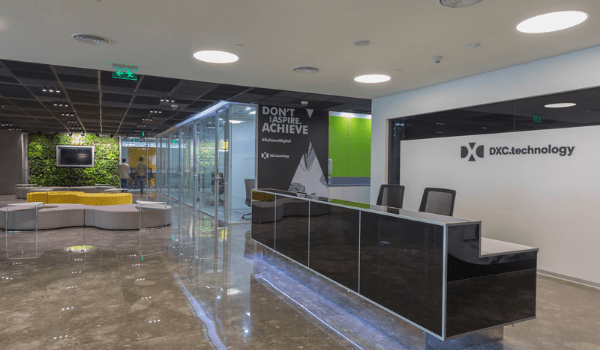
    The Company has adopted a virtual-first model, allowing employees to work remotely. Lokendra Sethi, VP – India HR lead, DXC Technology, reveals that the Company has about 43,000 employees in India and at any given time, not more than 1000 employees are visiting or working from the office.

    zoha

    While many industry experts and HR leaders have argued that employee engagement and collaboration amongst teams becomes a challenge in a remote-working culture, Sethi believes, “We do not need to be in office to drive collaboration”.

    He goes on to say that even during pre-pandemic days, people working from different offices and locations collaborated virtually. In fact, he states that being able to attend virtual events has actually provided more flexibility to people and increased reach.

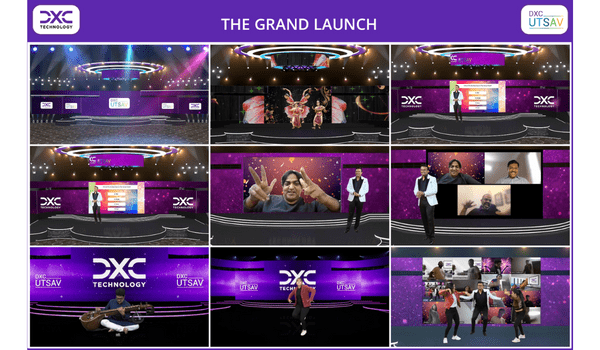
    He shares that at an internal annual event called ‘DXC Utsav’, the Company was able to engage with the families of the employees as well, which would not have been possible in a physical setup.
     

    Benefits of virtual-first culture

    Sethi tells HRKatha that having a virtual-first culture has really benefited DXC Technology, especially when it comes to the overall people strategy of the Company.

    zoha

    Hiring from anywhere: “Our talent quotient has increased since we have adopted a virtual-first model at DXC Technology,” admits Sethi. This also means that now the Company has no boundaries to attract talent. The best of talent can be hired from any part of the country without any geographical constraints.

    Sethi reveals that from the time DXC Technology decided to work remotely, which was in March 2020, the firm has hired more than 30,000 employees virtually till date. All hiring has been done virtually and even for fresher hiring from the campuses, the Company managed without physically visiting the campuses.

    Accessibility and scalability: Accessibility and scalability in terms of upskilling employees has also increased at DXC Technology, observes Sethi. Sethi proudly shares that the women’s leadership development programme at DXC, called ‘SheLeads’, which took place a year and half ago, was a 100 per cent virtual programme, and was a major success. “Our ability to train and scale training programmes has really gone up since we moved to a virtual- first model,” observes Sethi.

    In terms of engagement scores, Sethi reports witnessing a positive response from the employees, but prefers to keep the overall engagement score confidential.

    “We do not need to be in office to drive collaboration”

    Lokendra Sethi, VP – India HR lead, DXC Technology

    Challenges of virtual-first culture

    Any working model will have benefits as well as challenges. DXC Technology had to battle its own set of challenges.

    Infrastructure: Lack of infrastructure at home was a huge hurdle for some. “Every home does not have the infrastructure for a home office,” points out Sethi. However, as per Sethi, people have now managed to figure out ways to create their own working spaces at homes and have got used to the same. For an instance, Sethi shares that many graduates have moved to smaller towns with their parents, where they have more comfortable spaces to set up an office corner or room.

    Access to technology: Access to internet and technology was another challenge. Since people have moved to smaller towns, accessibility of internet has remained a challenge to some extent. However, due to technological advancements in the country, the penetration of internet connectivity has improved in recent times.

    Culture shift: Another major challenge was the culture shift to a virtual-first environment. This had more to do with the mindset of the people. It was easier for the younger generation to accept this shift. However, some of the leaders and supervisors, primarily belonging to the older generation, found it difficult to adapt. “We organised various sensitisation sessions to train our leaders to manage people in a remote environment and evaluate performance without really interacting with them physically in the office,” explains Sethi.

    Moving forward, Sethi is confident that this is going to remain the accepted working model at DXC Technology. However, as the Company calls it a virtual-first model, employees are welcome to meet in person whenever they want to.

    DXC Technology Lokendra Sethi Remote work VP - India HR lead work from office
    Share. LinkedIn Twitter Facebook WhatsApp
    mm
    Kartikay Kashyap | HRKatha

    A mass communication graduate Kartikay is a quick learner. A fresh bake, yet a prolific writer, he is always keen to learn and discover new things. He is an easy going gallivanted and just likes to chill out when he is not chasing news. He loves watching movies as well.

    Leave A Reply Cancel Reply

    Related Posts

    HR Perspectives by Sushil Baveja: “Learning cultures fail when learning is seen as separate from work”

    June 24, 2026

    Global talent mobility in retreat: AI is the exception

    June 24, 2026

    As ABD evolved, so did its workforce

    June 23, 2026

    Sensemaking: Turning confusion into clarity

    June 23, 2026
    Editorial

    The two cultures inside the same multinational

    Someone I know works with one of the world’s largest technology and consulting firms. Based…

    Why HR becomes conservative when hiring HR

    Hire for potential, not just pedigree. Look beyond industry boundaries. Avoid groupthink. Value transferable capability.…

    EDITOR'S PICKS

    HR Perspectives by Sushil Baveja: “Learning cultures fail when learning is seen as separate from work”

    June 24, 2026

    Global talent mobility in retreat: AI is the exception

    June 24, 2026

    As ABD evolved, so did its workforce

    June 23, 2026

    Sensemaking: Turning confusion into clarity

    June 23, 2026
    Latest Post

    HR Perspectives by Sushil Baveja: “Learning cultures fail when learning is seen as separate from work”

    Perspectives June 24, 2026

    As manufacturing undergoes rapid transformation driven by automation, digitalisation, AI and evolving workforce expectations, organisations…

    L&T pledges investment in Tamil Nadu, to add 8,200 jobs

    Expansion June 24, 2026

    Engineering giant Larsen & Toubro will invest Rs 18,600 crore in Tamil Nadu under a…

    Oracle cuts 21,000 staff as AI shift drives $1.8 billion restructuring bill

    Layoff June 24, 2026

    Oracle has reduced its workforce by 21,000 people in the last year, blaming artificial intelligence…

    Global talent mobility in retreat: AI is the exception

    Research June 24, 2026

    The global movement of highly-skilled professionals slowed dramatically in 2025. Cross border relocations fell from…

    Asia's No.1 HR Platform

    Facebook X (Twitter) Instagram LinkedIn WhatsApp Bluesky
    • Our Story
    • Partner with us
    • Career
    • Reach Us
    • Exclusive Features
    • Cover Story
    • Editorial
    • Dive into the Future of Work: Download HRForecast 2024 Now!
    © 2026 HRKatha.com
    • Disclaimer
    • Refunds & Cancellation Policy
    • Terms of Service

    Type above and press Enter to search. Press Esc to cancel.