



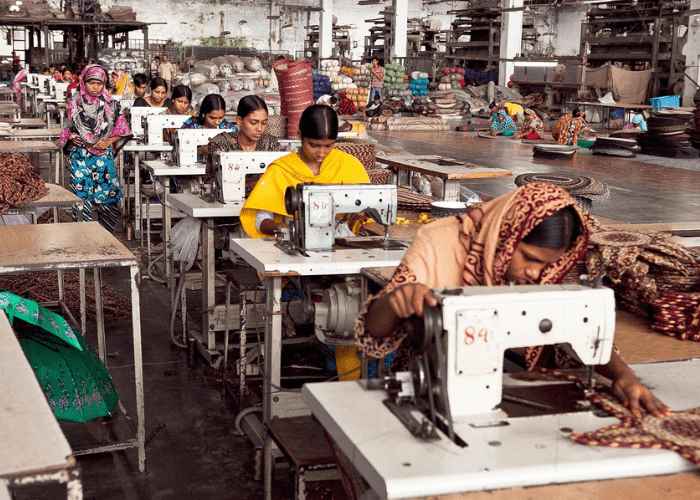
Factory workers worldwide are facing mounting job losses as companies restructure, shut plants, or collapse under competitive and financial pressures. Recent developments in the US, India, and Cambodia highlight how manufacturing employment is being reshaped by global market forces.
In the US, Electrolux announced the temporary closure of its Anderson County plant, affecting 1,200 workers. The facility, currently producing food preservation equipment, will be repurposed into a fabric care factory under a joint venture with Midea. Production is expected to resume in 2027, with employees invited back once operations restart. Until then, workers will receive severance packages, while Electrolux continues to operate its other plants in Tennessee and North Carolina.

In India, a family-run ink manufacturer has shut down two of its three factories, laying off more than 2,800 employees, including permanent and contractual staff. The company cited three years of losses driven by cheap Chinese imports and rising operational costs. The layoffs sparked debate over severance terms, with many employees receiving minimal compensation compared to earlier overseas cuts. The closures reflect wider distress in India’s manufacturing sector, where rising raw material costs and weak demand have forced several factories to halt production.
Meanwhile, in Cambodia, nearly 700 garment workers were left jobless after ML Intimate Apparel went bankrupt and closed its Poipet factory. The sudden announcement triggered protests, but an agreement was reached to pay wages and benefits in two phases. Workers under fixed contracts will receive final pay, unused leave compensation, and a completion bonus.
Clearly, global manufacturing is under strain from restructuring, international competition, and financial instability. While some closures are temporary and linked to strategic shifts, others reflect deeper structural challenges. For workers, the immediate impact is job loss, uncertainty, and uneven severance support — underscoring the fragile state of factory employment worldwide.
