



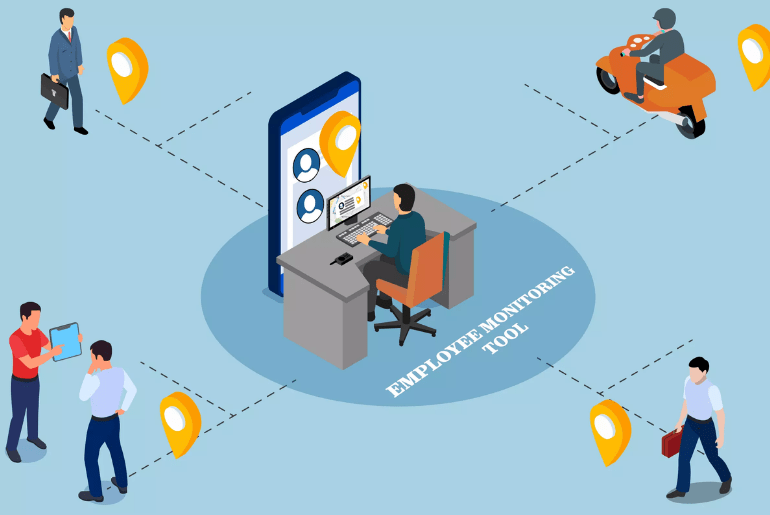
The growing use of employee monitoring software in Canadian workplaces is coming under scrutiny, with workers at several large organisations expressing concerns over rising stress, declining trust and the impact on their mental well-being. Productivity tracking tools, which monitor employees’ screen activity and time spent on work applications, are increasingly becoming a source of anxiety, even as employers defend them as workflow optimisation measures.
The debate gained fresh attention after TD Bank informed employees in one of its financial crime and risk management teams that it would begin using WorkiQ, a software that tracks time spent on browsers, internal communication platforms and meeting applications. The move has prompted concerns among employees beyond the affected team, many of whom fear similar monitoring could be introduced across the organisation.

Several employees have reportedly questioned whether screen activity accurately reflects their actual work. Many routine responsibilities, including reviewing documents, analysing information and collaborating with colleagues, often take place without continuous keyboard or mouse activity. Workers worry that relying heavily on digital activity metrics could lead to unfair performance evaluations, affecting bonuses, appraisals and even job security.
The issue is not limited to the banking sector. Employees in Canada’s telecom industry have also raised objections to workplace surveillance tools that measure screen time and user activity. Some workers claim the software has become more demanding since the pandemic, leaving little flexibility for short breaks or tasks that fall outside predefined productivity metrics. Concerns have also been raised about the physical and mental strain created by the constant pressure to remain digitally active.
Experts say such monitoring systems often undermine trust between employers and employees while increasing workplace stress. Research has also suggested that electronic performance monitoring does not necessarily improve productivity. Instead, employees may begin focusing only on measurable tasks while neglecting collaboration, creativity and other valuable contributions that cannot be captured through tracking software.
As organisations continue to adopt digital monitoring technologies, the debate over balancing operational efficiency with employee privacy, trust and well-being is expected to intensify. Labour representatives have also called for greater transparency and safeguards to ensure monitoring practices do not negatively affect workers’ health or create misleading measures of performance.
