


Every workplace has that one colleague everyone wants on their team.
Not necessarily the loudest voice in meetings or the one with the most impressive résumé.
Not always the fastest to climb the hierarchy or the first to volunteer for a high-profile assignment. Yet somehow, things run more smoothly when they are involved. Managers trust them without needing to explain why. Colleagues know, almost instinctively, that the work will get done and that they can rely on them.
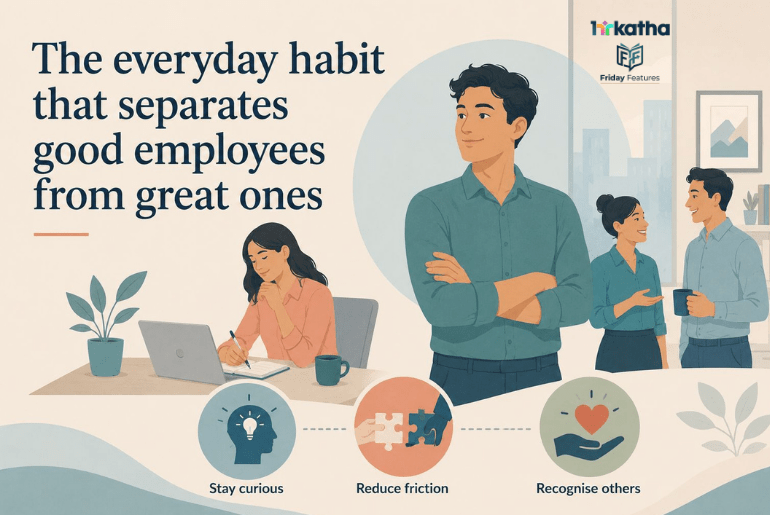
What separates these people is rarely dramatic. It is almost never a single breakthrough moment. More often, it is a collection of small behaviours repeated so consistently that, over time, they become a reputation. Three HR leaders share the habits they believe make the difference.
Curiosity compounds
Amit Chincholikar, Group President HR, Hinduja Group
Amit Chincholikar believes the defining habit is curiosity, coupled with the willingness to act on it without waiting for permission.

Good employees complete the task in front of them. Exceptional employees want to understand why the task matters, how it connects to the larger business and what they still do not know. They leave a meeting and read more about the subject. They ask colleagues from other functions how they see the same problem. They look for answers before anyone asks them to.
That distinction has become increasingly valuable. Skills are changing faster than organisations can redesign job descriptions, making curiosity less of a desirable trait and more of a survival skill. Employees who keep asking questions continue to evolve. Those who stop asking often discover that experience alone is no longer enough.
Curiosity is not something people either possess or lack. It is a habit of choosing to look one layer deeper than the job demands.
Become the colleague who reduces friction
Jaikrishna B, Enterprise and Family Business Advisor and Leadership Coach
Jaikrishna B has spent decades watching what makes certain employees indispensable, and his answer is surprisingly simple.

It is not brilliance. It is making everyone else’s work easier.
The people organisations struggle most to replace are rarely those with the highest IQ. They are the ones who remove friction from everyday work. They reply before reminders become necessary. They share information before someone has to ask for it. They notice a deadline slipping and offer help before it becomes an escalation. They circulate meeting notes promptly, connect people who should know each other and think one step ahead often enough that problems disappear before they become visible.
None of these actions attracts much attention. Few feature prominently in performance reviews. Yet together they create something every organisation values and very few systems measure well: trust. When people stop worrying about whether something will happen because they know who is responsible, reliability has become a competitive advantage.
Over time, that quiet dependability is what turns a competent employee into one nobody wants to lose.
Recognition is a leadership habit
Pradyumna Pandey, Senior HR Leader & CEO, Promedieexcel Learning
Pradyumna Pandey points to a habit so simple that it is often overlooked: recognising other people’s contribution.

Most organisations celebrate visible achievement. They are less consistent at acknowledging the people who quietly made that achievement possible. The employees who stand out, Pandey observes, are often the ones who notice those invisible contributions. The teammate who stayed late to solve a problem. The colleague whose suggestion improved a project but never claimed the credit. The person who made everyone else’s work easier without drawing attention to themselves.
A genuine word of appreciation takes only a few seconds. Its effect lasts much longer. It strengthens relationships, lifts morale and creates goodwill that no engagement initiative or reward programme can manufacture.
More importantly, appreciation reveals something about the person offering it. People who consistently recognise others are signalling that they pay attention, value collaboration and define success in terms larger than their own achievements. In many organisations, that mindset remains rarer than it should be.
The habits that quietly compound
Workplaces celebrate milestones: promotions, successful product launches, record sales and ambitious targets achieved. What receives far less attention are the small behaviours that make those moments possible in the first place.
Asking one more thoughtful question. Removing a piece of friction before it becomes someone else’s problem. Taking a moment to tell a colleague that their effort mattered. None feels particularly significant on its own. Repeated consistently, however, they build the trust, credibility and relationships that careers are built upon.
The employees who become exceptional are rarely those who rely on talent alone. They are the ones who keep practising habits so ordinary that almost nobody notices them individually.
Until, one day, everybody notices the person.
What is the one everyday habit you have seen consistently separate good employees from great ones? Share it in the comments.