
A product manager from a business-critical team resigns, creating an urgent vacancy. The HR team responds immediately by updating the job description, posting the opening, and beginning an external search.
But what if the right candidate is already part of the organisation?

Perhaps it is an employee who has worked closely with the product team for years. They understand the business, have developed relevant skills over time, and have built strong relationships across functions. While they may not tick every box in the job description, their understanding of the organisation and its ways of working can be just as valuable.
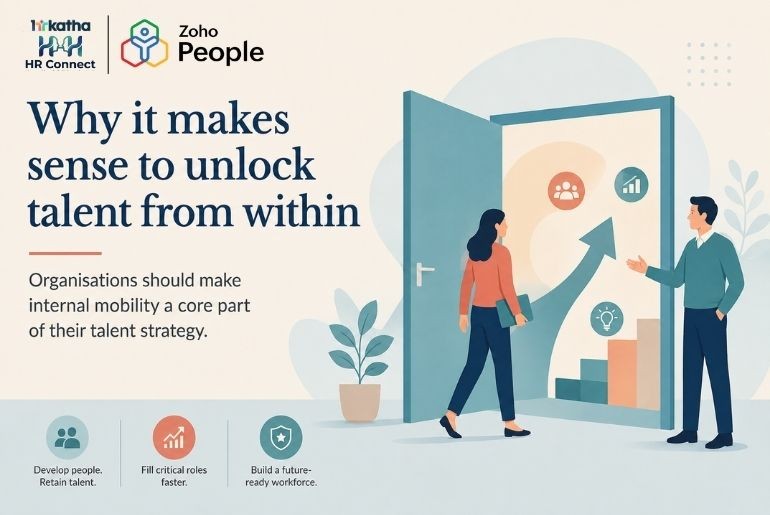
Yet many organisations continue to overlook the talent they already have. As skill requirements evolve and hiring becomes more expensive and competitive, internal mobility is emerging as a practical way to fill critical roles, strengthen leadership pipelines, and build a more agile workforce.
Why internal mobility makes business sense
According to a recent LinkedIn survey, about 55 per cent of career development champions and 48 per cent of other respondents consider internal mobility a high priority. The reason is straightforward. It benefits both employees and employers.
Employees gain opportunities to explore new roles, develop new capabilities, and advance their careers without leaving the organisation. Businesses, meanwhile, are able to respond more quickly to changing talent needs by developing and deploying people who already understand the organisation’s culture, customers and operations.
Beyond reducing hiring costs and time-to-productivity, internal mobility also helps retain institutional knowledge and reinforces a culture of continuous learning.
What is holding organisations back?
Despite its advantages, many organisations still find it difficult to move employees across roles, teams and locations. Some of the most common barriers include:
• Limited visibility into employees’ skills beyond their current role, resulting in capable people being overlooked.
• Managers who are reluctant to let high-performing team members move elsewhere, restricting career growth in the process.
• The absence of an internal platform where employees can discover open roles, projects or short-term assignments.
• A continued tendency to prioritise job titles, seniority and educational qualifications over demonstrated skills and potential.
How to build a culture of internal mobility
1. Make opportunities visible
Employees cannot apply for opportunities they do not know exist. A centralised internal job portal gives HR a platform to advertise vacancies, stretch assignments and cross-functional projects before looking outside the organisation. When employees are aware of internal opportunities, they are more likely to explore their next career move within the company rather than elsewhere.
2. Treat career growth as a journey
Career growth is often associated with promotions and salary increases. However, some of the most valuable development comes through lateral moves, cross-functional exposure, and assignments that help employees build new capabilities.
Encouraging employees to take on different challenges, regardless of where they sit in the hierarchy, creates a workforce that is more adaptable and better prepared for future business needs.
3. Reward curiosity and potential
Internal mobility should not be reserved only for the obvious top performers. Success in one role does not always predict success in another, just as average performance in one function does not mean someone lacks the potential to excel elsewhere.
Employees who are curious, willing to learn and ready to embrace new challenges often bring fresh perspectives and capabilities that might otherwise remain untapped.
4. Hire for potential, not just fit
Selecting candidates who meet every requirement may provide short-term confidence, but roles and business priorities rarely remain static. Organisations should also consider qualities such as adaptability, learning agility, critical thinking and a willingness to grow. These attributes often prove just as valuable as technical expertise over the longer term.
5. Invest in mentoring
Mentoring helps employees gain a better understanding of different roles and the capabilities required to succeed in them. It enables them to learn from experienced colleagues, make more informed career decisions, and identify skill gaps before they become barriers to growth.
For organisations, mentoring also strengthens succession planning by preparing employees for future opportunities rather than waiting until vacancies arise.
Internal mobility is no longer simply a talent management initiative. It is increasingly becoming a business imperative. Organisations that consistently look within before hiring outside are often better positioned to respond to change, retain valuable institutional knowledge, and create meaningful career opportunities for their people.
The right candidate for a critical role may already be on your payroll. The question is whether your organisation has the visibility, systems and culture to recognise that potential before someone else does.
Tarika Arun is a Product Marketer at Zoho, where she focuses on HR technology and the future of work. She writes on topics spanning AI in HR, employee experience, talent management and workplace transformation, translating complex technology shifts into actionable insights for HR practitioners. Her work aims to help organisations make better decisions about the tools and strategies shaping the future of work.