Close Menu
    Facebook X (Twitter) Instagram
    • Our Story
    • Partner with us
    • Reach Us
    • Career
    Subscribe Newsletter
    HR KathaHR Katha
    • Exclusive
      • Exclusive Features
      • Perspectives
      • Friday Features
      • herSTORY
      • Rising Stars
      • Case-In-Point
      • Point Of View
      • Research
      • HR Pops
      • Dialogue
      • Movement
      • Profile
      • Beyond Work
      • By Invitation
    • Brief News
      • Global HR News
      • Compensation & Benefits
      • Diversity
      • Events
      • Gen Y
      • Hiring & Firing
      • HR & Labour Laws
      • Learning & Development
      • Merger & Acquisition
      • Performance Management & Productivity
      • Talent Management
      • Tools & Technology
      • Work-Life Balance
    • Special
      • Editorial
      • HR Forecast 2026
      • Cover Story
      • HR Forecast 2024
      • HR Forecast 2023
      • HR Forecast 2022
      • HR Forecast 2021
      • HR Forecast 2020
      • HR Forecast 2019
      • New Age Learning
      • Coaching and Training
      • Learn-Engage-Transform
    • Studio
      • The CHRO Playbook
      • Quick HR Insights
      • The Corner Office
    • Reports
      • Whitepaper
        • HR Forecast 2024 e-mag
        • Future-proofing Manufacturing Through Digital Transformation
        • Employee Healthcare & Wellness Benefits: A Guide for Indian MSMEs
        • Build a Future Ready Organisation For The Road Ahead
        • Employee Experience Strategy
        • HRKatha 2019 Forecast
        • Decoding and Driving Employee Engagement
        • One Platform, Infinite Possibilities
      • Survey Reports
        • Happiness at Work
        • Upskilling for Jobs of the Future
        • The Labour Code 2020
    • Forums
      • HRKatha Inner Circle
      • HRKatha Futurecast
      • Leadership Summit 2025
      • Rising Star Leadership Awards
      • HRKatha Futurecast 2025
      • Automation.NXT
      • The Great HR Debate
    WhatsApp LinkedIn X (Twitter) Facebook Instagram
    HR KathaHR Katha
    Home»Exclusive Features»Time to shift from ‘human capital’ to ‘social capital’
    Exclusive Features

    Time to shift from ‘human capital’ to ‘social capital’

    mmBy Jasmeen Saeed | HRKathaOctober 29, 2018Updated:October 30, 20184 Mins Read17238 Views
    Share LinkedIn Twitter Facebook WhatsApp
    Share
    LinkedIn Twitter Facebook WhatsApp

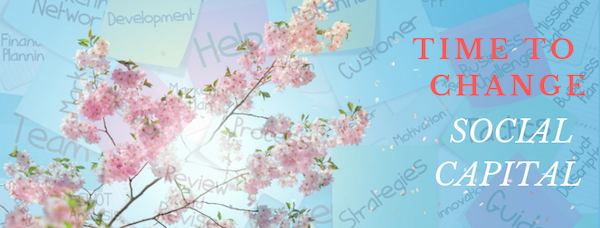
    Human capital is awaiting an upgrade. Some organisations have already hit the start button. The latest buzzword is ‘social capital’, and this is what many organisations are now trying to figure out.

    The word first appeared in a book published in 1916 in the United States that discussed how neighbours can work together to oversee schools, but businesses have started realising its importance only recently.

    What is social capital all about?

    We all know that human capital deals with the talent, skills, knowledge, information and experience that an organisation possesses.

    Social capital just goes a step further. It is the ability of an organisation to utilise the skills, knowledge and experience of their employees in the systems and processes.

    The crucial aspect for organisations today is to not just know what they have but to leverage the best from what they have.

    SV Nathan, chief talent officer, Deloitte, says “Companies need to develop effective communication and networking platforms (both formal and informal), across the organisation to enhance workplace engagement. This will lead to productivity and business growth.”

    Social capital is a tangible asset that is very significant in the daily lives of people, for instance, goodwill, fellowship, sympathy, and social intercourse among the individuals and families who make up a social unit.

    From an organisation’s perspective, social capital is the link, shared values and understandings that enable individuals and groups to trust each other and also work together.

    Why has social capital become so important now?

    We are living in an era of change, and businesses need to adapt to change at a pace not less than the pace of change itself.

    The struggle for each company is to answer the question — ‘Can we change at the rate of change?’

    Companies are trying to be fundamentally more adaptable. They are attempting to accept the pace of change and also be ready to re-orient.

    However, to be an adaptable business, innovation is essential. Businesses strive to make innovation a regular routine for every single employee, and those who are able to do it are successful. But none of this will be possible without ‘social capital’.

    Truly innovative companies try to inspire their employees to come to work every day, because they genuinely want to use their passion, energy, ideas and initiatives in their daily work.

    Organisations need to adapt or they will face issues in the long run.

    As Nathan says, “When employees are given a chance to innovate within their daily work they feel more valued and respected for their individualism, which gives a sense of identity— a sense of belongingness to the employees.”

    The core genesis of ‘social capital’ is adaptive capacity.

    The answer to effective social networking, which leads to better results is to be aware of how and when to bring the social arrangements in the organisational system to drive innovation and adaptation.

    SV Nathan

    “When employees are given a chance to innovate within their daily work they feel more valued and respected for their individualism, which gives a sense of identity— a sense of belongingness to the employees.”

    According to Nathan, “Informal communication network needs no invitation to participate or the ‘why’. However, the question of ‘how to participate’ could be engineered through ‘formal networks’.”

    Companies need to develop an agenda in which employees are encouraged to share ideas, contribute to decision making and think independently. Deliberate actions need to be taken to access new ideas from both inside and outside the company. This will help build the activities and procedures of a company. An important connect in the process of building ideas is a ‘thread’ that connects employees from across the organisation.

    While developing ideas, it is important to have people from across teams, cultures and boundaries.

    “Effective use of formal and informal networks bring creativity, knowledge and abilities of people into mainstream development and growth of the organisation,” Nathan opines.

    To integrate these into the system a very strong, cohesive team needs to be built to produce best results.

    The developed ideas have to be combined and synced into the broader organisation such that they give best results, result in better decision making and enhance the company’s productivity.

    Effective social networks can upsurge employee engagement and enhance workplace productivity, leading to business growth.

    The social networks form the foundation of an engaged workforce. To ‘bring in’ the best people is only a part of the solution; organisations must also ‘bring out’ the best in people.

    Social capital stresses on the importance of such social networks and relationships, and aims to use them in the best possible way to achieve organisational goals.


    Share. LinkedIn Twitter Facebook WhatsApp
    mm
    Jasmeen Saeed | HRKatha

    Leave A Reply Cancel Reply

    Related Posts

    HR Perspectives by Arindam Chakraborty: “Succession planning must begin two to three levels below the target role”

    October 28, 2026

    26% frontline employees report negative transformation experiences, nearly 3x the senior management rate

    October 28, 2026

    Microaffirmations: The small gestures that build big trust

    October 27, 2026

    For TELUS Digital, the diversity question is no longer how many but where

    October 27, 2026
    zoha
    Editorial

    The rift between the corner office and the floor below

    A general manager at a large Indian steel conglomerate recently described an exchange with his…

    Can India become a skills-first economy while remaining a collar-conscious society?

    Consider two employees beginning their careers. One joins a technology company as a junior analyst.…

    EDITOR'S PICKS

    HR Perspectives by Arindam Chakraborty: “Succession planning must begin two to three levels below the target role”

    October 28, 2026

    26% frontline employees report negative transformation experiences, nearly 3x the senior management rate

    October 28, 2026

    Microaffirmations: The small gestures that build big trust

    October 27, 2026

    For TELUS Digital, the diversity question is no longer how many but where

    October 27, 2026
    Latest Post

    Apple cuts hardware Programme manager roles amid management restructuring

    Brief News October 28, 2026

    Apple has reportedly laid off some hardware programme managers as it moves to reduce management…

    Škoda Auto’s LGBTQ+ employee network marks 5 years amid wider inclusion efforts

    Brief News October 28, 2026

    Škoda Auto’s LGBTQ+ employee network, Škoda Proud, has completed five years, with the automaker receiving…

    HSBC Cuts 4,500 roles in six months as workforce falls to 2,04,330

    Brief News October 28, 2026

    HSBC’s global workforce declined by around 4,500 full-time equivalent employees over the six months to…

    Tamara Leisure Experiences trains next generation of hoteliers through immersive learning programmes

    Brief News October 28, 2026

    Tamara Leisure Experiences (TLE) has concluded the fourth cohort of its Responsible Hoteliers of Tomorrow…

    Asia's No.1 HR Platform

    Facebook X (Twitter) Instagram LinkedIn WhatsApp Bluesky
    • Our Story
    • Partner with us
    • Career
    • Reach Us
    • Exclusive Features
    • Cover Story
    • Editorial
    • Dive into the Future of Work: Download HRForecast 2024 Now!
    © 2026 HRKatha.com
    • Disclaimer
    • Refunds & Cancellation Policy
    • Terms of Service

    Type above and press Enter to search. Press Esc to cancel.