


Close Menu
    Facebook X (Twitter) Instagram
    • Our Story
    • Partner with us
    • Reach Us
    • Career
    Subscribe Newsletter
    HR KathaHR Katha
    • Exclusive
      • Exclusive Features
      • Perspectives
      • Friday Features
      • herSTORY
      • Case-In-Point
      • Point Of View
      • Research
      • HR Pops
      • Dialogue
      • Movement
      • Profile
      • Beyond Work
      • Rising Star
      • By Invitation
    • News
      • Global HR News
      • Compensation & Benefits
      • Diversity
      • Events
      • Gen Y
      • Hiring & Firing
      • HR & Labour Laws
      • Learning & Development
      • Merger & Acquisition
      • Performance Management & Productivity
      • Talent Management
      • Tools & Technology
      • Work-Life Balance
    • Special
      • HR Forecast 2026
      • Cover Story
      • Editorial
      • HR Forecast 2024
      • HR Forecast 2023
      • HR Forecast 2022
      • HR Forecast 2021
      • HR Forecast 2020
      • HR Forecast 2019
      • New Age Learning
      • Coaching and Training
      • Learn-Engage-Transform
    • Magazine
    • Reports
      • Whitepaper
        • HR Forecast 2024 e-mag
        • Future-proofing Manufacturing Through Digital Transformation
        • Employee Healthcare & Wellness Benefits: A Guide for Indian MSMEs
        • Build a Future Ready Organisation For The Road Ahead
        • Employee Experience Strategy
        • HRKatha 2019 Forecast
        • Decoding and Driving Employee Engagement
        • One Platform, Infinite Possibilities
      • Survey Reports
        • Happiness at Work
        • Upskilling for Jobs of the Future
        • The Labour Code 2020
    • Conferences
      • Leadership Summit 2025
      • Rising Star Leadership Awards
      • HRKatha Futurecast
      • Automation.NXT
      • The Great HR Debate
    • HR Jobs
    WhatsApp LinkedIn X (Twitter) Facebook Instagram
    HR KathaHR Katha
    Home»By Invitation»How ‘design thinking’ can transform your talent development strategies
    By Invitation

    How ‘design thinking’ can transform your talent development strategies

    mmBy Michael CanningOctober 10, 2018Updated:October 12, 20184 Mins Read30954 Views
    Share LinkedIn Twitter Facebook WhatsApp
    Share
    LinkedIn Twitter Facebook WhatsApp

    Ever wondered what goes behind creating the new innovative products – such as those of Apple? Thanks to design thinking, we have these amazing offerings at our disposal. However, are you aware that this process can also lead to radical transformation in talent-development strategies? Case in point is Nike.

    Design thinking is powered by a thorough understanding, through direct observation, of what people want and need in their lives. Nike CLO, Andre Martin and his colleagues decided to use this approach to overhaul talent development in the company. Two reasons led to this decision.

    zoha

    The first was a belief that Nike’s HR operation should model how the actual business works. Therefore, Martin’s team borrowed the design thinking principles from merchandising and product design.

    Second, Nike is in a competitive market for talent. Martin believed that its differentiation should come from his team being closer to its key consumers – Nike’s managers and leaders.

    The HR team wanted to focus on the employees while developing design-talent solutions, to unleash their full potential. While approaching this challenge, the team considered the shifts in traditional learning and development thinking that are critical to developing leaders of growth.

    According to Martin, “The ability to see ourselves as product designers, rather than HR leaders, has changed the conversation.” The team now thinks smarter about how it moves from insight to innovation.

    Design Thinking Guru Justin Ferrell will be leading a series of open enrollment workshops on 10-11 December in Mumbai, 13-14 December in New Delhi and 16-17 December in Bengaluru. Click here to know more.

    “We create more credibility for the function as we speak the language of our leaders,” he added. “We now spend less time selling because we are serving clear and pressing needs. Uptake is almost automatic.”

    zoha

    Nike and a handful of other forward-thinking organisations have begun to see the advantages of viewing their employees as customers. They are applying design-thinking principles to internal processes so that their organisations are re-calibrated for a fast-changing world.

    These efforts require leaders throughout the business who can think and act more like designers. Martin has collaborated with design-thinking faculty, Justin Ferrell, to roll out design-thinking workshops in various formats at Duke Corporate Education, where they work with Global 1000 firms to build the abilities good designers must possess. Three of them are as follows:

    Design Ability #1: Act with Empathy
    We are born egocentric. This was a finding identified by neuroscientists from the Max Planck Institute. We use ourselves as a yardstick to formulate opinions and project our emotional state on to others. As leaders, experience often creates comfort in applying our yardsticks, which is problematic in a fast-changing world. We need to test our assumptions and be curious about the experience of customers and employees. Empathy has to be practised and relearned.

    Design Ability #2: Successive Approximation
    It is tempting to elongate analysis and prepare to make ‘one big final decision’. Many were trained to operate in such a way. This is another learned skill that needs an overhaul. Leave this approach outside your organisation. Instead, consider iterating and co-creating with others in real time. This requires us to study, frame, act and adapt our solutions in shorter intervals.

    Design Ability #3: Integrative Thinking
    Author and consultant Graham Douglas introduced this concept in 1986 as the ‘process of integrating intuition, reason and imagination to address a problem’. The data we get from direct experience and closeness with users, coupled with more imagination, is what is needed to generate a unique insight into today’s challenges.

    Most of our clients are reshaping their organisations to be more adaptive – faster with better engagement. Having more leaders who ‘think and act like designers’ can accelerate these efforts to turn problems into possibilities for all our stakeholders.

    design talent solutions Design Thinking Learning
    Share. LinkedIn Twitter Facebook WhatsApp
    mm
    Michael Canning

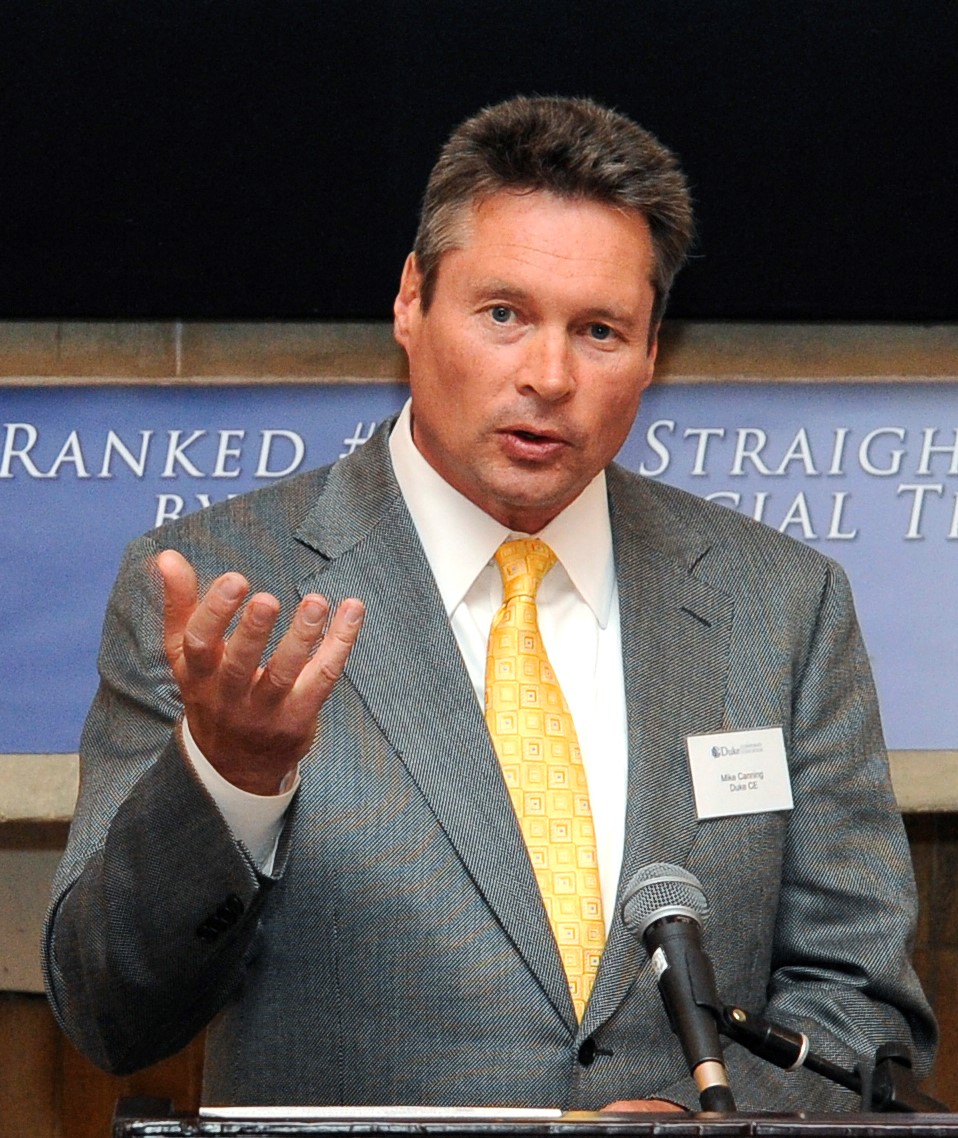
    Michael Canning is the Global Head of New Commercial Models at Duke Corporate Education, the only custom executive education provider to be ranked in the top three for 18 years according to the Financial Times. He has collaborated with design thinking expert Justin Ferrell and others at Duke Corporate Education in launching design thinking offerings.

    Leave A Reply Cancel Reply

    Related Posts

    FedEx trains 4,40,000 employees in AI skills

    March 24, 2026

    AI and job loss: Why HR leaders must prepare for a smaller workforce

    February 26, 2026

    From 20 to 200: The leadership shifts that let you scale without stalling

    January 15, 2026

    Why positive mood now matters more than pay at work: PwC

    January 7, 2026
    Editorial

    Why great ‘Number Twos’ rarely become ‘Number One’

    The pattern is familiar enough that it no longer surprises. A senior leader exits. The…

    The problem isn’t HR. It’s how managers are measured

    The image circulated widely: a professional working from a parked car, laptop balanced precariously, joining…

    EDITOR'S PICKS

    The Leela’s 15-month bet on building future general managers

    May 12, 2026

    Upward conversations: When learning flows upward

    May 12, 2026

    POV: Do office mandates build culture or resentment?

    May 11, 2026

    Why great ‘Number Twos’ rarely become ‘Number One’

    May 10, 2026
    Latest Post

    Karnataka Government raises DA to 15.75%

    News May 12, 2026

    Karnataka government employees and pensioners will receive a higher dearness allowance (DA) after the state…

    SBI workforce reaches 5-year high after hiring nearly 9,000 employees in FY26

    News May 12, 2026

    State Bank of India (SBI) expanded its workforce to a five-year high in FY26 after…

    Starbucks cuts 61 technology jobs

    News May 12, 2026

    Starbucks has eliminated 61 corporate technology roles at its Seattle headquarters as the coffee chain…

    GM cuts hundreds of IT jobs while expanding AI and autonomous hiring

    News May 12, 2026

    General Motors (GM) has started laying off hundreds of salaried employees within its information technology…

    Asia's No.1 HR Platform

    Facebook X (Twitter) Instagram LinkedIn WhatsApp Bluesky
    • Our Story
    • Partner with us
    • Career
    • Reach Us
    • Exclusive Features
    • Cover Story
    • Editorial
    • Dive into the Future of Work: Download HRForecast 2024 Now!
    © 2026 HRKatha.com
    • Disclaimer
    • Refunds & Cancellation Policy
    • Terms of Service

    Type above and press Enter to search. Press Esc to cancel.