


HR is at the epicentre of the changes that are sweeping across the business environment, globally.
Year 2015 is witnessing an altogether new workplace— multigenerational and diverse! The way we do business has been transformed in the last decade, thanks to the new war for talent, the rapidly evolving technology innovations and the evolution of new strategic talent solutions. And what is more – this change is expected to continue for the next few years!
All of these factors have significantly altered the relationship, interaction and engagement between the employer and the workforce. Finally, the role of HR seems to have grown from that of mere executioner to a more strategic one. As Moorthy K Uppaluri, MD and CEO, Randstad India, says, “We are observing a constantly changing business environment, with globalisation, and an evolving talent and regulatory landscape, both in the demand and supply side, where HR is at the epicentre of these changes. India is a human resource powerhouse and this makes the role of HR in our country even more critical.”
The road ahead is not a smooth one, though.
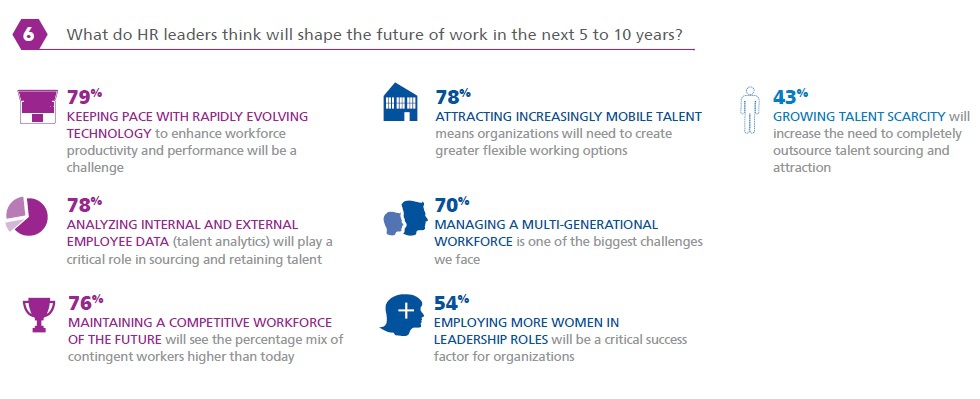
The Randstad Talent Trends Report, sought the opinions and feedback of 350 HR and talent acquisition leaders across the country. Around 70 per cent of the HR leaders opine that managing a multigenerational workforce is one of the biggest challenges that organisations face today.
Quite likely! Given the fact that it is for the first time in the corporate history that four generations – generation X, baby boomers, millennials and generation Z – are now to be part of the same workforce. Though, it makes an interesting yet lethal combination of youthfulness, energy, experience and vibrancy, it also remains a daunting task to keep them together as a cohesive team.

What’s even more interesting is that millennials are now taking up senior and leadership roles. So, they will get the opportunity to bring about a cultural change in a more assertive way. This leads to a situation wherein organisations need to adopt a tactical shift in how they attract, engage and manage employees.
Specific strategies geared towards different generations are needed to optimise organisational cohesion.
Today, a high-performing, inclusive workforce is all about having the right people in the right roles at the right time — regardless of age, gender, race, physical disability, ethnicity and sexual orientation. Around 54 per cent of HR leaders interviewed by Randstad think that more women in leadership will be a critical success factor for organisations. This implies the change in the basic thought process of organisations in the country.
Another significant change that has happened is that organisations have become more open and flexible. Be it the openness to accept contractual employees as part of the team or the flexibility in terms of culture where people are allowed to work from remote locations.
For instance, a leading IT major with a workforce of 1.5 lakh employees, has over 15 per cent of its staff working on a contractual basis. Companies have realised that the desirable talent will not necessarily be a permanent employee. On the other hand, many talented workers are opting to call the shots by becoming independent contractors — a trend that complements the desire of employers who want a more agile workforce.
 As per the Indian Staffing Federation (ISF), there are about 1.7 million flexi workers in India, and the trend is on an upward growth trajectory.
Besides, it drives cost savings and increases efficiency. SMBs as well as large businesses from the retail, telecom, hospitality, pharma and manufacturing sectors have all accepted the new norm.
The survey reveals that 47 per cent of HR leaders factor in independent contractors as part of their talent acquisition strategy and 78 per cent of them agree that organisations will need to create greater flexible working options. Variable work hours, job-sharing, or working from home are the options that will attract the increasingly mobile workforce.
The growth of technology has played a great role in bringing in this conviction. With the proliferation of mobile, video and desktop virtualisation technologies, it is becoming far easier to hire remote staff, comfortable working out of their own spaces and using multiple devices to access enterprise data.
While technology has been helpful, it has also emerged as the biggest challenge for the HR fraternity. Around 79 per cent of the respondents opine that keeping pace with rapidly evolving technology to enhance workforce productivity and performance will be a challenge.
In terms of shortage and demand of talents, organisations are increasingly looking for knowledge workers and leaders than skilled workers, both for the short and long terms. When asked about the category of workers their respective companies would need in the next five years, 45 per cent and 35 per cent of respondents said leaders and knowledge workers, respectively. Only 3 per cent of the respondents felt the need for skilled trade workers.
Even for the short-term plan – which is 12 months – 59 per cent and 52 per cent of the respondents felt there would be more demand for knowledge workers and leaders over 17 per cent skilled trade workers.
2 Comments
Admittedly, HR structures suffer because of technology lag and personnel structure. I agree that more women should join corporate ranks, creating diverse applicant pools and ultimately work environments. Great read!
Very informative