



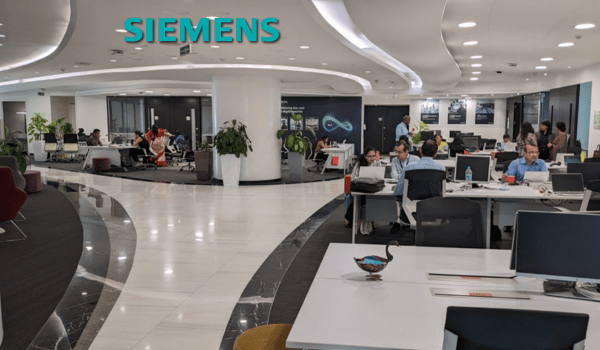
In today’s rapidly-evolving global landscape, the significance of diversity and inclusion within the workplace cannot be overstated. By embracing and cultivating a diverse and inclusive workforce, companies unlock a multitude of benefits, ranging from heightened innovation and creativity to improved decision-making. Following the same footsteps, Siemens, a global powerhouse in technology and engineering, introduced a series of programmes targeted to increase this DE&I approach globally, under ‘The Four-lever Approach.’
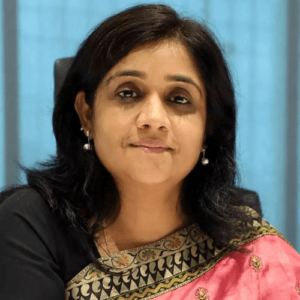
Talking about the initiative, Shilpa Kabra Maheshwari, EVP and country head, (people & organisation-HR), Siemens India, shares that Siemens has been discussing the importance of diversity and inclusion for quite some time, even before it became a significant trend in the industry. Although it was focused on hiring more women and creating an environment where they felt comfortable, it soon realised that these initiatives were not having the desired impact. “We were early adopters of providing a seven-month maternity leave to our female employees, and we also implemented programmes such as ‘return to work’ and ‘career support’. Despite all these measures, three years ago, we decided to reassess our approach, recognising that diversity and inclusion should not just be seen as a business case, but rather, examined as a fundamental aspect.”

Maheshwari elaborates how the company realised the need to go beyond traditional approaches to diversity. It recognised that diversity should extend beyond gender and include other communities based on ability, generation and society. The company established four key tenets: gender balance, LGBTQ+ inclusion, ability (for individuals with disabilities or special needs), and engagement with a wider society. It understood the importance of embracing marginalised communities and leveraging their contributions.
“We were early adopters of providing a seven-month maternity leave to our female employees, and we also implemented programmes such as ‘return to work’ and ‘career support’. Despite all these measures, three years ago, we decided to reassess our approach, recognising that diversity and inclusion should not just be seen as a business case, but rather, examined as a fundamental aspect.”
Shilpa Kabra Maheshwari, EVP and country head, (people & organisation-HR), Siemens India
However, since the company operates globally, running such initiatives smoothly becomes far more complicated. Hence, Siemens uses two easy ways to ensure that its four-lever approach is implemented across different departments and levels within the organisation.
First, at the country level, leadership plays a vital role in driving the initiatives. The commitment and support from the top leadership create the necessary momentum and action. Second, there are common policies, practices and initiatives that are standardised throughout the organisation, regardless of the location or business unit.
Additionally, the company also believes in setting targets and measuring outcomes. For instance, the company has defined targets for increasing the representation of women in the workforce and in management positions. These commitments are supported by a dedicated core team, including a chief diversity officer and a diversity and inclusion (DI) council, responsible for governing, driving, measuring and monitoring the initiatives.
The core team collaborates with business leaders to align the central programme with the unique priorities of each unit. This flexibility allows for the development of initiatives that work best for individual business units, fostering a sense of ownership and engagement. Examples of these initiatives include women’s development programmes, promoting campus hiring of women, and implementing specialised programmes and facilities to support diverse employees, such as exercise programmes for women or specific leave policies.
However, just introducing and implementing programmes isn’t enough for progress. Data and results are a must. Hence, Siemens uses several indicators to measure the success of its diversity and inclusion approach.
First, it tracks the gender balance in campus hiring, aiming for a 50:50 gender ratio. Siemens has consistently surpassed the 40 per cent mark in the past two years, with a goal of reaching 50 per cent. Additionally, the company has achieved 15 per cent women amongst all new hires at the lateral level. This exceeds the market average in the industrial sector. They also track the representation of women in management positions, aiming to increase their presence in these roles.
Additionally, Siemens has also implemented initiatives to promote diversity and inclusion for the LGBTQ+ community. It has employee-resource groups and has recently hired two trans people, demonstrating its commitment to hiring from different communities.
Regarding the specific percentage increase in gender diversity since the implementation of the Gender Equity programme or Reboot 2.0, the company is approaching a 50 per cent gender balance in campus hiring, a substantial increase from around 35 per cent three years ago. Lateral hiring in the tech sector has reached 35 per cent for women, and in non-tech areas — such as industrial and support functions — it stands at 15 per cent. Siemens continues to track these metrics and set goals for further improvement in the coming years.
Siemens encourages and supports employees to embrace diverse perspectives and contribute to a culture of inclusivity through various initiatives and practices.
Speak up: First, it promotes a ‘speak-up’ culture, where employees are encouraged to bring their authentic selves to work and enjoy the right to voice their opinions and needs. Leadership is accessible and there are no hierarchies or closed doors, allowing anyone to reach out and communicate freely.
Empowerment: Second, Siemens adopts a collaborative and bottom-up approach, creating a ‘pull effect’ rather than dictating or pushing the diversity agenda. Business units are empowered to lead initiatives related to events such as International Women’s Day and Pride Day, fostering a sense of ownership and informal competition. This approach increases awareness, appreciation and acceleration of diversity efforts within the organisation.
Focus on skills & ability: On the hiring front, Siemens has moved beyond hiring from traditional competitors and is now focused on skills, learning ability and agility to deliver. Having recognised the importance of diversity beyond regional boundaries, it has a workforce comprising 18 nationalities in India alone. It also strives to overcome unconscious biases, such as the perception that it’s difficult to hire women for project roles due to safety concerns, by sensitising managers and giving individuals the choice to take on such positions.
Fair compensation: Siemens follows an inclusive and fair ‘pay for position’ compensation philosophy. Compensation is based on the role’s positioning within the organisation, rather than solely on the number of years of experience. This approach ensures that individuals selected for a position are compensated based on their abilities and performance, irrespective of their experience level.
The company also maintains pay parity between men and women in Siemens India and continuously reviews and tracks metrics related to gender pay equality. It conducts thorough reviews during hiring processes, particularly for critical or key positions, to ensure equal pay and eliminate discrimination.
DE&I culture: Overall, Siemens employs a range of strategies and practices to promote diversity, inclusion and equality. These efforts aim to cultivate a culture where employees feel valued, empowered and appreciated for their diverse perspectives and contributions. “Our creche is open to both men and women. Till four years ago, it was only open to women. Then we realised that for us inclusion means people, as individuals, remain what or who they are. They should feel that they belong here, irrespective of gender. Therefore, we’re trying everything possible to be inclusive as well as diverse,” opines Maheshwari.
Employee engagement: All these efforts have not only driven high engagement within the organisation, but have also improved overall retention. For instance, the company focuses on two aspects while measuring employee engagement — the willingness of employees to stay with the company and their recommendation of Siemens to others. “While we don’t have an overall engagement score, these two indicators provide valuable insights. In terms of specific questions, one example is the question regarding whether the organisation protects people from discrimination, which has received a score of over 90 per cent,” reveals Maheshwari.
She further shares, “We have observed a consistent positive trend in the core questions related to employee engagement, such as belongingness, inclusion, respect and well-being, with scores surpassing 80 per cent. Additionally, the statement ‘I can be myself at work’ has scored high with 89 per cent, and ‘I feel a sense of belonging at Siemens’, has scored over 82 per cent. The majority of employees, 85 per cent, report not experiencing exclusion at work.”
“It is worth noting that our workforce comprises four generations, 18 nationalities and diverse groups within Siemens, contributing to a multi-generational and multicultural environment,” points out Maheshwari.
Reverse mentoring: Siemens values diversity in various forms, including not only gender and ethnicity but also diverse thinking styles. People are offered platforms to share their ideas, speak up, learn from mistakes, and even run a reverse mentoring programme — where experienced leaders learn from younger employees — particularly in areas such as technology and starting something new. The leaders and seniors actively seek input from the younger generations to understand their expectations and vision for the company’s future.
“We have four generations working side by side. Therefore, we’re a multi-generational workforce. Within Siemens also, we have multiple group companies where we sit side-by-side or collaborate on multiple projects. So, we are also diverse in terms of the kind of entities we work or associate with,” enunciates Maheshwari.
By embracing diversity from different angles, fostering collaboration, creating a culture of belongingness, and harnessing the strengths of the workforce, Siemens aims to cultivate an organisation with great energy that contributes to business growth and achieves high retention rates. “With over 92 per cent retention, Siemens outperforms the industrial sector average and demonstrates its commitment to an inclusive and successful workplace,” concludes Maheshwari.