


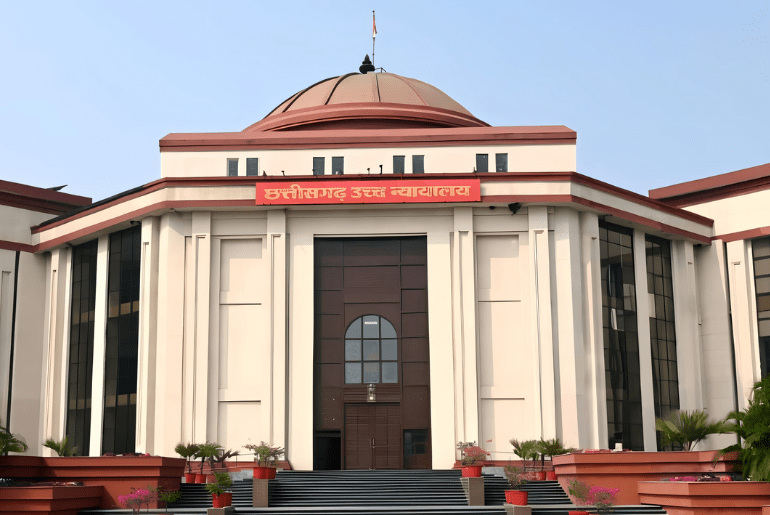
The Chhattisgarh High Court has ruled that government employees who voluntarily refuse promotions cannot seek time-bound financial upgradation under the Assured Career Progression (ACP) Scheme. The HC held that the scheme is designed to relieve hardship from genuine career stagnation, not to compensate employees who opt out of advancement.
According to the bench, the ACP framework, rooted in the OM dated 9 August, 1999, provides monetary upgradation only when an employee completes 12 and 24 years of service without a regular promotion. It was introduced as a “safety net” for staff facing inadequate promotional opportunities, the judges noted. That rationale does not extend to situations where promotions are offered but declined.
The Court highlighted that refusal of higher posts often stems from a desire to continue at a preferred location, which can create administrative gaps in manning senior positions. Such self-imposed stagnation, it said, does not qualify as the kind of hardship the scheme seeks to remedy.
The decision echoes the Supreme Court’s view in Union of India v. Manju Arora 2022 SCC OnLine SC 6. In that case, the apex court observed that employees who turn down multiple promotion offers “of their own volition” cannot claim ACP benefits, since the issue is not absence of opportunity.
Reinforcing the principle, the High Court clarified that financial upgradation is conditional, not automatic. It applies only when an employee is willing to move up but is denied the chance. When career growth is consciously refused, the employee is deemed not stagnating, and therefore, ineligible for the scheme’s relief.
