

Close Menu
    Facebook X (Twitter) Instagram
    • Our Story
    • Partner with us
    • Reach Us
    • Career
    Subscribe Newsletter
    HR KathaHR Katha
    • Exclusive
      • Exclusive Features
      • Perspectives
      • Friday Features
      • herSTORY
      • Rising Stars
      • Case-In-Point
      • Point Of View
      • Research
      • HR Pops
      • Dialogue
      • Movement
      • Profile
      • Beyond Work
      • By Invitation
    • News
      • Global HR News
      • Compensation & Benefits
      • Diversity
      • Events
      • Gen Y
      • Hiring & Firing
      • HR & Labour Laws
      • Learning & Development
      • Merger & Acquisition
      • Performance Management & Productivity
      • Talent Management
      • Tools & Technology
      • Work-Life Balance
    • Special
      • HR Forecast 2026
      • Cover Story
      • Editorial
      • HR Forecast 2024
      • HR Forecast 2023
      • HR Forecast 2022
      • HR Forecast 2021
      • HR Forecast 2020
      • HR Forecast 2019
      • New Age Learning
      • Coaching and Training
      • Learn-Engage-Transform
    • Magazine
    • Reports
      • Whitepaper
        • HR Forecast 2024 e-mag
        • Future-proofing Manufacturing Through Digital Transformation
        • Employee Healthcare & Wellness Benefits: A Guide for Indian MSMEs
        • Build a Future Ready Organisation For The Road Ahead
        • Employee Experience Strategy
        • HRKatha 2019 Forecast
        • Decoding and Driving Employee Engagement
        • One Platform, Infinite Possibilities
      • Survey Reports
        • Happiness at Work
        • Upskilling for Jobs of the Future
        • The Labour Code 2020
    • Conferences
      • Leadership Summit 2025
      • Rising Star Leadership Awards
      • HRKatha Futurecast
      • Automation.NXT
      • The Great HR Debate
    WhatsApp LinkedIn X (Twitter) Facebook Instagram
    HR KathaHR Katha
    Home»Exclusive Features»Point Of View»Does an open office always translate into an open culture?
    Point Of View

    Does an open office always translate into an open culture?

    mmBy Lipi Agrawal | HRKathaNovember 3, 2017Updated:January 31, 20194 Mins Read101067 Views
    Share LinkedIn Twitter Facebook WhatsApp
    Designed by ijeab / Freepik
    Share
    LinkedIn Twitter Facebook WhatsApp

    While it may facilitate an open culture, it may not guarantee one.

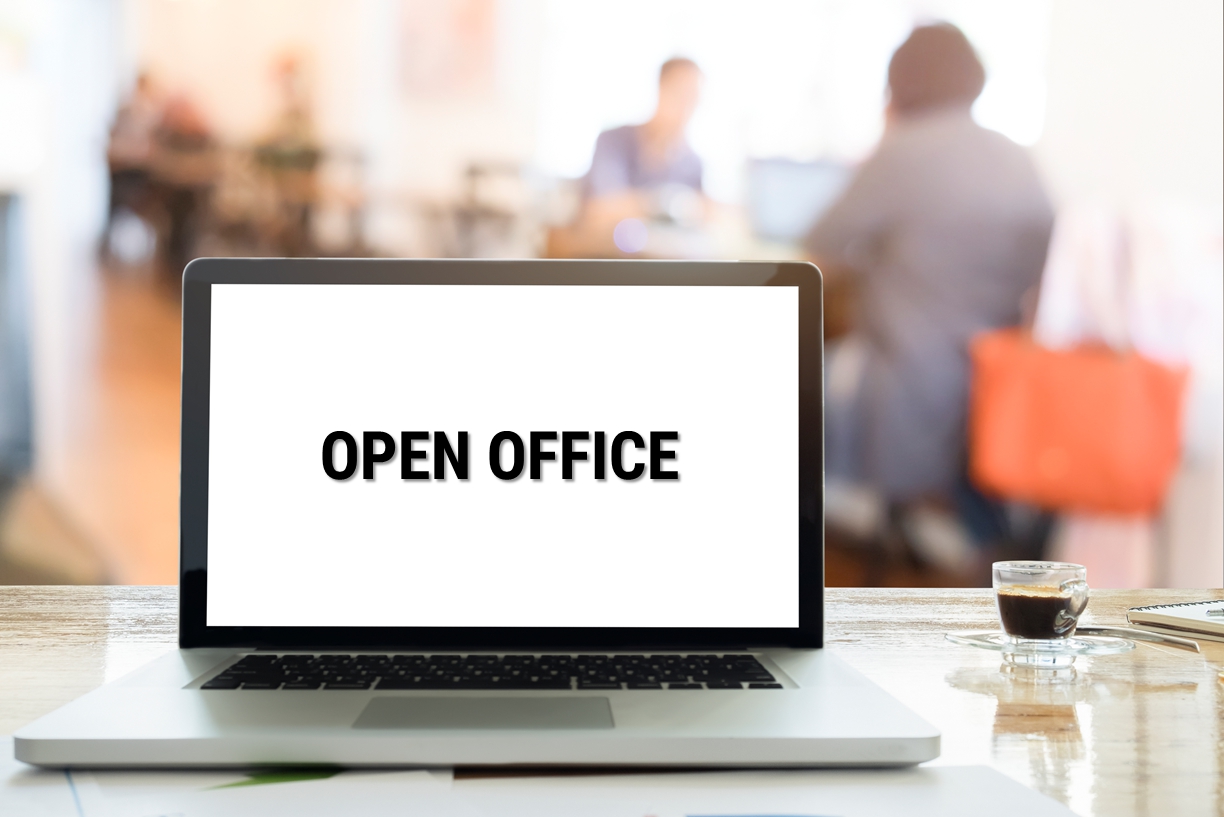
    Many organisations these days are opting for modern-looking open office designs, that promise a more collaborative and open work environment. However, people have, at times, raised concerns about distractions at work and lack of privacy that tag along with an open workspace. At the same time, there are benefits, such as easy and quick inter and intra team interactions. But, whether an open office design necessarily translates into an open working culture, is still a question.

    Here’s what the experts have to say—

    Rohit Kumar, HR director (CHRO), Kellogg India

    The open office concept has to be complemented with a change in mindset of the leadership. 

    The office layout can be a great enabler in reinforcing the organisation’s culture. With companies becoming less hierarchical and more informal, office design should reflect this new-age reality. The smell of the workplace and the energy that’s palpable within has a lot to do with the way its layout has been designed. The open office concept enables more collaboration and engagement across functions and hierarchies. However, this has to be complemented with a change in mindset of the leadership. There is sure to be dissonance and resistance to change if the leadership is not at ease with the reality of the new world being created.

    With more and more organisations breaking down the barriers of cabins and walls, care has to be taken to incorporate abundant collaborative spaces, ample meeting rooms, and easy access to phone booths and private meeting space to carry out sensitive conversations. If not carefully designed, the open office can actually lead to intrusion of privacy and become a hindrance when an employee needs uninterrupted quiet time to work on critical work proposals.

    Manish Kumar, head-HR and learning & development, Ricoh India

    Open Office can only make a difference along with a top-to-bottom approach.

    Open offices have become quite common nowadays owing to the fact that a large part of the working population constitutes millennials, who prefer workplaces with an open culture. In fact, even before joining an organisation, millennials are concerned about the company’s culture. An organisation that lacks an open culture is sure to lose out on young talent.

    While an open work culture is extremely important these days, an open office design does not necessarily indicate an organisation has an open culture. Although an open office is an effective enabler for an open culture, it does not guarantee one. It is just one of the ingredients and can only make a difference along with a top-to-bottom approach, where the senior leadership, including the MD, makes efforts to build a culture of openness. The top management’s conviction is crucial to ensuring an open work culture.

    Compared to the traditional workplace design, which doesn’t even allow employees to see each other’s faces properly, the modern open workspaces are devoid of most physical barriers, allowing enhanced approachability. Open offices allow better verbal and non-verbal communication at the workplace.

    Saurabh Nigam, vice president, human capital, Omidyar Network

    It is ultimately the leaders’ responsibility to create and maintain an open and vibrant culture.

    I am a big advocate of open workspaces, but to say that it always translates into an open work culture would not be fair, because that’s not true. An open workspace is better for various economic and behavioural reasons. Open offices are aesthetically better as they are brightly lit and tastefully decorated, with people around providing the area a dense and active looking environment.

    Such a workspace is also better in terms of providing easy access and communication, making it a more connected workplace. It certainly brings in a lot of positivity and liveliness into the work environment.

    Despite these benefits, an open workspace design only facilitates an open culture but doesn’t really ensure one. There are other factors that are equally important. An open culture is very much dependent on the leaders in an organisation—their mindset and the general work culture. Whether the leaders or managers are open and appreciative of people asking questions or offering honest feedback, makes a big difference in maintaining or not maintaining an open culture.

    It is more a matter of the mentality of the office rather than its design. It is ultimately the leaders’ responsibility to create and maintain an open and vibrant culture.

    Open Culture Open office
    Share. LinkedIn Twitter Facebook WhatsApp
    mm
    Lipi Agrawal | HRKatha

    On days less busy, Lipi enjoys being a foodie, poet and an explorer. Add to that her experience as a journalist who covered the HR beat for seven years and you know her grasp on content is firm as well.

    Leave A Reply Cancel Reply

    Related Posts

    POV: Is the “passion for work” expectation exploitative or inspirational?

    August 31, 2026

    POV: Should AI fluency determine career growth?

    August 24, 2026

    POV: Is learning becoming the new employer brand?

    August 17, 2026

    POV: Should HR have veto power over business decisions?

    August 10, 2026
    zoha
    Editorial

    Employees are redesigning work before their companies do

    Nobody announced that work would change this way. There was no strategy document, pilot programme…

    “My door is always open” is an expensive sentence in leadership

    Walk into almost any organisation and you will hear some version of it. In town…

    EDITOR'S PICKS

    The career lessons hiding in unfamiliar territory

    September 4, 2026

    Case-in-Point: The pregnancy disclosure dilemma

    September 3, 2026

    herSTORY: Sejal Haribhakti Mody, CHRO, Akasa Air

    September 3, 2026

    59% of employees are financially stressed. Most HR dashboards cannot see it

    September 2, 2026
    Latest Post

    The career lessons hiding in unfamiliar territory

    Friday Features September 4, 2026

    There is a question that arrives, quietly and reliably, whenever an interesting opportunity appears. The…

    Why PayPal has cut 220 jobs in India 

    Layoff September 4, 2026

    PayPal has carried out job cuts in India as part of its global restructuring plan.…

    India’s nuclear expansion faces talent crunch; country targets 100 GW capacity by 2047

    News September 4, 2026

    India’s ambitious plan to expand its nuclear power capacity to 100 GW by 2047 could…

    Jharkhand HC orders retrospective regularisation of tourism corp employee

    News September 4, 2026

    The Jharkhand High Court has directed the Jharkhand Tourism Development Corporation (JTDC) to regularise the…

    Asia's No.1 HR Platform

    Facebook X (Twitter) Instagram LinkedIn WhatsApp Bluesky
    • Our Story
    • Partner with us
    • Career
    • Reach Us
    • Exclusive Features
    • Cover Story
    • Editorial
    • Dive into the Future of Work: Download HRForecast 2024 Now!
    © 2026 HRKatha.com
    • Disclaimer
    • Refunds & Cancellation Policy
    • Terms of Service

    Type above and press Enter to search. Press Esc to cancel.