

Close Menu
    Facebook X (Twitter) Instagram
    • Our Story
    • Partner with us
    • Reach Us
    • Career
    Subscribe Newsletter
    HR KathaHR Katha
    • Exclusive
      • Exclusive Features
      • Perspectives
      • Friday Features
      • herSTORY
      • Case-In-Point
      • Point Of View
      • Research
      • HR Pops
      • Dialogue
      • Movement
      • Profile
      • Beyond Work
      • Rising Star
      • By Invitation
    • News
      • Global HR News
      • Compensation & Benefits
      • Diversity
      • Events
      • Gen Y
      • Hiring & Firing
      • HR & Labour Laws
      • Learning & Development
      • Merger & Acquisition
      • Performance Management & Productivity
      • Talent Management
      • Tools & Technology
      • Work-Life Balance
    • Special
      • HR Forecast 2026
      • Cover Story
      • Editorial
      • HR Forecast 2024
      • HR Forecast 2023
      • HR Forecast 2022
      • HR Forecast 2021
      • HR Forecast 2020
      • HR Forecast 2019
      • New Age Learning
      • Coaching and Training
      • Learn-Engage-Transform
    • Magazine
    • Reports
      • Whitepaper
        • HR Forecast 2024 e-mag
        • Future-proofing Manufacturing Through Digital Transformation
        • Employee Healthcare & Wellness Benefits: A Guide for Indian MSMEs
        • Build a Future Ready Organisation For The Road Ahead
        • Employee Experience Strategy
        • HRKatha 2019 Forecast
        • Decoding and Driving Employee Engagement
        • One Platform, Infinite Possibilities
      • Survey Reports
        • Happiness at Work
        • Upskilling for Jobs of the Future
        • The Labour Code 2020
    • Conferences
      • Leadership Summit 2025
      • Rising Star Leadership Awards
      • HRKatha Futurecast
      • Automation.NXT
      • The Great HR Debate
    • HR Jobs
    WhatsApp LinkedIn X (Twitter) Facebook Instagram
    HR KathaHR Katha
    zoha
    Home»Diversity Equity & Inclusion»How work-from-home is fighting ableism
    Diversity Equity & Inclusion

    How work-from-home is fighting ableism

    Mahima Sharma | HRKathaBy Mahima Sharma | HRKathaSeptember 22, 2020Updated:September 22, 20204 Mins Read16749 Views
    Share LinkedIn Twitter Facebook WhatsApp
    Share
    LinkedIn Twitter Facebook WhatsApp

    Teen Vogue, an American online publication, interviewed people on the concept of remote working. One employee diagnosed with rheumatoid arthritis claimed that the WFH have been ‘relieving’, as it lets them perform tasks while taking care of their health. Another expressed that offices that had earlier denied them entry into their office spaces because of their ‘supposed defects’ of not fulfilling the eligibility criteria of a ‘must-have driver’s license’, are now actively admitting differently-abled people, in turn, enabling them to do three part-time jobs!

    The new normal, the highlight of which is the ‘work-from-home’ arrangement, has been a blessing for this particular section. Members of this section or group have welcomed remote working with open arms and a big sigh of relief. Yes, we are talking about people with disabilities.

    zoha

    Many accounts of differently-abled people have come out, expressing pain as well as relief towards the ‘new normal’. These accounts also pose a question. Why did it take a pandemic for corporates to realise that remote working can prove to be a reasonable accommodation for the differently-abled or chronically ill? While it is understandable that working from office may increase productivity by a large margin, it may also end up enabling workplace ableism, which affects a large population of the world. Options, such as remote working, that accommodate not just able-bodied people, but also differently-abled people, equally, are crucial and consequential to the increased productivity, inclusion, and success of companies.

    Workplace ableism is a reality, and surely not an unknown. Briefly described, ableism refers to targeted discrimination and social prejudice against people with disabilities, grounded in the belief that sees non-disabled people as ‘superior’, or ‘normal’. According to a report produced by the National Statistical Office (NSO) in 2018, approx. 2.2 per cent of the Indian population suffers from a disability. Given this number, it becomes imperative to look at how ableism manifests in one of the most crucial areas, the workplace.

    Work-from-home or WFH is a reality that has long been denied by workplaces as it is believed to hamper fair working conditions, proving to be detrimental to the culture of corporate professionalism. Interestingly, as pointed out by many critics, these drastic social changes have come forth as a means to accommodate able-bodied people and maintain their productivity in times of the virus. This stands contrary to what has long been the narrative about an ideal worker and archetypal work conditions. However, this new policy of work from home has proved to be fruitful to people who suffer from visible or invisible disabilities.

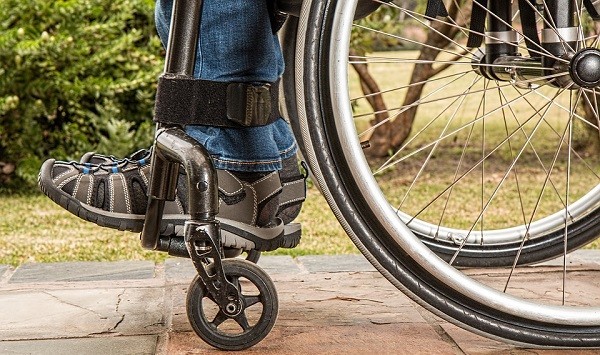
    Increased use of digital tools, such as Google Meet, Zoom and Microsoft Teams, has definitely made it easier for people with disabilities to work from the comfort of their homes, without being subjected to environmental ableism time and again. People who seek the support of wheelchairs while commuting to work have found relief in this new mode of working, as they are able to do the same tasks from home more efficiently. Those with mental illnesses are now able to control and be mindful of their surroundings and themselves, without the fear of external judgment and performance anxiety impeding their productivity.

    How ableism manifests at work

    The onset of COVID-19 has considerably changed the very way reality is perceived. With more and more corporates facilitating work-from-home policies, the notion of productivity and ideal working conditions are being redefined. Not just offices, but schools and colleges have also shifted to the new form of remote learning ever since the pandemic hit the world.

    In some work cultures, the notion of success is believed to be a product of extreme physical and mental labour. This notion sometimes lays down expectations from the employees to be able to work for long hours or sit in the same place without batting an eyelid. So much so, that disabled people are sometimes viewed as being ‘deficient’, as they would fail the set criteria of an ‘ideal’ or a ‘normal candidate’: one who can slog for long hours at a stretch, without displaying any signs of lethargy. Such expectations may translate into becoming trigger points for people dealing with chronic back problems or mental issues, such as bipolar disorder, that may not be noticeable at first. In this manner, many corporates consciously or unconsciously end up excluding many skilled candidates. Such bindings may lead to stigmatisation of disabilities, further discouraging differently-abled people from accessing professional opportunities and availing their basic right to work.

    zoha
    able bodied ableism disabled inclusion person with disability
    Share. LinkedIn Twitter Facebook WhatsApp
    Mahima Sharma | HRKatha

    Leave A Reply Cancel Reply

    Related Posts

    POV: Should organisations move beyond hiring diversity to truly measuring inclusion?

    April 27, 2026

    The career moves no one planned (but everyone remembers)

    April 24, 2026

    Case-in-Point: Merit vs retention risk

    April 23, 2026

    herSTORY: Maria Rajesh, CHRO, Embassy Developments

    April 23, 2026
    Editorial

    The reference economy: When hiring decisions are made before interviews begin

    Somewhere between the job posting and the final interview, the real hiring decision has already…

    When “zero tolerance” tolerates for four years

    On April 12th, 2026, Tata Consultancy Services issued a statement about allegations from its Nashik…

    EDITOR'S PICKS

    The reference economy: When hiring decisions are made before interviews begin

    April 27, 2026

    POV: Should organisations move beyond hiring diversity to truly measuring inclusion?

    April 27, 2026

    The career moves no one planned (but everyone remembers)

    April 24, 2026

    Case-in-Point: Merit vs retention risk

    April 23, 2026
    Latest Post

    Infosys approves fresh stock incentives for employees; CEO in focus

    News April 27, 2026

    Infosys has cleared a new round of stock-based rewards for its employees, highlighting its continued…

    Unilever appoints Faraz Zaidi as head-HR, global customer operations

    Movement April 27, 2026

    Unilever has appointed Faraz Zaidi as head-HR for global customer operations, reinforcing its focus on…

    Maharashtra plans study group to address IT workforce concerns

    Movement April 27, 2026

    Authorities in Maharashtra are set to establish a dedicated study group to examine workforce-related concerns…

    Cholamandalam MS General Insurance appoints Parthasarathi V as head-HRBP

    Movement April 27, 2026

    Cholamandalam MS General Insurance has appointed Parthasarathi V as head-HR business partner, strengthening its leadership…

    Asia's No.1 HR Platform

    Facebook X (Twitter) Instagram LinkedIn WhatsApp Bluesky
    • Our Story
    • Partner with us
    • Career
    • Reach Us
    • Exclusive Features
    • Cover Story
    • Editorial
    • Dive into the Future of Work: Download HRForecast 2024 Now!
    © 2026 HRKatha.com
    • Disclaimer
    • Refunds & Cancellation Policy
    • Terms of Service

    Type above and press Enter to search. Press Esc to cancel.