



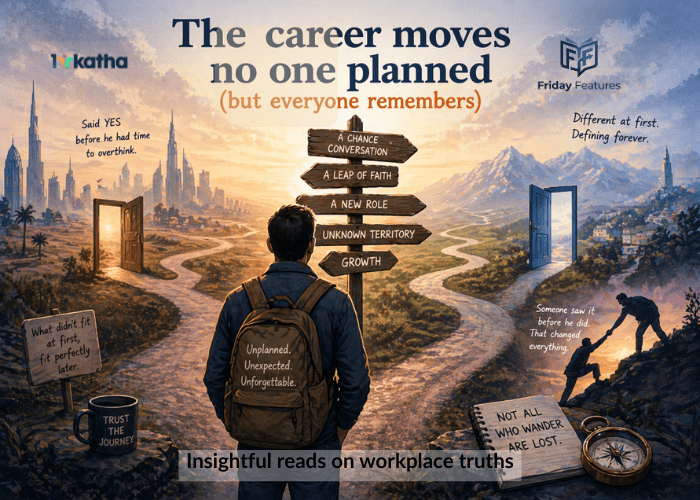
Some careers look beautifully planned — a straight road stretching confidently into the future.
And then there are the real ones.
The ones that zig, zag, pause, and occasionally take a turn that wasn’t even on the map. Not because something went wrong, but because something unexpected went right.
This Friday, three HR leaders look back at the moves they didn’t plan — and couldn’t have. The roles that didn’t quite fit. The conversations that led somewhere. The opportunities that only made sense in hindsight.
The kind of stories people keep going back to, long after the job title has changed.
When you stop planning, things start happening
Nihar Ghosh, Former CHRO, Emami
The most defining moments of Nihar Ghosh’s career didn’t come from a plan. They came from saying yes before he had time to overthink.
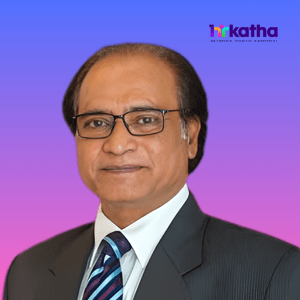
One such moment arrived early. At 34, he was told he’d be heading a significant assignment at Johnsons & Johnsons India. It didn’t align with his expectations. Honestly, it didn’t even feel real at first. His immediate reaction was disbelief — surely this was a mistake.
It wasn’t.
What followed was less a carefully charted career and more a series of bold, almost impulsive decisions. Moving across industries without prior experience. Stepping into roles that demanded more than he’d done before. Learning on the go — not because he had mastered everything, but because he was willing to try.
Over time, he stopped seeing his career as something to control and started seeing it as something to respond to.
What made it work wasn’t just courage. It was honesty. The ability to admit when he didn’t know something. To ask for help without hesitation. To trust that figuring it out was part of the process.
Looking back, his career reads less like a strategy and more like a series of well-lived moments.
What to carry forward: Don’t reject an opportunity just because it doesn’t match the plan. Sometimes the unplanned ones know you better.
The move that changed everything — even the daily commute
Raj Narayan, Former CHRO, Titan & Co-Founder & Lead Mentor, The CrossMentors
For Raj Narayan, the “accidental” moment didn’t come with a big announcement. It started quietly, at a conference in Düsseldorf.
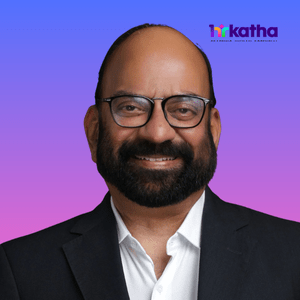
Somewhere between presentations and a casual dinner conversation, a role came up — one that had nothing to do with what he’d been doing. A global leadership development role. Specialised. Focused. And completely outside his comfort zone.
He had always seen himself as an HR generalist. This felt like stepping into a different identity entirely.
But something about it stayed with him long enough to say yes.
That one decision didn’t just change his job. It changed his life.
Moving to Germany meant starting over in many ways. A new culture, a new language, a different way of working. Even the small things shifted — from having a car and driver to figuring out public transport. Everything felt unfamiliar. And yet, slowly, it began to feel possible.
In learning how to design and deliver leadership programmes, he re-learned how to lead. In navigating a new country, he discovered a level of independence he didn’t know he had.
Growth didn’t come in increments. It came all at once.
The shift in mindset was simple: he stopped calling it “difficult” and started calling it “different.” That quiet reframing changed how he approached everything that followed.
“Before you decide something is too hard, ask if it’s just unfamiliar.”
What to carry forward: Sometimes a single word swap — from difficult to different — is all it takes to change how you show up.
When someone else sees it before you do
Pankaj Lochan, Former Group CHRO, Jindal Steel & Power
For Pankaj Lochan, the turning point came disguised as a responsibility he didn’t feel ready for.
Until then, his identity was clear — he was a manufacturing and operations professional, deeply rooted in systems, processes, and quality. Then came a role that didn’t quite fit that identity.

He was asked by Dr. Vinod Nowal to take on Site HR responsibilities at one of India’s largest steel plants, alongside his existing work in Total Quality Management. It was a significant shift — not just in function, but in mindset. People, culture, and human dynamics were now as important as systems and efficiency. And he had no formal background in HR.
It would have been easy to step back. To say this isn’t my space.
Instead, he stepped in — partly because the opportunity was there, and partly because someone he trusted believed he could do it.
That belief changed everything.
The transition wasn’t smooth. It came with its own learning curve and its own moments of doubt. But over time, something clicked. The combination of operational rigour and people understanding didn’t just make him better at HR — it made him a more complete leader. He began seeing problems from multiple angles. Balancing logic with empathy. Structure with flexibility.
What started as an uncomfortable detour became the foundation of everything that followed.
“When someone you trust sees potential in you, don’t rush to question it — try growing into it instead.”
What to carry forward: Confidence doesn’t always have to come from within first. Sometimes it begins with someone else’s belief in you.
The thread that runs through all three
None of these moves were planned. None of them felt obvious in the moment.
What they share is something quieter: the willingness to say yes to something unfamiliar, and the self-awareness to grow into it rather than wait until it felt safe.
Careers don’t always move in straight lines. And honestly, the ones that don’t are often the most interesting.
What’s the most “accidental” career move you’ve ever made?
The one that felt uncertain at the time — but turned out to be exactly right? Share in the comments.