




HRKatha’s Case-in-Point presents real-world HR dilemmas and invites leaders to weigh competing business and ethical choices.
Company: Orion Manufacturing (fictitious), a listed industrial conglomerate with 18,000 employees, operating across heavy engineering, infrastructure components and industrial automation in India and South-East Asia.
Background
Three years ago, the Board of Orion Manufacturing identified Vikram Nair, the company’s chief operating officer, as the successor to its outgoing CEO.
The decision was communicated directly. Vikram was told he was next in line and given expanded responsibilities to prepare for the position. He subsequently turned down two significant external offers, choosing to remain with Orion because he believed the CEO role was his to earn.
For three years, he had been preparing for it.
Six weeks ago, the Board’s composition changed with the induction of two independent directors experienced in technology and digital transformation. Their arrival prompted a reassessment of the capabilities Orion would need in its next CEO.
The new directors argued that the company’s next phase of growth would require stronger digital capabilities, including platform thinking, data-led operations and technology-enabled manufacturing. They began advocating an external search for someone with a proven record of leading digital transformation at scale.
No formal decision had been made. But an external search was now quietly underway alongside Vikram’s continued preparation.
Vikram knew nothing about it.
The CHRO knew both processes were active. She had been asked to support the external search while continuing Vikram’s leadership development programme. The Board had provided no guidance on what, if anything, should be communicated to him.
She now faced an uncomfortable responsibility: supporting a confidential process that could overturn an expectation the organisation itself had created.
The dilemma
Should the CHRO maintain confidentiality, recognising the Board’s authority to reconsider its succession plans and evaluate external candidates without disclosing every deliberation?
Or should she press the Board to inform Vikram that his succession status is being reconsidered, allowing him to make informed career decisions without revealing confidential details of the search?
And if neither approach is sufficient, should she recommend a formal assessment of the capabilities the Board now considers essential, giving Vikram an opportunity to demonstrate his readiness while the Board evaluates its options?
What’s really at stake
This is a question about what succession planning promises, and what organisations owe executives who make career decisions based on those promises.
Vikram was not merely considered a possible successor. He was explicitly identified as the next CEO and given responsibilities to prepare for the position. He declined external opportunities because he believed the organisation had committed to his progression.
Yet being identified as a successor is not the same as being guaranteed an appointment. Business priorities change, leadership requirements evolve, and Boards must retain the freedom to reconsider whether an internal candidate remains the best choice.
Orion’s new directors may have legitimate concerns. Digital transformation could require capabilities that Vikram has not yet demonstrated. The Board would be failing in its responsibility if it ignored those concerns simply to honour an earlier succession preference.
But the way that reconsideration is handled matters.
The CHRO is being asked to support an external search while continuing to develop Vikram for a role he may no longer be the preferred candidate to fill. She must protect confidential Board deliberations without misleading an executive whose expectations were created by the organisation.
There is also a distinction between confidentiality and silence. The Board need not disclose every candidate under consideration. But does that justify allowing Vikram to believe his succession remains settled when the Board itself is no longer certain?
For a listed company, the sensitivity is greater. Mishandled succession information can create uncertainty among employees, investors and other stakeholders. Premature disclosure carries risks, but so does allowing expectations to persist long after the underlying commitment has weakened.
The capability question complicates matters further. If digital transformation is now central to the CEO role, Vikram deserves to understand the expectations against which his readiness will be assessed. Whether he can meet them is a separate question.
The deeper dilemma is whether an organisation can legitimately change its succession plans without acknowledging that the expectations it created have changed.
We asked three HR leaders how they would approach this dilemma.
What HR leaders said
Aman Attree, senior HR leader
“Succession planning must be transparent in its intent, process and development approach if it is to build trust and ensure good governance. While confidentiality in lateral hiring and sensitive talent discussions is understandable, it should not come at the cost of clarity in internal talent development.
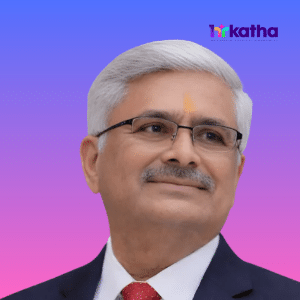
Transparency in how people are assessed, how gaps are addressed and how development opportunities are provided is essential to building a credible and fair succession process.
Organisations must distinguish between keeping sensitive hiring discussions confidential and maintaining transparency in talent development. Confidentiality may protect the decision-making process, but clarity around performance expectations, development opportunities and assessment criteria is essential to ensuring that succession planning remains fair and credible.”
Sanjeeb Lahiri, CHRO, GRP
“HR leaders must recognise that they have a responsibility to uphold a degree of professional integrity within the organisation, even when it is not explicitly part of their role. However, creating transparency in a situation such as this is primarily the responsibility of the Board or the leadership.

If the leadership has chosen to keep the external search confidential, HR cannot simply disclose that information to the internal candidate. Doing so would be unfair to the decision-making process and could prove professionally damaging for the HR leader.
This becomes even more complicated when the company is listed. Any leakage of confidential succession information into the market could create considerable uncertainty and disruption. Confidentiality is essential, and HR must respect the leadership’s prerogative.
That said, HR should not remain passive. If the HR leader believes the internal candidate has been overlooked despite having the potential to succeed, that concern can be raised with the leadership. The HR leader can advocate for a fair process and seek clarity on why the Board is considering an external candidate.
If the leadership remains convinced that an external appointment is necessary to address a capability gap, HR may, where authorised, help the internal candidate understand the possible implications for his career, discussing his development priorities and helping him evaluate his future within the organisation.
When the decision eventually becomes public, HR must step in to support the individual through coaching, counselling and appropriate career support.”
Pankaj Lochan, senior HR leader
“HR has a clear responsibility here, and the answer lies in transparency and performance management, not merely succession planning.

HR’s primary role is not to find a replacement but to assess and develop the capabilities of the person already identified for succession.
If the Board now believes the future CEO needs stronger digital transformation capabilities, the first step should be to clearly identify the competency gap between the incumbent COO and the desired CEO profile. Once identified, HR must create a structured development plan with clearly defined competencies, proficiency levels, development interventions and measurable milestones.
From here, two outcomes are possible. The COO successfully bridges the gaps and demonstrates readiness for the CEO role. Or, despite a fair opportunity and structured support, he is unable to achieve the required proficiency, and the decision to look externally becomes objective, transparent and defensible.
In either case, the organisation wins because the process is fair and the expectations are clear.
Keeping someone in the dark after encouraging them to shape their career around a succession promise is neither good HR nor good governance. It risks creating a demoralised leader, a damaged relationship and potentially an acrimonious exit.
The Board retains the prerogative to choose its CEO. But HR has the responsibility to ensure the internal candidate is assessed, developed and treated fairly. Succession planning is not about choosing between internal and external talent. It is about identifying future capability requirements, objectively evaluating the gaps, and giving internal talent a fair opportunity to bridge them.”
If you were the CHRO at Orion Manufacturing
Vikram has spent three years preparing for the CEO role and declined two external offers. The Board is now considering other candidates without his knowledge, while you have been asked to support both processes.
What would you do?
- Maintain confidentiality, respecting the Board’s authority to evaluate alternatives and supporting Vikram once a decision is made?
- Urge the Board to authorise an honest conversation with Vikram about his changing succession status, without revealing confidential search details?
- Recommend a formal capability assessment and development opportunity for Vikram, ensuring his readiness is evaluated against the Board’s revised expectations?
Or is the bigger question this:
When an organisation encourages someone to build a career around a succession promise, does its right to change course also create an obligation to explain why?
Share your perspective in the comments or on LinkedIn using #HRKathaCaseInPoint.