



It is easy to celebrate diversity when it shows up neatly in hiring dashboards. Percentages improve, targets are met and representation increases.
But the real test begins after that.

Do people feel heard?
Do they stay, grow and thrive?
Organisations are increasingly realising that diversity without inclusion is incomplete. Bringing people in is one part of the journey. What they experience after they enter is what determines whether those efforts sustain.
The conversation is now shifting from who is in the room to what their experience in the room actually feels like. This is not just a philosophical shift. It demands new ways of listening, measuring and leading.
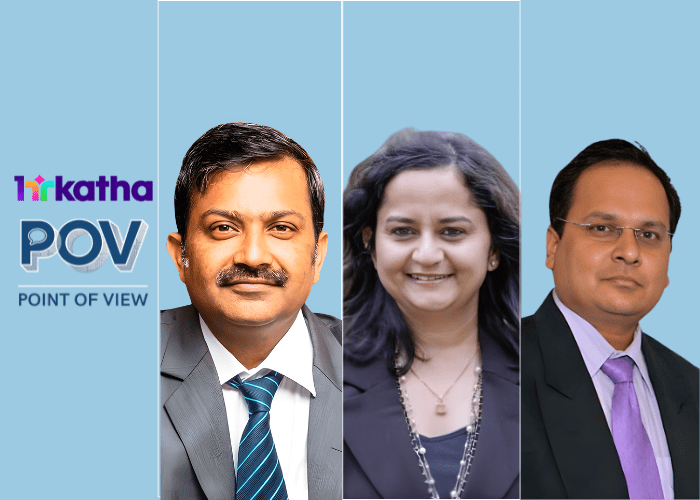
Bhavya Mishra, chief human resources officer, Godrej Capital
Both matter equally, but inclusion demands deeper listening and intentional leadership.
Representation and culture are equally critical. One cannot exist meaningfully without the other.
Without representation, inclusion has no starting point. But stopping at hiring is where many organisations fall short.

Inclusion is not about policy design alone. It is about listening to what people experience every day and acting on it. This often requires rethinking processes, reshaping environments and making deliberate choices that reflect what employees actually need.
A key challenge is how organisations interpret data. Aggregated metrics such as overall engagement or attrition can hide important differences. The real insight lies in disaggregated data.
Leaders need to ask sharper questions. Are experiences consistent across locations, roles and demographics? Do smaller or underrepresented groups feel the same sense of belonging?
Even a single voice matters, especially when it comes from a minority group. These perspectives are easily missed unless leaders actively seek them out.
Another important factor is leadership language. The way leaders speak about different groups shapes how inclusion is experienced. Language signals intent and influences behaviour.
Representation is essential. But without listening, intentional action and mindful leadership, it does not translate into inclusion.
Takeaway: Inclusion becomes real when leaders go beyond averages, listen to minority voices and act on nuanced experiences.
Rajesh Jain, group chief people officer, Vishvaraj
Inclusion is proven through retention and growth, not just hiring.
Many organisations have learned this through experience.
Focusing only on diversity numbers can create short-term gains but not long-term impact. People may join, but they do not stay. In some cases, they leave with negative experiences, making it harder to attract diverse talent in the future.

This shifts the question from hiring to outcomes. How do you measure inclusion?
One clear indicator is growth. If inclusion is working, diverse employees will progress within the organisation. However, in many cases, representation improves at entry levels but reduces at senior levels.
This is where the real gap becomes visible.
Inclusion takes time to show results. Progression, retention and experience need to be tracked consistently over a period of time. At the same time, leaders must stay connected to employees and understand what they are experiencing on the ground.
Readiness is another critical factor. Before pursuing diversity goals, organisations must assess whether they are prepared to support them. This includes policies, infrastructure and mindset.
In one instance, efforts to hire from the third gender community required significant internal preparation. Through dialogue and awareness-building, the organisation addressed concerns before moving forward.
Inclusion is not a single initiative. It is an ecosystem that must be continuously evaluated.
Takeaway: Inclusion is reflected in retention and progression. If diverse talent does not grow, the system is not truly inclusive.
R Venkattesh, former president, DCB Bank
Inclusion becomes sustainable only when it is embedded in culture.
Building a diverse workforce is the first step. It signals intent and reflects organisational philosophy.

But inclusion is more complex. It is closely linked to fairness, consistency and the ability of individuals to contribute without barriers.
In organisations where inclusion works well, it does not feel like an initiative. It becomes part of everyday behaviour. People across roles, regions and backgrounds work together with a shared sense of belonging.
This happens when inclusion is embedded into culture.
When people experience inclusion themselves, they begin to extend it to others. Over time, it becomes self-sustaining.
In organisations where this is not yet established, leaders need to be more deliberate.
Representation, equal access and participation in decision-making processes become critical.
Simple actions can make a difference. Being invited into discussions, having a voice in meetings and being heard without bias all shape how inclusion is experienced.
For inclusion to sustain, it requires leadership commitment, alignment with organisational purpose and continuous reinforcement.
Diversity and inclusion cannot be enforced through policies alone. They must be practiced consistently.
Takeaway: Inclusion becomes sustainable when it moves from an initiative to a lived cultural value.