


Close Menu
    Facebook X (Twitter) Instagram
    • Our Story
    • Partner with us
    • Reach Us
    • Career
    Subscribe Newsletter
    HR KathaHR Katha
    • Exclusive
      • Exclusive Features
      • Perspectives
      • Friday Features
      • herSTORY
      • Case-In-Point
      • Point Of View
      • Research
      • HR Pops
      • Dialogue
      • Movement
      • Profile
      • Beyond Work
      • Rising Star
      • By Invitation
    • News
      • Global HR News
      • Compensation & Benefits
      • Diversity
      • Events
      • Gen Y
      • Hiring & Firing
      • HR & Labour Laws
      • Learning & Development
      • Merger & Acquisition
      • Performance Management & Productivity
      • Talent Management
      • Tools & Technology
      • Work-Life Balance
    • Special
      • HR Forecast 2026
      • Cover Story
      • Editorial
      • HR Forecast 2024
      • HR Forecast 2023
      • HR Forecast 2022
      • HR Forecast 2021
      • HR Forecast 2020
      • HR Forecast 2019
      • New Age Learning
      • Coaching and Training
      • Learn-Engage-Transform
    • Magazine
    • Reports
      • Whitepaper
        • HR Forecast 2024 e-mag
        • Future-proofing Manufacturing Through Digital Transformation
        • Employee Healthcare & Wellness Benefits: A Guide for Indian MSMEs
        • Build a Future Ready Organisation For The Road Ahead
        • Employee Experience Strategy
        • HRKatha 2019 Forecast
        • Decoding and Driving Employee Engagement
        • One Platform, Infinite Possibilities
      • Survey Reports
        • Happiness at Work
        • Upskilling for Jobs of the Future
        • The Labour Code 2020
    • Conferences
      • Leadership Summit 2025
      • Rising Star Leadership Awards
      • HRKatha Futurecast
      • Automation.NXT
      • The Great HR Debate
    • HR Jobs
    WhatsApp LinkedIn X (Twitter) Facebook Instagram
    HR KathaHR Katha
    zoha
    Home»Exclusive Features»Research»Future systems will have to be human, simple, flexible and without limitations
    Research

    Future systems will have to be human, simple, flexible and without limitations

    mmBy Liji Narayan | HRKathaDecember 13, 2018Updated:December 13, 20184 Mins Read28410 Views
    Share LinkedIn Twitter Facebook WhatsApp
    Share
    LinkedIn Twitter Facebook WhatsApp

    Change, innovation, technology, progress, advancement, and cultural shift are just some of the terms that are thrown around in the corporate world today. With changes taking place every day and every minute, organisations can never be prepared enough for the future, when it comes to the systems they use. How can they ensure that their systems will be able to survive in the future? What should organisations do to ensure that their systems are ready to take on the challenges that lie ahead? Will it be enough to combine applications, data and infrastructure? No. It is important to also put in place the right talent — talent that is updated and well versed with not just machines but the latest technologies.

    Change is happening constantly, and it is happening at a fast pace. To keep up, organisations need to possess agility, resilience and a willingness to experiment. None of these traits will be found in stubborn stodgy organisations that prefer to adhere to conventional ways and run away from new ideas, innovations and novels techniques of working. These traits will only be found in progressive organisations with a modern staff that is open to adapting to technological changes.

    zoha

    Simply put, success will come the way of companies that adapt to change, have no boundaries and are fundamentally human, especially in these times when information technology companies are undergoing a cultural and technical makeover.

    What are the hurdles to success?

    Organisations are stopped from tasting success because of a workforce that is not updated in terms of knowledge, especially when the world around them is fast evolving.

    When the existing employees find themselves rendered incompetent in the face of technological advancements; when they are unable to handle the continuous data flow and incompetent to come to terms with the remarkable powers of artificial intelligence and the Internet of Things, success will remain distant.

    According to a report on ‘Future Systems’ by Accenture, the current information technology (IT) style is incapable of handling the changes that keep happening, and that too, at an alarming pace. This brings us back to the three qualities mentioned earlier— agility, resilience and willingness to experiment. That is not all. Companies have to put life into their systems by connecting their applications and infrastructure with their workforce to create a meaningful, dynamic and productive whole.

    Organisations can do the following to ensure success for future systems and change the manner of working and living:

    zoha

    • Remove barriers: The IT stack of the past needs to innovate to stay relevant. The newer stack is equipped to come up with new ways to solve issues pertaining to not just business and customers, but the society in general. Everything happens in the cloud. In fact, the cloud is the strong enterprise-wide foundation that does away with all boundaries and dependencies across the IT stack.

    • Adapt: When systems become adaptable, the organisations are able to productively use their ability to scale new innovations rapidly. Adaptable systems are capable of making use of data and machine intelligence to take the business forward and help it grow without lagging behind in an environment that is forever changing. When the workforce within the organisation becomes adaptable, it is able to work in tandem with the machines to arrive at effective decisions without any delay. Faster decisions means quick action, and with time being of utmost value, nothing prevents the business from growing if its systems are adaptable.

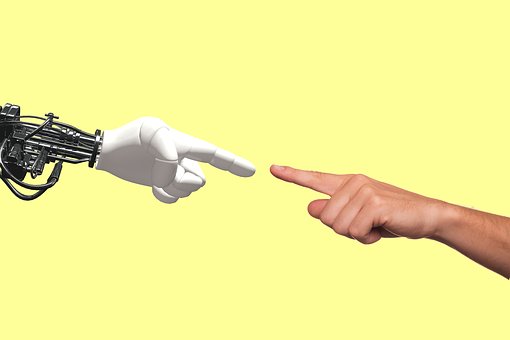
    • Make systems adjustable to human beings: It is quite a challenge to get people to change and adjust to machines. But if we approach it the other way round, and get machines to adjust to humans, things become much simpler. The technology interfaces should be designed such that they make the experiences simple and at the same time fulfill the needs of the stakeholders, including the customers.

    What should companies invest in?

    With the future being all about machines and human beings teaming up, continuous learning will be the buzzword. Therefore, there will have to be new models of sourcing talent too. And organisations will have to majorly and seriously invest in the right talent. In fact, it is more important to have the appropriate software engineering talent in place than finance, for the growth of a business.

    future systems human-machine collaboration Technology
    Share. LinkedIn Twitter Facebook WhatsApp
    mm
    Liji Narayan | HRKatha

    HRKatha prides itself in being a good journalistic product and Liji deserves all the credit for it. Thanks to her, our readers get clean copies to read every morning while our writers are kept on their toes.

    Leave A Reply Cancel Reply

    Related Posts

    Cognizant AI turns employee chats into $200 million in new sales

    June 11, 2026

    TCS could have as many AI agents as human employees: N Chandrasekaran

    June 10, 2026

    AI is making communication skills more valuable, not less

    June 10, 2026

    Paytm plans to hire 4,000 employees across AI, product and technology teams

    June 9, 2026
    Editorial

    The two cultures inside the same multinational

    Someone I know works with one of the world’s largest technology and consulting firms. Based…

    Why HR becomes conservative when hiring HR

    Hire for potential, not just pedigree. Look beyond industry boundaries. Avoid groupthink. Value transferable capability.…

    EDITOR'S PICKS

    The two cultures inside the same multinational

    June 13, 2026

    The most unexpected source of motivation at work

    June 12, 2026

    Case-in-Point: Values vs performance

    June 11, 2026

    herSTORY: Preeti Ahuja, Global CPO, Husk Power

    June 11, 2026
    Latest Post

    The two cultures inside the same multinational

    Editorial June 13, 2026

    Someone I know works with one of the world’s largest technology and consulting firms. Based…

    Hyatt surpasses youth hiring goal, employs over 12,000 through RiseHY initiative

    News June 12, 2026

    Hyatt Hotels Corporation has exceeded its global hiring target under its RiseHY workforce- development programme,…

    Public-sector banks add over 13,000 employees in FY26: Report

    News June 12, 2026

    Public-sector banks continued to expand their workforce in FY26, signalling that human capital remains central…

    Volkswagen targets 28,000 job cuts by 2030

    News June 12, 2026

    Volkswagen is moving ahead with its restructuring strategy in Germany, with thousands of jobs set…

    Asia's No.1 HR Platform

    Facebook X (Twitter) Instagram LinkedIn WhatsApp Bluesky
    • Our Story
    • Partner with us
    • Career
    • Reach Us
    • Exclusive Features
    • Cover Story
    • Editorial
    • Dive into the Future of Work: Download HRForecast 2024 Now!
    © 2026 HRKatha.com
    • Disclaimer
    • Refunds & Cancellation Policy
    • Terms of Service

    Type above and press Enter to search. Press Esc to cancel.