



Hospitality sells experience, not inventory. Rooms can be standardised; service cannot. As Indian hotel chains expand into metros, pilgrimage towns, business corridors and emerging tourist hubs, the operational challenge is obvious. The cultural one is harder: how do you preserve warmth at scale?
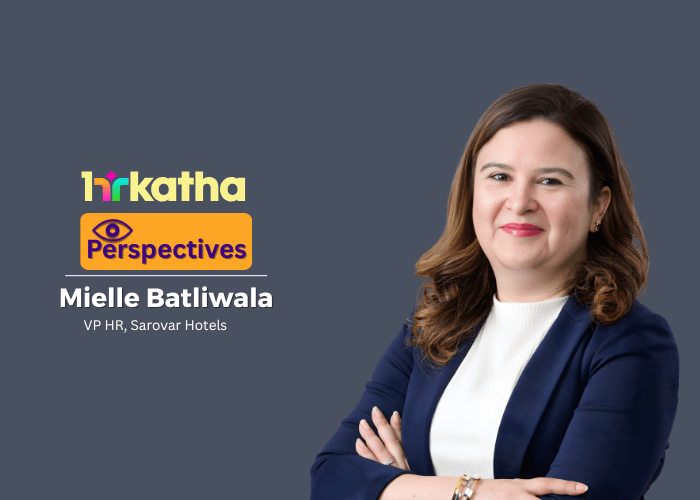
Sarovar Hotels, with 150 properties across 88 locations, sits at that intersection of expansion and intimacy. For Mielle Batliwala, VP HR, the answer is less about technical skill and more about mindset. In an industry where technology is rising, generational diversity is widening and expansion is relentless, she argues that attitude is the only true constant — and everything else can be built around it.

Attitude as non-negotiable
Are you hiring for skills that exist today or capabilities to learn what doesn’t exist yet? What does future-ready talent mean at Sarovar?
When we look at hiring, what matters most is attitude. We look for flexibility, mobility, enthusiasm and genuine willingness to engage. That is the mindset we want.
We believe skills can be taught. If someone has the right attitude and eagerness to grow, we can equip them with the required skills. Without the right attitude, even the most experienced candidate may not be the right fit.
Our presence across 88 locations allows us to create employment in markets where options may be limited. Even if someone doesn’t come with formal skills, we provide training and the opportunity to learn, earn and build a livelihood. Ultimately, it comes down to willingness and attitude.
“Accountability, efficiency and execution are career accelerators”
Willingness bridges generations
Can one culture truly serve five generations simultaneously, or are we heading towards fragmented, personalised employee experiences?
We have team members who’ve been with us for 25 to 28 years, and we also have people just entering the industry. So yes, we’re working with multiple generations. And no, there isn’t a one-size-fits-all approach.
Younger generations adapt quickly to technology. For more experienced team members, it may take longer, but there is genuine willingness to learn.
As we scale, we’re leveraging technology across HR and learning and development to connect with employees across locations. Adoption may take time, but the effort is constant so everyone moves forward together.
“Hospitality doesn’t build specialists — it builds resilient generalists”
Learning in local languages
How do you embed continuous learning into daily work?
We learn every day. Even in my current role, I am still learning — including from younger team members.
Our workforce is spread across the country, and for many, English is not the first language. That can make learning challenging.
We are building learning libraries and creating online learning videos in select local languages so learning continues without interruption. The aim is to reach employees across all locations, because learning never really stops.
“Internal leadership pipelines protect culture during growth”
AI as enabler, not replacement
How are you helping employees see AI as a tool that amplifies their capabilities rather than a threat?
AI for us is an enabler. It is not something we are using to replace people.
At the corporate office, we use AI in recruitment, learning and development, and revenue management. It helps us analyse data, create projections and study markets.
These tools enhance processes, but hospitality still requires human interaction and physical presence to run operations. We will continue to embrace AI, but complete replacement is not the objective.
“Recognition begins when hierarchy becomes conversation”
Internal leadership pipelines
How do you balance investing in stars versus democratising development?
When someone performs well and shows high potential, it is important to invest in them — for their future and for the company.
We introduced our General Manager Development Programme about three and a half years ago, identifying high-potential leaders from operations and placing them on a focused six-month fast-track programme.
Around 15 individuals have been promoted internally to hotel and general manager roles in the past three years. They are performing well and adding strong value.
“Learning in local languages keeps growth inclusive”
Open communication as recognition
How do you build an authentic culture of recognition?
We have made it mandatory for unit general managers to spend time every month with small groups of employees. Each person shares one positive aspect and one suggestion.
This has helped break down barriers. Earlier, many employees hesitated to speak openly with general managers. Today, they are far more comfortable.
When leadership visits hotels, we sit with employees across levels in open forums. Alongside this, we have strengthened spot recognition and town hall appreciation. Over the last 12–18 months, we have seen meaningful progress in creating a more engaged culture.
“Scale without warmth is just expansion without culture”
Hospitality builds strong generalists
What differentiates a great HR leader in hospitality?
This industry grounds you. You are not sitting in an office all day — you are on the floor, interacting with teams and stepping in when needed.
Over the course of my career, I have worked as a restaurant hostess, served at breakfast and worked through New Year’s Eve. You become part of the hotel.
From an HR perspective, hospitality builds strong generalists. You are involved in recruitment, compliance, development and retention. Learning and growth happen faster — especially if you are mobile and open to opportunities.
“Internal leadership pipelines protect culture during growth”
Business understanding as foundation
If someone wants to be a CHRO in 15 years, what should they learn that is not in traditional HR curricula?
Beyond formal HR education, what matters most is building a strong foundation across HR while deeply understanding the business.
The ability to connect people decisions to business outcomes is critical. A CHRO is not just an enabler of HR processes, but a strategic partner contributing to organisational growth.
Experience, the right environment and leadership support together shape the perspective required for the role.
“Five generations don’t need uniformity — they need shared intent”
Accountability, efficiency, execution
What is one unwritten rule you wish people understood earlier in their careers?
If I had to narrow it down, three things matter: accountability, efficiency and execution.
If people practise these from day one, very little can hold them back in their careers.