


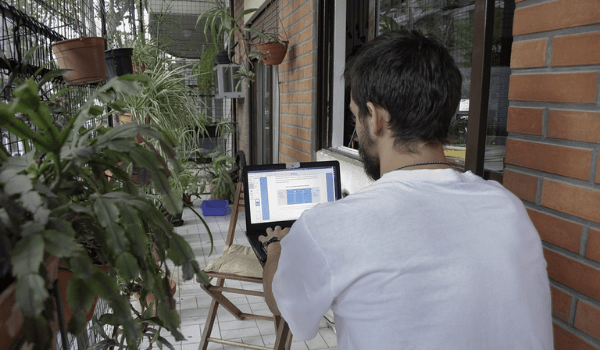
It is difficult to adapt to change and get into something new. Agreed. However, it can be as difficult, if not more, to undo that change, as the pandemic has taught us.
When the lockdown was announced, companies shifted to a work-from-home model almost instantaneously. Although a new approach that posed many challenges for organisations, especially the HR, the shift was made to happen with much collaborative effort. Despite little hiccups in the beginning, this arrangement did work and even managed to be highly successful for almost two years.
Now that things are looking much brighter and there are hints of normalcy, companies are again looking to re-open and are calling their employees back to office. However, the problem is, employees are not willing to return to office!
Multiple studies around the world suggest that employees are not ready to accept a full-time work-from-office model. On the other hand, however, top executives want to re-open and come back to office. One of the global studies states that 76 per cent of employees are unwilling to revert to full-time work from office, while 67 per cent executives wish for regular work-from-office.
“Earlier, WFH option did not exist, but now that people have experienced this option it is natural for them choose what works for them”
Mahipal Nair, CHRO, South Asia, Middle East and Africa, NielsenIQ
We can clearly see a divide, which wasn’t really unexpected. What has made employees prefer work-from-home over work-from-office?
Talking to some of the HR leaders, HRKatha was able to pin point some of the reasons why employees have lost their interest in the once normal physical office or workplace.
Why do employees not want to come to office?
Comfort: Work from home was a privilege before the pandemic. It was a perk because employees got to enjoy working from the comfort of their homes. Now, after two years of the pandemic, employees are realising the innumerable benefits that come from working from home or remotely. For one, they can avoid the rigours of daily commute, which meant two to three hours on the road for some. They have now got used to waking up and working from their beds! “Earlier, this option did not exist, but now that people have experienced this option it is natural for them choose what works for them,” says Mahipal Nair, CHRO, South Asia, Middle East and Africa, NielsenIQ.
Lifestyle: The last two years have witnessed massive change in lifestyle. Irrespective of position or level, employees have almost forgotten that they used to travel to office daily. People are not used to it anymore. Work-from-home has become a part of everyone’s lifestyle and people are finding it difficult to disrupt that routine yet again and revert to work-from-office. “Initially, people coped with work-from-home arrangements. Albeit difficult for some at first, they all managed to find an equilibrium somehow. Now people are being forced to try and find an equilibrium yet again, as offices have started to open up and call workforces back,” says Nishant Madhukar, HR leader.
Savings: Work from home meant less commute, which meant people could save a significant amount of money which was otherwise spent on commute. We are all aware how transportation costs have gone through the roof. Fuel prices have spiked and cab services are becoming increasingly unaffordable on a daily basis. Therefore, people can see monetary benefits in the work-from-home model.
Flexibility: People have tasted the advantages of the flexibility of working at their own pace. They have realised that they can easily manage their domestic chores /personal work along with their official work. “People have seen the value of spending more time with kids, family and their home. They have realised that they can balance work and personal life quite comfortably,” says Nair.
“Initially, people coped with work-from-home arrangements. Albeit difficult for some at first, they all managed to find an equilibrium somehow. Now people are being forced to try and find an equilibrium yet again, as offices have started to open up and call workforces back”
Nishant Madhukar, HR leader
As per Madhukar, if employers want their employees to come back to office regularly, they will have to ensure a much healthier and more welcoming work environment. Therefore, managers will have to play a key role in serving as the pulling factor.
Other than that, an environment of respect and fair treatment is the key. “From the point of view of building a career, I would say that collaborating at the office sometimes is important. How frequently that will happen will have to be decided by each company,” says Madhukar.
Also, Nair points out that companies will need to question why they need to work out of a physical office full time. “Employers will have to choose what is right for them. They should opt for full-time work from office only if they really see a genuine need for employees to come to office every day. Employees will also have to choose what they really want going forward,” explains Nair. He adds, “If employees feel watercooler conversations and interactions with seniors can add value to their careers, then working from office does make sense.”