

December 3 is observed as International Disability Day, and here’s why corporates want to hire PwDs.
For a long time now, businesses have pondered upon whether there’s any real business sense in hiring disabled people. Well, there are certain business benefits in it that unfortunately lie hidden. Yet, come International Disability Day and organisations begin beating their drums around how important it is for them to include the disabled in their workforce. Especially after the passage of the Rights of Persons with Disabilities Act late last year—which seeks to protect people with disabilities or PwDs from discrimination and ensures equality of opportunity—organisations began looking at business reasons to absorb more PwDs. However, still not many have actually done much in the area.
In fact, there are only a handful who actually realise the true value of having PwDs as a significant part of their workforce. According to Census 2011, India has 2.68 crore people with disabilities, and in a country which has a total population of 1.3 billion and workforce of 470 million-plus, appreciating this sect of people and realising the benefits of providing them the right opportunities doesn’t come easy. Still, there are a few organisations that have been able to not only see business sense in hiring and developing PwDs but have also put in significant efforts to ensure the same.
For Lemon Tree Hotels, hiring the disabled is not a charity or a social experiment but a part of their business strategy. The Group owns and operates 33 hotels in 21 cities and has 3500 employees in its workforce, out of which about 28 per cent are opportunity deprived Indians (ODIs). The Group plans to take the number of ODIs to 45 per cent of the total headcount by 2019.
Lemon Tree Hotels is working with the Skill Council for Persons with Disability (SCPwD) and the National Skill Development Corporation (NSDC) to develop training material to train people with disabilities for various jobs.
Amongst the people with disabilities, the Group employs about 350 people who are speech and hearing impaired (SHI), about a 100 who are orthopedically handicapped (OH) and 14 with Down Syndrome (figures as per September 2016). Aradhana Lal, vice president, sustainability initiatives, Lemon Tree Hotels, says, “We are able to do it at this scale, as the efforts are a part of our business model strategy and not just a social experiment.”
So much so, that taking the idea beyond just Lemon Tree Hotels, now the Group is also working with the Skill Council for Persons with Disability (SCPwD) and the National Skill Development Corporation (NSDC), under the ‘Skill India’ initiative to develop training material to train people with disabilities for various jobs.
Another organisation that may not have hired PwDs in the same number as the company aforementioned, but is certainly cognizant of the business benefit in doing so, is Hinduja Global Solutions (HGS). The Company has a centre in Mumbai where 100 per cent of its staff (about 150 people) including the centre manager are PwDs. In all, it has about 275 employees who are PwDs, spread across 13 locations out of the 14 cities it has offices in.
Avesh Kumar Jha, senior vice president- OD & PM, Hinduja Global Solutions, believes that people’s capability to deliver at work does not necessarily depend on gender or the segment they belong to – even if it is disability. “In fact, having the specially abled as part of the workforce brings in diversity of thoughts and also enables a positive and healthy work environment,” he explains.
Hinduja Global Solutions has a centre in Mumbai where 100 per cent of its staff – about 150 people – including the centre manager are PwDs.
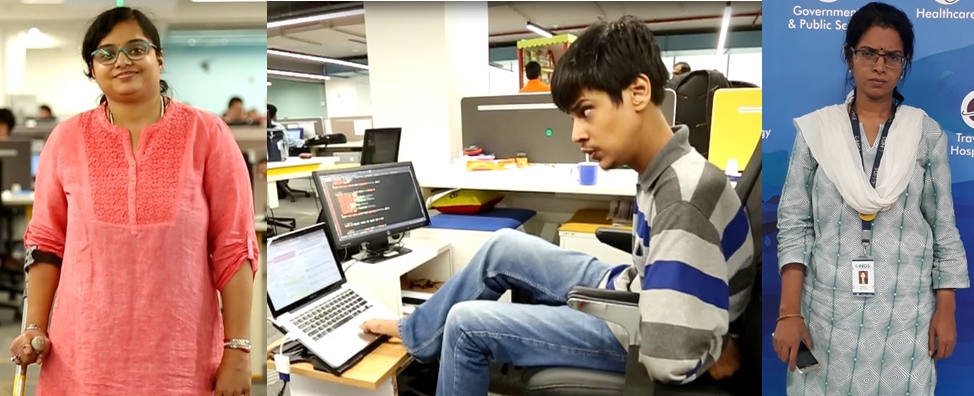
In line with the same, MakeMyTrip, which has over 40 people with disabilities working across roles that include programming, legal, and customer care experts, also believes that hiring the disabled is not just a CSR or D&I mandate, but a business move that brings business benefits. MakeMyTrip has employees, such as Anant, who is visually impaired but leads the Customer Feedback Team at MakeMyTrip and, Suppria Agarwal and Sidharth Taneja, who have cerebral palsy and are working as quality analysts with the holidays and engineering teams respectively.

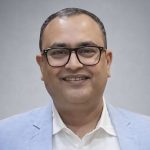
Aradhana Lal, Avesh Kumar Jha, Yuvaraj Srivastava & Prashant Khullar (L-R)
“Diversity of thoughts, profile, interest, gender and for that matter diversity of any kind makes the workplace richer in terms of perspective and experience for every stakeholder. We believe that PwDs at the workplace bring in inspiration, resoluteness and empathy for everyone. They not only work as well as other employees but also epitomise the spirit of surmounting constraints and overcoming obstacles to be successful. Simply put, they are great energisers for everyone who is considered physically able,” concurs Yuvaraj Shrivastava, chief human resources officer at MakeMyTrip.
When there is no compromise in the talent or capabilities they bring on-board, the whole concept around organisations being socially responsible in hiring more disabled people, if not completely futile, is not even the sole reason behind the same. Even Jha raises a strong point as he says, “Talent is already scarce, and hence, it makes no sense to close your doors to a particular segment of people – be it PwDs.”
MakeMyTrip has over 40 people with disabilities working across roles that include programming, legal, and customer care experts. It believes that hiring the disabled is not just a CSR or D&I mandate, but a business move that brings business benefits.
Taneja of MakeMyTrip shares, “Despite my physical limitations, I am an IT resource working on several important projects, growing professionally as the organisation grows.” Agarwal reveals that apart from the pick-up and drop cab service, she has been given a full-time attendant who helps her move around. “Standing on my feet, if not literally, has been figuratively possible because of MakeMyTrip,” she says.
Similarly, Poornima S of HGS, who is not just a valued employee but also a part of the diversity council at HGS says, “My disability of being visually impaired and not being able to read completely has not acted as a barrier in my career. With continuous support and guidance from my colleagues and team members at HGS, I have been able to interact with customers successfully with the help of the non-visual desktop access (NVDA) screen reader.”
Jha agrees that there’s a long journey for the Company to undertake in terms of getting more disabled into the workplace and providing them the best work environment, yet the understanding that it impacts the business and the work culture positively is a big step in itself. “From fragmented steps in the area until last year, we have now ensued a more focussed approach towards hiring and developing PwDs at HGS,” he opines.
Mahindra Holidays is another organisation that employs about 60 differently-abled individuals who are working across resorts as front-office operators, spa therapists, electricians and plumbers, gardeners, kitchen staff and housekeeping staff.
Prashant Khullar, chief human resource officer, Mahindra Holidays, shares stories of disabled employees who are not only great performers at their own jobs but also how they inspire others to beat all odds and to be at their best. One of their resorts employs four deaf and mute people, one of whom is Anwar, a hockey player and a Para Olympic Champion (Athletics) who has won several medals.
Mahindra Holidays is another organisation that employs about 60 differently-abled individuals who are working across resorts as front-office operators, spa therapists, electricians and plumbers, gardeners, kitchen staff and housekeeping staff.
With a good number of success stories, it is evident how businesses gain in more than one way by hiring the disabled. With organisations also waking up to the importance of the same—socially, economically and business wise as well—the employment scenario for PwDs seems to be improving.
With diligent efforts from the Government, the NGOs and training arms for PwDs investing focussed efforts on making the disabled more employable, organisations are seeing noteworthy business impact in getting them into the workforce. With further hope for improvement, one can say, baby steps yet, but in the right direction!
3 Comments
Great Article. However having experienced “physical disability” very closely and being HR evangelist too, I always sense a two-way treatment being given to “specially-abled” people.
Either they get sympathy or they get laughed at.
Both of which they don’t want at all.
Isnt this “different treatment” closing all of us being that “Equal-Opportunity-Employer”?
At business end, yes hotel industry has been employing PwD but predominantly at housekeeping jobs
Other sectors don’t seem to open much as they have to bear “extra cost” or take added efforts to employ these gem of people.(Even those with required qualification not survive a stable tenure)
We, the so-called “normal” people are having one or the disablity too( for e.g I would have written this comment in “Mandarin” and “Non-chinese” will be “unable” to read it, making them “people with disability” to decode)
Hope in coming years, we stop calling them “PwD” and treat them as equal, not with pity nor amusement.
A good read !!!
It’s indeed a very good initiative by the Organizations.
However, in addition to catering to the training needs of specially-abled (including hearing and vocal impaired), some attention must also be given to spread awareness and educate the general public on how to deal with them.
For eg. If a hearing impaired employee is serving as a cashier, then the public must be able to communicate with that person effectively else everything goes in vain. The Cashier gets demotivated and might feel awkward and the customer also has a bad experience.
Great to see HR Karta covering this topic….need too enhance society’s sensitivity to PWDs