


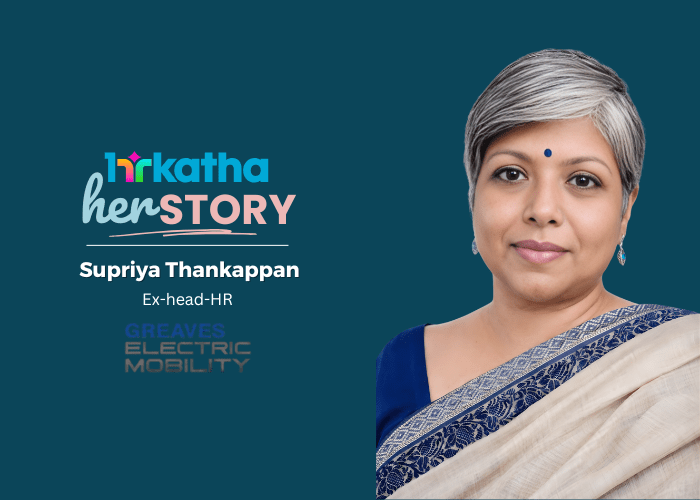
From project engineer to HR professional
Supriya Thankappan did not start off as an HR professional. In fact, she worked as a project engineer at an engineering consulting firm and moved to HR laterally. It didn’t take her much time to understand the dual responsibility the role carried. She became aware that HR must anchor human values whilst safeguarding business interests—and do so with objectivity.
And as effective HR leadership requires, she managed to rise above her own emotions, even whilst dealing deeply with those of others.
Today, as former head-HR and admin at Greaves Electric Mobility, Thankappan leads with a philosophy that challenges one of HR’s most persistent assumptions: that understanding people is HR’s job alone.
Asking to be included
For much of her career, Thankappan worked in environments where men significantly outnumbered women. This often led to being left out of certain conversations—not out of intent, but because of informal social structures at work.
She recalls being uncomfortable about it but chose to respond deliberately. She invested in building intentional connections, maintaining an open, direct communication style. She addressed the issue head-on when required—asking to be included in peer discussions or seeking clarity from senior leaders on exclusions.
Over time, she realised that many colleagues were unaware of the impact of their actions, and that naming the issue calmly often led to meaningful change. It was a lesson that would shape her entire approach to leadership: speaking up—asking questions, sharing perspectives, and naming what matters—is one of the most underrated leadership skills.
“Speaking up—asking questions, sharing perspectives, and naming what matters—is one of the most underrated leadership skills.”
Inward evolution
Thankappan describes her leadership style as rooted in participation and trust. She makes a conscious effort to draw people into the conversation and encourage them to think for themselves, even if the outcome isn’t perfect the first time.
Over the years, she has become more confident, she admits, in challenging the status quo and clearer in communicating expectations, steering clear of ambiguity about direction.
“My leadership has evolved inward—I work continuously to stay authentic and ensure that the role I occupy never becomes larger than the person I am,” says Thankappan.
It’s a philosophy that extends to how she thinks about HR’s role in organisations.
Quick Fire Round
What’s the best career advice you’ve ever received?
Speaking up—asking questions, sharing perspectives, and naming what matters—is one of the most underrated leadership skills.
One thing you wish people understood about being a woman in HR leadership:
It requires a unique combination of emotional intelligence, business acumen and the courage to speak up when it’s uncomfortable.
Morning ritual that sets you up for success?
Working on mental and physical health through Vipassana meditation and workout.
What energises you most about your work?
Being able to nurture others through meaningful work and authentic relationships.
Best investment you’ve made in yourself:
Actively honing my self-awareness whilst remaining deeply curious—learning every day from the people around me and the world beyond my immediate sphere.
“I ensure that the role I occupy never becomes larger than the person I am.”
Shared ownership versus delegation
One mindset that needs to retire, according to Thankappan, is the idea that understanding people is the exclusive domain of HR. Every function must deeply understand human motivation—because businesses ultimately create products, services, and experiences for people.
What deserves far more attention is building this human understanding across all professions, so leaders and teams take shared ownership of how people think, feel, and perform, rather than delegating it solely to HR.
To prepare for the future of work, Thankappan feels that organisations should understand AI technologies. Additionally they should partner with leaders to enable adoption without creating panic and insecurity through clear communication, reskilling, and confidence-building.
Paying it forward
Having experienced the barriers women often face at work through her own journey, she is very intentional about paying it forward. Therefore, she actively mentors young professionals, makes herself available as a sounding board, and creates safe spaces for honest conversations.
“Wherever possible I connect women to opportunities that enable learning, visibility and growth,” she shares.
What energises her most about her work? “Being able to nurture others through meaningful work and authentic relationships.”
Her best investment in herself hasn’t been a degree or certification—it’s been actively honing her self-awareness whilst remaining deeply curious, learning every day from the people around her and the world beyond her immediate sphere.