

Close Menu
    Facebook X (Twitter) Instagram
    • Our Story
    • Partner with us
    • Reach Us
    • Career
    Subscribe Newsletter
    HR KathaHR Katha
    • Exclusive
      • Exclusive Features
      • HR Pops
      • herSTORY
      • Perspectives
      • Point Of View
      • Case-In-Point
      • Research
      • Dialogue
      • Movement
      • Profile
      • Beyond Work
      • Rising Star
      • By Invitation
    • News
      • Global HR News
      • Compensation & Benefits
      • Diversity
      • Events
      • Gen Y
      • Hiring & Firing
      • HR & Labour Laws
      • Learning & Development
      • Merger & Acquisition
      • Performance Management & Productivity
      • Talent Management
      • Tools & Technology
      • Work-Life Balance
    • Special
      • Cover Story
      • Editorial
      • HR Forecast 2024
      • HR Forecast 2023
      • HR Forecast 2022
      • HR Forecast 2021
      • HR Forecast 2020
      • HR Forecast 2019
      • New Age Learning
      • Coaching and Training
      • Learn-Engage-Transform
    • Magazine
    • Reports
      • Whitepaper
        • HR Forecast 2024 e-mag
        • Future-proofing Manufacturing Through Digital Transformation
        • Employee Healthcare & Wellness Benefits: A Guide for Indian MSMEs
        • Build a Future Ready Organisation For The Road Ahead
        • Employee Experience Strategy
        • HRKatha 2019 Forecast
        • Decoding and Driving Employee Engagement
        • One Platform, Infinite Possibilities
      • Survey Reports
        • Happiness at Work
        • Upskilling for Jobs of the Future
        • The Labour Code 2020
    • Conferences
      • Leadership Summit 2025
      • Rising Star Leadership Awards
      • HRKatha Futurecast
      • Automation.NXT
      • The Great HR Debate
    • HR Jobs
    WhatsApp LinkedIn X (Twitter) Facebook Instagram
    HR KathaHR Katha
    Home»Culture»GSK says ‘No’ to cabins and cubicles
    Culture

    GSK says ‘No’ to cabins and cubicles

    mmBy Prajjal Saha | HRKathaJanuary 11, 2015Updated:December 5, 20184 Mins Read12780 Views
    Share LinkedIn Twitter Facebook WhatsApp
    Share
    LinkedIn Twitter Facebook WhatsApp

    The open office culture in Gurgaon, which is second after Philadelphia, is expected to boost collaboration and productivity at GlaxoSmithKline Consumer Healthcare .

    GlaxoSmithKline Consumer Healthcare has redesigned its Gurgaon office to make it more open and collaborative. The office reflects GSK’s philosophy of ‘do more, feel better and live longer’. In fact, the new office design also takes cues from GSK’s logo of the GSK ‘heart’.

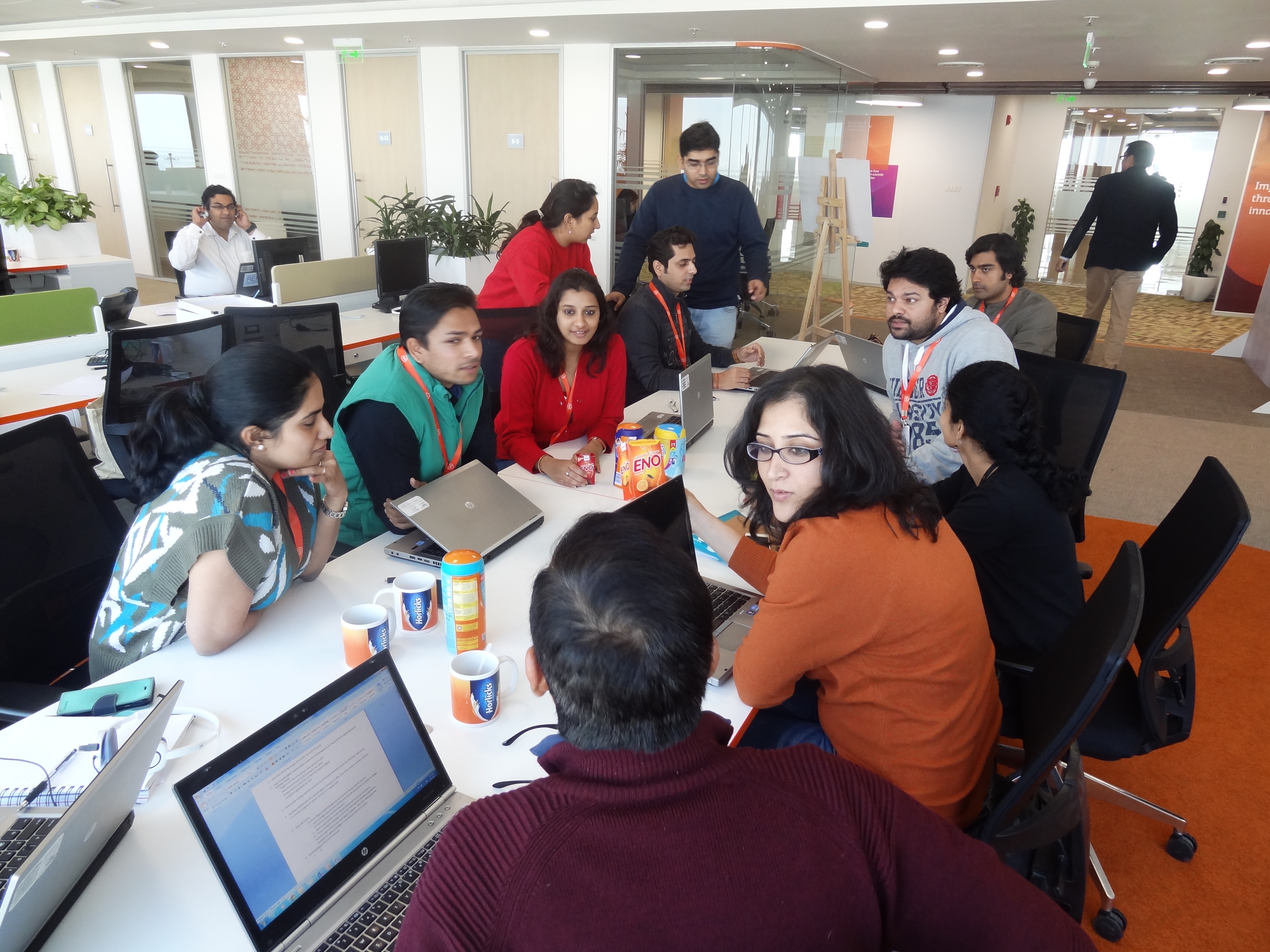
    To encourage openness and collaboration as well as to increase productivity, GSK has done away with office cubicles, cabins and fixed workstations. The new office is an open space, where an employee is free to sit at any of the available desks. 

    GSK’s office redesign is the result of a research it commissioned 10 years ago. It studied how workspaces could be modernised to match the other technological advances that had taken place in the last 100 years.

    The research revealed that most of the work happened not within the fixed office cubicles, but outside them, in meeting rooms, coffee shops or halls. In fact, while 85 per cent of GSK’s assets were dedicated to the individual cubicles or workstations, only 35 per cent of work-related activity was actually happening in those areas. 

    Taking note of these findings, GSK started redesigning its offices worldwide to augment collaboration and productivity. For GSK, the first such smart office was its headquarters in Philadelphia, North America and the one at Gurgaon is second worldwide.  

    In the new setup, everybody including the MD sits on desks that are kept in open spaces instead of cubicles. Barring a few, there are no permanent seats for employees and free seating is encouraged. There is a practical reason for this—assigning a desk to an employee pins him to that place, but in a free seating environment, he is likely to sit with his workgroup and team members. This increases collaboration among team members and aids in cohesion. 

    To enable the movement of employees, the office has adopted technology platforms like LAN, WiFi, Live meeting, Office Communicators and Soft Phones for real-time communication. No matter where an employee may sit, the productivity will not be hampered.

    “This new office is a symbol of our collective efforts for continuous growth, collaboration beyond boundaries and reaching new heights, says Zubair Ahmed, MD, GSK Consumer Healthcare. 

    Team table

    Ahmed himself works from an open office, though he has tall potted plants to offer some privacy for his visitors. However, the sales head and his team sit close to him, and therefore, they can all easily get to know what each other is doing. In fact, he says, the open office environment has improved the communication between the sales and marketing team, which is very essential. 

    GSK has also reduced the number of seats in its offices to 75 per cent of its total strength, as the sales and marketing teams are usually on tour, and precious office space is wasted in holding empty desks. To further remove the concept of a permanent seat, none of the desks have any drawers in them, and each employee is allocated a locker for storing backpacks, files or any other stationery.

    While an open office has shown to facilitate team work and break down hierarchies, any animated discussion or debate among employees will be in the open domain, and may be a cause for distraction for other employees. However, the advantages of an open office far outweigh its disadvantages, and GSK looks forward to turning all its offices from a crowd of cubicles and workstations to open spaces where its employees can interact with each other in a more productive manner.

    Culture GlaxoSmithKline Consumer Healthcare, GSK Open office Zubair Ahmed
    Share. LinkedIn Twitter Facebook WhatsApp
    mm
    Prajjal Saha | HRKatha

    Dr. Prajjal Saha, editor and publisher of HRKatha since 2015, leverages over 25 years of experience in business journalism, writing, and editing. He founded HRKatha to provide insightful analysis on the evolving workplace. With expertise spanning HR, marketing, distribution, and technology, Saha has a deep understanding of business dynamics. His authorship of the acclaimed Marketing White Book highlights his versatility beyond HR. A trusted voice across industries, his clear and thoughtful commentary has earned him a reputation for thought leadership, making him a reliable source of knowledge and insights for professionals navigating the complexities of the business world.

    3 Comments

    1. Kavita on April 17, 2015 8:37 am

      Good insight

      Reply
    2. Surinder K. Verman on August 4, 2015 8:52 am

      I have had the opportunity of visiting Flipkart at Bangalore and can visualize the advantages of an open office. Knocking down the barriers to effective communication improve employee morale and motivation and thenhence productivity and open offices undoubtedly promote the culture of openness- the WE feeling.

      Reply
    3. Rahul Mehandiratta on April 7, 2016 8:12 am

      This is really appreciating. Its a far sighted insightful approach which will still take a decade long for most of Indian companies to have acceptability to begin with, though some have started.

      Reply
    Leave A Reply Cancel Reply

    Related Posts

    Jaikrishna B is redesigning work at 58—after 35 years of preparing for it

    February 11, 2026

    HR perspectives by Mielle Batliwala: “If the attitude is right, everything else can be taught”

    February 11, 2026

    98% feel urgency to deliver on AI, 91% aren’t ready

    February 11, 2026

    The undead in your inbox

    February 10, 2026
    Editorial

    Gen Z doesn’t follow leaders — they follow crowds

    A manager at a Bengaluru tech company noticed something odd. Her Gen Z team routinely…

    Why “Remove HR” goes viral every few years, and why it never happens

    Last week, workforce strategist Amanda Goodall reignited the cycle by calling to “remove 90 per…

    EDITOR'S PICKS

    Jaikrishna B is redesigning work at 58—after 35 years of preparing for it

    February 11, 2026

    HR perspectives by Mielle Batliwala: “If the attitude is right, everything else can be taught”

    February 11, 2026

    98% feel urgency to deliver on AI, 91% aren’t ready

    February 11, 2026

    The undead in your inbox

    February 10, 2026
    Latest Post

    Vedanta targets 50% women in STEM hiring as metals sector pushes past old norms

    Diversity February 11, 2026

    Vedanta has set a target to hire more than half its STEM recruits as women…

    German auto industry faces job and investment crisis

    Global HR News February 11, 2026

    Germany’s automotive sector is facing a serious crisis as companies reduce investments and jobs domestically…

    Jaikrishna B is redesigning work at 58—after 35 years of preparing for it

    Exclusive Features February 11, 2026

    In corporate India, 58 is often treated as an exit ramp. Superannuation arrives, farewells are…

    Odisha clears 23 projects; to create 10,000 jobs across sectors

    News February 11, 2026

    Odisha has approved 23 new investment projects worth ?4,111.80 crore, expected to generate 9,924 jobs…

    Asia's No.1 HR Platform

    Facebook X (Twitter) Instagram LinkedIn WhatsApp Bluesky
    • Our Story
    • Partner with us
    • Career
    • Reach Us
    • Exclusive Features
    • Cover Story
    • Editorial
    • Dive into the Future of Work: Download HRForecast 2024 Now!
    © 2026 HRKatha.com
    • Disclaimer
    • Refunds & Cancellation Policy
    • Terms of Service

    Type above and press Enter to search. Press Esc to cancel.