


A technology company launches a comprehensive wellness programme.
Employees gain access to meditation apps, fitness subsidies, mental health counselling and flexible hours. Engagement surveys improve initially. Leadership celebrates the initiative.
Two years later, burnout remains high. Attrition continues. Performance is uneven.
The problem was not the wellness programme. It was the absence of accountability structures around it. Without performance clarity, flexible arrangements created ambiguity. Without distributed leadership, work still concentrated on the same people. Wellness became a perk, not a system.
By 2026, this pattern will become unsustainable.
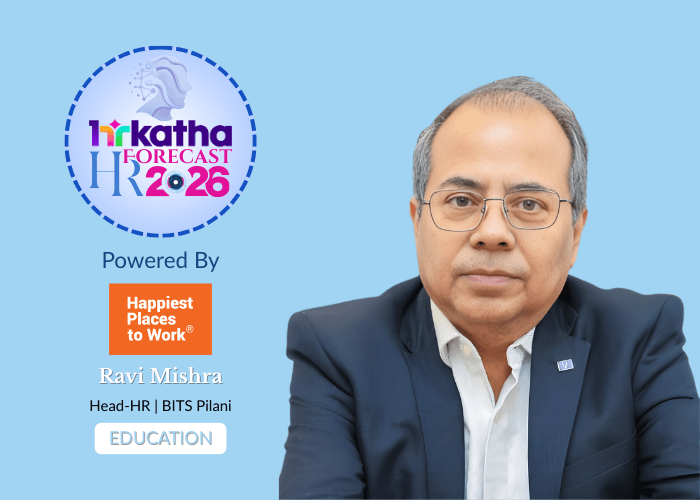
Ravi Mishra, Head – HR at BITS Pilani, where he leads people strategy for one of India’s premier educational institutions, believes the answer depends not on intent but on alignment. “Employee wellness programmes, when implemented in their true spirit and supported by the right tools, can certainly deliver measurable ROI — provided other organisational processes are aligned and robust.”
The keyword is alignment. Well-being cannot sit disconnected from performance systems, accountability frameworks or leadership philosophy. When it does, it risks becoming counterproductive.
By 2026, Mishra expects a decisive shift: organisations will be forced to move from performative productivity to sustainable productivity — or face deeper disengagement and systemic stress.
Three signals point to that transition.
Signal 1: Holistic well-being will show ROI only with accountability
Well-being has expanded beyond physical health to financial security, social belonging, career growth and purpose alignment. The debate persists: will holistic programmes show measurable returns, or remain well-packaged perks?
Mishra’s answer is conditional. Well-being creates conditions for people to contribute their best. But human behaviour is complex.
He draws from McGregor’s Theory X and Theory Y to illustrate how managerial assumptions shape employee response. Excessive emphasis on camaraderie without equal focus on accountability can produce complacency.
Mishra has observed situations where comfort began to outweigh commitment — a dynamic sometimes associated with long-standing structures where stability erodes urgency.
“When workplace comfort begins to outweigh commitment to organisational sustainability and growth, the long-term health of the institution may be at risk.”
The message is not anti-wellness. It is anti-imbalance.
Organisations that integrate wellness with performance clarity will see measurable returns. Those treating it as symbolic goodwill may inadvertently weaken institutional discipline.
By 2026, holistic well-being will survive — but only when paired with structural accountability. Wellness programmes will be judged not by their existence but by their integration with performance expectations, career frameworks and leadership behaviour.
The divide will be visible. Some organisations will operate with genuine wellness ecosystems that enable sustainable performance. Others will maintain symbolic programmes whilst burnout and disengagement persist beneath the surface.
Signal 2: Internal mobility will succeed only as strategy, not accommodation
Internal mobility is frequently positioned as a retention tool. But Mishra cautions against using it to simply retain “flying birds.”
Mobility must be embedded in long-term career architecture — not deployed reactively.
When implemented strategically, internal mobility allows employees to explore multiple interests, gain diverse exposure and expand competencies. It fosters experimentation, encourages cross-functional learning and injects fresh thinking into systems.
A thoughtful mobility framework strengthens engagement whilst building institutional capability simultaneously.
The risk lies in superficial execution. If mobility becomes a temporary fix for disengagement, silos persist beneath the surface. Employees move laterally without developing depth. Organisations shuffle talent without strengthening capability.
By 2026, organisations will face a choice: design fluid career pathways intentionally, or continue managing retention episodically.
True mobility is not about movement. It is about capability expansion embedded in strategic workforce planning. Organisations that master this will retain talent whilst building adaptability. Those that use mobility as a retention band-aid will experience continued flight risk and capability gaps.
Signal 3: Burnout will force a shift from relentless output to sustainable systems
Burnout has reached alarming levels. Mishra does not see it as purely organisational in origin. Social pressures, economic uncertainty, changing lifestyles and rising expectations all contribute.
However, organisations cannot remain indifferent.
“Work must remain an important part of life but not become life itself.”
A job should support one’s broader journey — not consume identity or create a sense of being permanently “bonded to the clock.”
Rising health crises among young professionals — heart attacks, neurological disorders — and increasing suicides in premier educational institutions signal systemic stress. These are not isolated incidents. They indicate deeper imbalances.
Mishra argues that sustainable productivity can only emerge from sustainable human systems.
The responsibility is shared: individual awareness, institutional boundaries and balanced expectations.
Organisations measure productivity through output volume. But volume without sustainability creates eventual collapse. High performers burn out. Quality deteriorates. Innovation stalls.
By 2026, organisations that prioritise sustainable performance over relentless productivity will retain credibility and trust. Those that ignore systemic stress may see new forms of disillusionment emerge — not just quiet quitting but active withdrawal, health crises and talent exodus.
The shift requires redesigning work itself: realistic timelines, distributed accountability, outcome-based evaluation rather than activity tracking, and leadership modelling sustainable behaviour.
The engagement reset: From events to structure
Quiet quitting, conscious unbossing and career cushioning are not random trends. They reflect expectation gaps.
Younger employees have defined viewpoints and clear expectations. When these are unmet, disengagement surfaces as minimal discretionary effort.
Superficial engagement initiatives — events, gifts, celebrations — may create temporary enthusiasm but fail to address structural concerns.
Mishra is clear: engagement must move beyond symbolism.
What actually drives engagement: career growth, meaningful work, transparent communication, fairness, leadership credibility, work-life integration and alignment with personal aspirations.
“Reducing workplace apathy requires courage to confront real issues, not decorate them.”
By 2026, engagement models that remain event-driven will lose relevance. Structural redesign will become unavoidable. Organisations will face a choice: address fundamental issues around growth, fairness and meaning, or watch discretionary effort decline further.
The divide will be stark. Some organisations will operate with genuine engagement rooted in structural fairness. Others will maintain superficial programmes whilst apathy deepens.
What must change
Looking ahead, Mishra identifies clear shifts in mindset.
HR must abandon:
- Judging employees based on personal traits for exclusionary decisions
- Measuring performance through “output visibility” instead of outcomes — especially problematic in hybrid settings where presence becomes proxy for contribution
HR must embrace:
- Reducing “bossism” and encouraging distributed leadership
- Building accountability over authority
- Strengthening employee development and support mechanisms
The underlying shift is cultural. Authority-centric workplaces struggle with autonomy-driven generations. Visibility-based performance metrics collapse in hybrid environments.
By 2026, organisations that move towards outcome-based evaluation, distributed leadership and balanced accountability will remain competitive. Those clinging to authority and visibility will face mounting friction.
Three Strategic Imperatives
Well-being Integration: Align wellness programmes with performance frameworks and accountability structures — treating well-being as enabler of sustainable performance, not isolated perk.
Strategic Mobility: Embed internal mobility in long-term career architecture focused on capability expansion — not reactive retention response.
Sustainable Performance: Redesign work systems to prioritise outcomes over output volume — building boundaries, distributed accountability and realistic expectations.
The Equilibrium Imperative
The next phase of organisational evolution will be defined by a single question: can productivity be sustained without breaking people?
Performative productivity — relentless output, visible presence, authority-driven control — is reaching limits. It produces burnout, disengagement and eventual collapse.
Sustainable productivity requires equilibrium: well-being paired with accountability, mobility aligned with strategy, performance judged by outcomes not activity, engagement rooted in structure not symbolism.
By 2026, organisations that design for balance will operate with visibly healthier cultures, stronger retention and more resilient performance. Those maintaining performative systems will experience mounting stress, talent exodus and credibility erosion.
The technology exists. The policies can be written. The real question is whether organisations have the courage to confront structural imbalances rather than decorating them with symbolic initiatives.
Sustainable productivity will replace performative productivity. But only for those willing to redesign systems, not just rebrand them.