

Close Menu
    Facebook X (Twitter) Instagram
    • Our Story
    • Partner with us
    • Reach Us
    • Career
    Subscribe Newsletter
    HR KathaHR Katha
    • Exclusive
      • Exclusive Features
      • Perspectives
      • Friday Features
      • herSTORY
      • Case-In-Point
      • Point Of View
      • Research
      • HR Pops
      • Dialogue
      • Movement
      • Profile
      • Beyond Work
      • Rising Star
      • By Invitation
    • News
      • Global HR News
      • Compensation & Benefits
      • Diversity
      • Events
      • Gen Y
      • Hiring & Firing
      • HR & Labour Laws
      • Learning & Development
      • Merger & Acquisition
      • Performance Management & Productivity
      • Talent Management
      • Tools & Technology
      • Work-Life Balance
    • Special
      • HR Forecast 2026
      • Cover Story
      • Editorial
      • HR Forecast 2024
      • HR Forecast 2023
      • HR Forecast 2022
      • HR Forecast 2021
      • HR Forecast 2020
      • HR Forecast 2019
      • New Age Learning
      • Coaching and Training
      • Learn-Engage-Transform
    • Magazine
    • Reports
      • Whitepaper
        • HR Forecast 2024 e-mag
        • Future-proofing Manufacturing Through Digital Transformation
        • Employee Healthcare & Wellness Benefits: A Guide for Indian MSMEs
        • Build a Future Ready Organisation For The Road Ahead
        • Employee Experience Strategy
        • HRKatha 2019 Forecast
        • Decoding and Driving Employee Engagement
        • One Platform, Infinite Possibilities
      • Survey Reports
        • Happiness at Work
        • Upskilling for Jobs of the Future
        • The Labour Code 2020
    • Conferences
      • Leadership Summit 2025
      • Rising Star Leadership Awards
      • HRKatha Futurecast
      • Automation.NXT
      • The Great HR Debate
    • HR Jobs
    WhatsApp LinkedIn X (Twitter) Facebook Instagram
    HR KathaHR Katha
    Home»By Invitation»How the war for talent has moved to non-technical jobs?
    By Invitation

    How the war for talent has moved to non-technical jobs?

    mmBy Abhijit BhaduriAugust 23, 2016Updated:September 5, 20184 Mins Read4464 Views
    Share LinkedIn Twitter Facebook WhatsApp
    Share
    LinkedIn Twitter Facebook WhatsApp

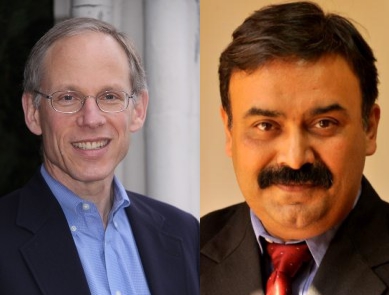
    Abhijit Bhaduri, chief learning officer, Wipro, in a conversation with George Anders, popular American business journalist and author of four books, on why a qualification in liberal arts is gaining importance in the corporate world, especially in IT companies.

    I know parents who roll up their eyes in horror when their kids want to pursue a degree in liberal arts in college. Does ‘liberal arts’ fall short of that promise, or is it the hottest degree for the future?

    zoha

    My interest in the subject was triggered by Pulitzer Prize winning journalist George Anders, who wrote a post for Forbes in 2015 titled ‘That ‘Useless’ Liberal Arts Degree Has Become Tech’s Hottest Ticket’. He explains why Facebook and Uber believe that the war for talent has moved to non-technical jobs, particularly sales and marketing.

    AB. Is a liberal arts degree ‘impractical’ (proxy for employability) to pursue?
    GA: It depends on your time horizon. When the workforce needs are predictable and companies optimise for the short run, this dynamic favours business or engineering graduates who can be plugged into productive jobs right away. In such situations, nonpractical majors may be seen as ‘useless’. Why take a year to train an anthropology major when US universities’ output of ready-for-action marketing majors, accounting majors, etc. is soaring?

    These days, however, growth opportunities and business models are in flux. As a result, there’s greater need for highly agile people who can move from specialty to specialty as needed, rather than single-subject experts who can’t be replanted. Liberal arts’ training develops this mobility. In my forthcoming book, You Can Do Anything, I will focus on ways to put this dynamic to use in building your own career or running your own business.

    AB. What does a degree in liberal arts teach you that is valuable to software companies?
    GA: I’ll offer you three common payoffs, focussed mostly on areas such as sales, marketing and project management.

    1. Dealing with ambiguity

    Liberal arts majors (generally) spend more time working with murky and fragmentary data. They are quite comfortable coming up with ways to proceed amid ambiguity.

    zoha

    2. Emotional intelligence

    Study a lot of novels, and you’ll be attuned to different people’s motivations — including some people whose life values are highly at variance with your own. Study a lot of history, and you’ll have a sense of how coalitions form and break up. This can be quite valuable in negotiating with partners, figuring out what’s keeping the reluctant customer from buying more, etc.

    3. Persuasive speaking

    In the social sciences and humanities, students have to debate and convince others about their point of view unlike STEM fields, where students generally don’t have to talk as much because there is one right answer, logically speaking.

    In business, the thorniest challenges come when it isn’t clear that there is a right answer. In such situations, companies need flexible thinkers who can work through a series of trade-offs and uncertainties. Just as important, they need bold communicators who can champion ‘the best idea for now’, while doing it in a way that makes it possible to regroup later without too much shame.

    AB. Is the liberal arts major valuable to companies beyond software?
    GA: Yes. There are a surprising number of philosophy majors who do extremely well in finance/investing. There’s something about the discipline of forming belief systems, critiquing them, etc. that can translate into a great knack for sorting through market chaos and finding opportunities that others don’t see.

    AB. Should L&D teams be encouraging liberal arts appreciation among business leaders?
    GA: Leaders often are the outside face of the company, dealing with regulators, key suppliers, unions, the general public, etc. Being able to understand multiple perspectives — even if they are being expressed in jarring ways — can have a huge impact on a company’s reputation, and its ability to sort out turmoil without making lasting enemies. Ditto for the ability to communicate in a way that’s mindful of audiences’ emotional state as well as logical considerations.

    (The author is chief learning officer, Wipro. Follow him on Twitter @AbhijitBhaduri. Also read his views on his personal blog www.abhijitbhaduri.com)

    Abhijit Bhaduri Emotional intelligence employability Facebook George Anders Liberal arts nontechnical jobs Persuasive speaking sales and marketing Uber War for talent Wipro
    Share. LinkedIn Twitter Facebook WhatsApp
    mm
    Abhijit Bhaduri

    Bhaduri is an author, columnist and management consultant. The former chief learning officer of Wipro is also a noted speaker.

    Leave A Reply Cancel Reply

    Related Posts

    POV: Is the MBA still relevant, or has on-the-job experience become the better credential?

    May 4, 2026

    Progress Software opens new office, expands India presence

    April 16, 2026

    Wipro’s Seoul expansion opens doors for local talent

    March 24, 2026

    Dhirendra Nath is Altimetrik’s new CHRO

    March 6, 2026
    Editorial

    Why great ‘Number Twos’ rarely become ‘Number One’

    The pattern is familiar enough that it no longer surprises. A senior leader exits. The…

    The problem isn’t HR. It’s how managers are measured

    The image circulated widely: a professional working from a parked car, laptop balanced precariously, joining…

    EDITOR'S PICKS

    The Leela’s 15-month bet on building future general managers

    May 12, 2026

    Upward conversations: When learning flows upward

    May 12, 2026

    POV: Do office mandates build culture or resentment?

    May 11, 2026

    Why great ‘Number Twos’ rarely become ‘Number One’

    May 10, 2026
    Latest Post

    Karnataka Government raises DA to 15.75%

    News May 12, 2026

    Karnataka government employees and pensioners will receive a higher dearness allowance (DA) after the state…

    SBI workforce reaches 5-year high after hiring nearly 9,000 employees in FY26

    News May 12, 2026

    State Bank of India (SBI) expanded its workforce to a five-year high in FY26 after…

    V-Bazaar plans major hiring push as retail expansion accelerates in smaller towns

    News May 12, 2026

    V-Bazaar is planning a significant workforce expansion as the fashion and lifestyle retailer accelerates store…

    Starbucks cuts 61 technology jobs

    News May 12, 2026

    Starbucks has eliminated 61 corporate technology roles at its Seattle headquarters as the coffee chain…

    Asia's No.1 HR Platform

    Facebook X (Twitter) Instagram LinkedIn WhatsApp Bluesky
    • Our Story
    • Partner with us
    • Career
    • Reach Us
    • Exclusive Features
    • Cover Story
    • Editorial
    • Dive into the Future of Work: Download HRForecast 2024 Now!
    © 2026 HRKatha.com
    • Disclaimer
    • Refunds & Cancellation Policy
    • Terms of Service

    Type above and press Enter to search. Press Esc to cancel.