


Close Menu
    Facebook X (Twitter) Instagram
    • Our Story
    • Partner with us
    • Reach Us
    • Career
    Subscribe Newsletter
    HR KathaHR Katha
    • Exclusive
      • Exclusive Features
      • Perspectives
      • Friday Features
      • herSTORY
      • Case-In-Point
      • Point Of View
      • Research
      • HR Pops
      • Dialogue
      • Movement
      • Profile
      • Beyond Work
      • Rising Star
      • By Invitation
    • News
      • Global HR News
      • Compensation & Benefits
      • Diversity
      • Events
      • Gen Y
      • Hiring & Firing
      • HR & Labour Laws
      • Learning & Development
      • Merger & Acquisition
      • Performance Management & Productivity
      • Talent Management
      • Tools & Technology
      • Work-Life Balance
    • Special
      • HR Forecast 2026
      • Cover Story
      • Editorial
      • HR Forecast 2024
      • HR Forecast 2023
      • HR Forecast 2022
      • HR Forecast 2021
      • HR Forecast 2020
      • HR Forecast 2019
      • New Age Learning
      • Coaching and Training
      • Learn-Engage-Transform
    • Magazine
    • Reports
      • Whitepaper
        • HR Forecast 2024 e-mag
        • Future-proofing Manufacturing Through Digital Transformation
        • Employee Healthcare & Wellness Benefits: A Guide for Indian MSMEs
        • Build a Future Ready Organisation For The Road Ahead
        • Employee Experience Strategy
        • HRKatha 2019 Forecast
        • Decoding and Driving Employee Engagement
        • One Platform, Infinite Possibilities
      • Survey Reports
        • Happiness at Work
        • Upskilling for Jobs of the Future
        • The Labour Code 2020
    • Conferences
      • Leadership Summit 2025
      • Rising Star Leadership Awards
      • HRKatha Futurecast
      • Automation.NXT
      • The Great HR Debate
    • HR Jobs
    WhatsApp LinkedIn X (Twitter) Facebook Instagram
    HR KathaHR Katha
    zoha
    Home»Exclusive Features»Point Of View»POV: Will merit-based promotions override tenure-linked advancement?
    Point Of View

    POV: Will merit-based promotions override tenure-linked advancement?

    For HR leaders today, the challenge is no longer choosing between merit and tenure—it is designing a growth philosophy that rewards performance while remaining equitable, defensible and built for the long term.
    mmBy Radhika Sharma | HRKathaFebruary 2, 2026Updated:February 2, 20265 Mins Read20541 Views
    Share LinkedIn Twitter Facebook WhatsApp
    Share
    LinkedIn Twitter Facebook WhatsApp

    Not too long ago, promotions followed a predictable rhythm. Stay long enough, learn the ropes, prove consistency—and growth would eventually arrive. But that rhythm is now being disrupted.

    As organisations compete fiercely to retain top performers, waiting no longer feels like a viable strategy. High-impact employees want recognition sooner, and companies are increasingly willing to accelerate careers to keep them engaged. Yet this shift brings an uncomfortable tension into the workplace—when one person leaps ahead, others instinctively measure fairness against time served.

    zoha

    Will merit-based promotions override tenure-linked advancement, even if it creates pay compression, role imbalance or morale challenges within teams? The question is forcing leaders to rethink what truly qualifies as “earned” growth. Is it the speed of contribution, the depth of experience or the readiness to shoulder greater responsibility? More importantly, how do organisations move faster without weakening the structures that sustain trust, credibility and culture?


    Rajorshi Ganguli, president & group head – HR, Alkem Laboratories
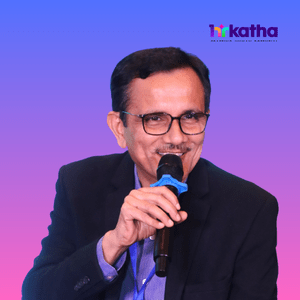
    Not entirely—tenure still matters, but it shouldn’t suffocate merit.

    I believe in maintaining a minimum residency period, because some level of discipline in the system is important. At the same time, organisations must guard against promoting people so frequently that others begin to question the legitimacy of those decisions.

    For me, credibility is everything. If I can clearly back a promotion with tangible examples of what the individual has delivered, people perceive it as fair. But the moment you cannot justify why someone was fast-tracked, the promotion loses its meaning.

    Another aspect I feel strongly about is the definition of a real promotion. In corporates, I often see two types. One is when an individual moves into a genuinely different role—where responsibilities expand, expectations shift and the person must operate at a new level. That is meaningful progression.

    The other is what I call an in-situ promotion, where only the grade or designation changes but the work remains exactly the same. To me, that is not a true promotion. Growth should always come with enhanced responsibility or a fundamentally different role.

    zoha

    So while tenure should not become a barrier—especially when someone has delivered exceptional results and a suitable role exists—it cannot be discarded entirely. Without some tenure framework, promotions may start happening every few months, and that creates chaos.

    Ultimately, it is about balance. Tenure should provide structure, but it should never suffocate meritocracy.

    Takeaway: If tenure prevents you from recognising genuine achievement, you risk killing the very culture of performance you are trying to build.


    Sanjay Bose, executive vice president – HR & L&D, ITC Hotels
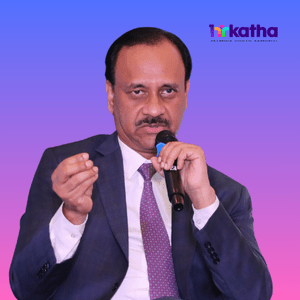
    It depends—there’s no universal answer.

    In my view, promotions cannot follow a single universal rule. The decision must always reflect the context of the role, the business environment and what the organisation needs at that moment.

    There are roles where inherent capability becomes critical—especially given the times we are operating in. But there are also roles that are deeply rooted in experience and tenure. Both realities coexist.

    For instance, if I am facing a talent crunch, I may need to progress someone quickly to a Tier-2 role and consciously take that risk. When the business demands speed, backing the right fit becomes the right decision.

    On the other hand, if the organisation is not expanding rapidly and opportunities are limited, it may be wiser to allow individuals to deepen their capabilities in their current roles before moving ahead. That creates a more measured and sustainable progression.

    So for me, the answer lies in situational balance. There is no ‘one-size-fits-all’ philosophy.

    Takeaway: Promotions should reflect what the organisation is facing—whether it requires bold moves or thoughtful patience.


    Saba Adil, CHRO, Edelweiss Life Insurance

    Yes, but only if structured properly.

    Career progression is undeniably speeding up. High performers today expect faster growth, and organisations are responding by rewarding impact, skills and readiness rather than simply counting years spent in a role.

    Yes, merit will play a much larger role in how people grow—but it cannot exist in isolation. Experience still matters, not as a measure of time served, but for the judgement, maturity and depth it brings.

    The real risk emerges when fast promotions happen without structure. Over time, this can lead to pay distortion, fragile role design and disengaged teams—especially when individuals are elevated before they are fully prepared to handle complex responsibilities.

    This is why I believe the conversation must shift from fast growth to earned growth. Progression should reflect sustained performance, the right skills, leadership behaviour and the demonstrated ability to operate at the next level—not just short-term wins.

    Fairness and transparency become critical in such transitions. When employees do not understand why someone has moved ahead faster, the organisation pays the price through disengagement, loss of trust and cultural fractures.

    Growth must therefore be anchored in capability, impact, readiness and long-term sustainability.

    Takeaway: When people can clearly see what growth looks like—and what it takes to get there—organisations can reward high performers without weakening the culture that holds everything together.

    career progression equitable growth high performer retention HR decision-making HR leadership HRKatha POV leadership credibility merit based promotions organisational fairness pay compression People management performance culture promotion philosophy Rajorshi Ganguli Alkem Laboratories Saba Adil Edelweiss Life Insurance Sanjay Bose ITC Hotels Talent Management tenure vs merit Workforce strategy
    Share. LinkedIn Twitter Facebook WhatsApp
    mm
    Radhika Sharma | HRKatha

    Radhika is a commerce graduate with a curious mind and an adaptable spirit. A quick learner by nature, she thrives on exploring new ideas and embracing challenges. When she’s not chasing the latest news or trends, you’ll likely find her lost in a book or discovering a new favourite at her go-to Asian eatery. She also have a soft spot for Asian dramas—they’re her perfect escape after a busy day.

    Leave A Reply Cancel Reply

    Related Posts

    POV: Is it cheaper to upskill or hire new talent?

    May 25, 2026

    The new power map inside HR

    May 25, 2026

    HRForecast 2026: Capability will define employability, credentials will provide context – Sudakshina Bhattacharya, President & CHRO, HDFC ERGO General Insurance

    May 22, 2026

    Mizuho Global Services appoints Supriya Wig as VP–HR

    May 20, 2026
    Editorial

    The new power map inside HR

    The org chart did not predict this shift. Business urgency did. Corporate HR structures still…

    Why HR cannot serve both employees and employers equally

    Happy HR Day. Across LinkedIn today, companies will celebrate HR as the “voice of employees,”…

    EDITOR'S PICKS

    HRForecast 2026: High-performing cultures will be disciplined, not relentless – Mona Cheriyan, former president & group head HR, Thomas Cook

    May 29, 2026

    The feedback that never really leaves

    May 29, 2026

    Case-in-Point: Culture fit vs hiring bias

    May 28, 2026

    herSTORY: Shamita Ghosh, Head-HR, BookMyShow

    May 28, 2026
    Latest Post

    HG Infra Engineering gets J Kumar as new CHRO

    Movement May 29, 2026

    J Kumar has been appointed chief human resources officer (CHRO) at HG Infra Engineering. He…

    SC confirms Railway staff equal to Central govt employees

    IR & Labour Laws May 29, 2026

    The Supreme Court has ruled that Railway employees are equivalent to Central government staff, giving…

    Amdocs to trim global workforce by 10%?

    Uncategorized May 29, 2026

    Software giant Amdocs is preparing for a major round of layoffs as part of a…

    One-day TASMAC strike causes loss of sales worth Rs 8.5 crore

    News May 29, 2026

    A one-day strike by Tamil Nadu State Marketing Corporation (TASMAC) employees on 27 May led…

    Asia's No.1 HR Platform

    Facebook X (Twitter) Instagram LinkedIn WhatsApp Bluesky
    • Our Story
    • Partner with us
    • Career
    • Reach Us
    • Exclusive Features
    • Cover Story
    • Editorial
    • Dive into the Future of Work: Download HRForecast 2024 Now!
    © 2026 HRKatha.com
    • Disclaimer
    • Refunds & Cancellation Policy
    • Terms of Service

    Type above and press Enter to search. Press Esc to cancel.