



ESG has moved from the sidelines to the operating system of manufacturing.
In 2026, organisations will no longer compete only on cost, scale or efficiency. They will increasingly compete on how safely, responsibly and sustainably they operate.

This shift is fundamental because sustainability is not delivered through policies or statements. It is delivered through people, through how work is done on the ground, how decisions are taken and how leaders show up every day.
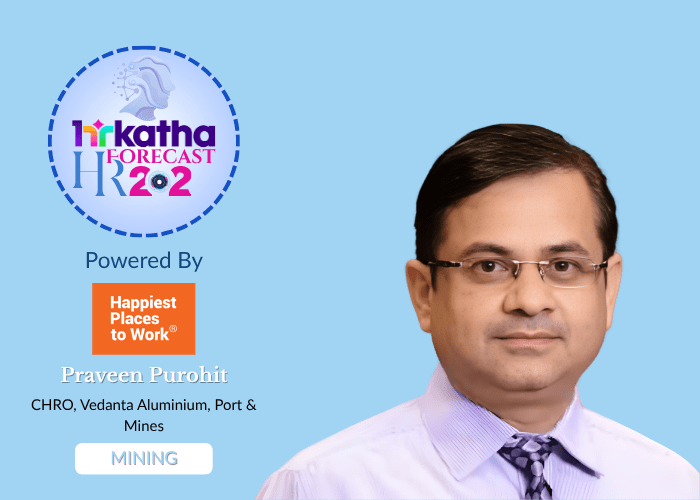
Praveen Purohit, CHRO at Vedanta Aluminium, Port & Mines, believes HR must sit at the centre of this transformation.
“How we hire, develop, reward and lead directly determines safety, performance, community impact and long-term value creation. That is why HR sits at the centre of the ESG agenda, owning the people levers that convert ambition into execution.”
Several signals suggest how this shift may unfold.
Signal 1: ESG will be operationalised—not treated as compliance
The social pillar of ESG begins with safety, dignity and inclusion—absolute non-negotiables in high-risk manufacturing environments.
But the deeper transformation lies in capability building.
As the aluminium industry moves towards green aluminium and lower-carbon production, organisations need leaders and employees who understand sustainability, ethical decision-making and community responsibility.
“HR plays a critical role in building these capabilities and encouraging a new way of working, where ESG is not an add-on, but part of everyday operational thinking,” Purohit notes.
This requires a fundamental shift in how work is designed and how people are developed.
Inclusion is central to this vision. Expanding opportunities for women across shop floors, technical roles and leadership is not just about representation. It strengthens innovation, improves decision quality and builds more resilient organisations.
“Creating gender-agnostic roles, enabling policies and safe, inclusive workplaces reflects the values we stand for and the future we are building.”
The governance dimension is where values turn into behaviour.
Accountability must be clearly defined and reinforced through performance management and incentives. When leaders are evaluated on safety, sustainability, ethical conduct and people development alongside business outcomes, ESG becomes part of how success is measured and rewarded.
“ESG succeeds when it is reflected in how we work, how we lead and how we create value for society; and that is where HR plays a truly transformative role.”
This is not ideology, Purohit emphasises. It is about risk, long-term value and the licence to operate in a globally competitive industry.
“ESG succeeds when it is reflected in how we work, how we lead and how we create value for society.”
Signal 2: Reverse mentoring will strengthen leadership relevance
Reverse mentoring is often framed as disrupting traditional power structures.
Purohit sees it differently—as a practical enabler of organisational learning.
“When younger employees share their perspectives on technology, emerging trends and new ways of working with senior leaders, it broadens leadership awareness and accelerates capability building without disrupting existing structures.”
The intent is not to challenge hierarchy, but to strengthen decision-making through relevance and context.
When designed with trust, clarity and mutual respect, these interactions encourage curiosity, reinforce inclusion and help leaders stay connected to how work is evolving on the ground.
“Over time, this creates a culture where learning flows both ways, leadership remains grounded, and the organisation adapts faster and more thoughtfully to change.”
Reverse mentoring succeeds not by dismantling hierarchy, but by keeping leadership connected to evolving realities on the ground.
In 2026, organisations that institutionalise this practice will maintain leadership relevance more effectively than those where senior decision-makers remain insulated from frontline insights and emerging trends.
“AI can highlight signals and probabilities, but culture, context and leadership still require human judgment.”
Signal 3: AI will create value through judgment enhancement—not automation alone
Predictive analytics and AI have been positioned as transformative for years. Progress, however, has been uneven.
Purohit believes AI delivers meaningful value when applied to specific, proven use cases rather than abstract promises.
A concrete example: Vedanta’s talent search initiative conducted assessments for over 15,000 employees, improving efficiency, consistency and acceptance of outcomes.
“That experience shows how AI can meaningfully support decisions by analysing large volumes of data to surface patterns in capability, potential and role fit that would otherwise take months to identify.”
Similar approaches can strengthen hiring, internal mobility and succession planning by improving visibility into attrition risk, performance trends and organisational health.
However, the human element remains critical.
“AI can highlight signals and probabilities, but context, leadership behaviour, culture and individual circumstances still require human judgement.”
The competitive advantage will not come from having more AI tools, but from combining machine intelligence with faster and better human judgment.
The real progress lies in using AI to enhance how people work—enabling faster, more informed decisions whilst leaders focus on interpretation, empathy and action.
“When used this way, technology doesn’t replace the human element; it sharpens it.”
In 2026, organisations that deploy AI to strengthen human judgment rather than replace it will outperform those pursuing automation for its own sake.
“The organisations that succeed will embed ESG into everyday operational thinking—not treat it as a separate agenda.”
The embedded transformation
These signals – ESG as operational practice, reverse mentoring as leadership strengthening, and AI as judgment enhancement – point to a common principle.
The most effective transformations are not parallel initiatives. They are integrated into how organisations function every day.
ESG creates value when safety, sustainability and governance shape operational decisions rather than remain confined to sustainability reports.
Reverse mentoring works when it strengthens leadership perspective rather than existing as symbolic exercise.
AI delivers results when it improves human decision-making with better insights and pattern recognition rather than attempting to automate complex judgments requiring context.
“This is not ideology,” Purohit emphasises. “It is about risk, long-term value and the licence to operate in a globally competitive industry.”
For high-risk manufacturing environments, this integration is particularly critical.
Safety cannot be separated from operations. Sustainability cannot operate independently of production. Governance cannot sit outside day-to-day decision-making.
The organisations that succeed will be those that make these considerations part of how work happens—not something layered on afterwards.
Three Strategic Imperatives
Embed ESG in Operations: Move beyond compliance to integrate safety, sustainability and governance into performance management, leadership evaluation and everyday decision-making.
Institutionalise Reverse Mentoring: Design structured programmes with clear goals, mutual respect and trust—enabling senior leaders to stay connected to frontline insights and emerging trends.
Deploy AI for Proven Use Cases: Focus on specific applications with demonstrated value—using technology to strengthen human judgment rather than replace it.
The Integration Test
The question for 2026 is not whether organisations have ESG commitments, reverse mentoring programmes or AI tools.
It is whether these are integrated into how work actually happens.
ESG that sits in sustainability reports but not in operational decisions becomes performative. Reverse mentoring that remains experimental rather than systematic misses its strategic value. AI that operates as separate technology layer rather than judgment enhancement tool underdelivers.
The organisations that succeed will be those where ESG shapes leadership behaviour and accountability, reverse mentoring keeps leaders connected to changing workforce realities, and AI strengthens decision-making through better insight rather than replacing human judgment.
Because in high-risk manufacturing environments, the gap between strategy and execution is not just inefficient—it is dangerous.
Safety, sustainability and governance must shape how work is designed, how people are developed and how decisions are made.
That is where HR plays a transformative role.
Not by creating separate ESG programmes, but by making ESG part of the organisation’s operating logic.
Because by 2026, organisations will not be judged by the ESG commitments they publish.
They will be judged by whether those commitments visibly shape how work gets done every day.