



The future of work may be shaped by technology, but it will be defined by trust.
For years, psychological safety has been positioned as a cultural aspiration—important, but often secondary to performance, efficiency and control.

That balance is shifting.
As organisations adopt AI, expand remote work and manage increasingly diverse workforces, the conditions that enable employees to speak up, take risks and admit mistakes are becoming harder to sustain—and more critical than ever.
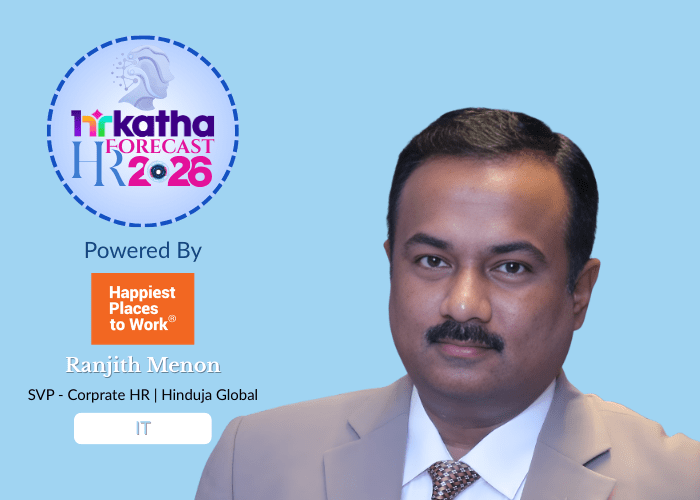
Ranjith Menon, SVP Corporate HR at Hinduja Global Solutions, believes 2026 will mark a turning point.
Psychological safety will no longer be a universal standard. It will become a competitive divider.
“It will separate organisations that thrive from those that stagnate.”
Several signals suggest how this divide may manifest.
Signal 1: AI will either enable trust—or institutionalise surveillance
AI is often positioned as a productivity enabler. But its real impact on workplace culture is more complex—and depends entirely on how it is deployed.
In high-trust organisations, AI is being used as a copilot—freeing employees from routine work and enabling greater creativity, experimentation and risk-taking.
In low-trust environments, the same technology is being used for algorithmic management—tracking keystrokes, monitoring behaviour and measuring micro-efficiency.
The result is a growing “surveillance culture” where employees become cautious, guarded and less willing to take risks.
Mistakes are hidden, not discussed. Transparency declines. Learning slows.
This creates a paradox: the very technology designed to improve performance can, if misused, undermine the conditions required for high performance.
When employees feel constantly monitored, they optimise for appearing productive rather than being productive.
By 2026, the gap between organisations using AI to augment versus those using it to monitor will be visible in engagement, innovation and retention metrics.
Signal 2: Remote work is creating “visibility theatre”
Remote and hybrid work were initially seen as enablers of flexibility and autonomy.
But in organisations lacking psychological safety, they are creating new forms of pressure.
Visibility is being equated with performance. Employees feel compelled to constantly signal activity—through meetings, messages and online presence—rather than focus on meaningful output.
Menon describes this as “visibility theatre.”
At the same time, a more subtle risk is emerging: digital silence.
In recorded calls and structured virtual environments, employees are less likely to speak up, challenge ideas or admit uncertainty. Without informal interactions—the “watercooler moments”—misinterpretations increase and trust erodes.
The absence of casual connection makes it harder to build the relational foundation that psychological safety requires.
By 2026, organisations that measure output rather than activity, and that intentionally design informal connection into remote work, will operate with visibly stronger cultures than those optimising for visible presence.
Signal 3: Predictive analytics will create an “analytical great divide”
For years, people analytics has promised a shift from intuition to insight.
By 2026, that shift will not be universal—but it will be decisive.
Menon describes this as an “Analytical Great Divide.”
On one side are organisations using predictive analytics and AI to anticipate attrition risk, map skills gaps in real time and enable proactive workforce planning.
On the other are organisations still reliant on historical reporting, fragmented data systems and leadership intuition during uncertainty.
This divide is not just technological—it is strategic.
Organisations that move to predictive models position HR as a growth engine, making faster, more informed decisions about talent deployment, capability building and workforce investments.
Those that do not risk making slower, reactive decisions in increasingly volatile environments—constantly responding to crises rather than anticipating them.
By 2026, predictive capability will not be a differentiator. It will be a baseline expectation for strategic HR functions.
Signal 4: Workforce personalisation will shift from generational labels to life-stage design
With five generations in the workforce, uniform policies are becoming increasingly ineffective.
But the shift is not towards fragmentation—it is towards intelligent personalisation.
Organisations are moving away from generational stereotypes and towards life-stage and need-based design.
This includes personalised benefits and flexibility models, reciprocal mentoring between younger and senior employees, and policies that prioritise autonomy over location.
The most effective organisations are acting as “experience architects”—using data to deliver tailored employee experiences whilst maintaining cultural cohesion.
The challenge is not diversity itself, but designing systems that can accommodate diversity without losing alignment.
Mass customisation—enabled by technology—allows organisations to offer meaningful choice at scale whilst preserving shared values and performance expectations.
By 2026, organisations still operating with one-size-fits-all HR policies will struggle to attract and retain talent across generational and life-stage diversity.
Signal 5: Skills-first models will replace proximity bias
As India emerges as a global innovation hub—particularly through Global Capability Centres—traditional HR mindsets are coming under pressure.
One of the most persistent is proximity bias—the belief that presence equals productivity.
Despite hybrid models, many organisations continue to rely on attendance and visibility as proxies for performance. This approach is increasingly untenable.
It creates mistrust, limits flexibility and pushes high-quality talent towards more adaptive, global employers.
The alternative is a skills-first model.
Rather than hiring for roles or tenure, organisations are beginning to map granular skills using AI, enable internal mobility and role transitions, and evaluate talent based on capability rather than credentials or location.
This shift—from monitoring to enabling—marks a fundamental change in how organisations think about work.
It replaces “factory thinking” (inputs and hours) with outcome thinking (capabilities and impact).
Organisations clinging to proximity-based models will face mounting talent disadvantages as competitors build more flexible, trust-based systems.
The trust divide
These signals—AI deployment choices, remote work dynamics, analytics maturity, workforce personalisation and skills-first models—are not independent trends.
They are converging forces shaping a single outcome: a growing divide between trust-based and fear-based organisations.
Safety-first organisations will use AI to augment rather than monitor, treat failure as learning data rather than career risk, and build cultures where employees speak up because it is psychologically safe to do so.
Fear-first organisations will use AI for surveillance and control, prioritise efficiency over trust, and struggle with disengagement, burnout and talent exodus.
By 2026, this divide will not be subtle. It will define performance, retention and long-term viability.
Organisations that recognise psychological safety as infrastructure—not aspiration—will adapt faster and retain stronger talent.
Those treating it as a soft concern will find themselves operating with fear-based systems that constrain exactly the capabilities—creativity, risk-taking, candour—required for complex environments.
Three Strategic Imperatives
Psychological Safety as Infrastructure: Move beyond cultural statements and design systems that reward openness, intelligent risk-taking and learning from failure—embedding safety into processes, not just values.
AI as Enabler, Not Monitor: Deploy technology in ways that enhance human capability rather than constrain behaviour—using AI for augmentation and insight, not surveillance.
Skills-First Models: Prioritise capability, adaptability and internal mobility over rigid roles and proximity-based performance—building trust through outcome accountability rather than activity monitoring.
The Safety Advantage
For years, psychological safety has been treated as a “soft” concept—desirable but secondary to efficiency and output.
By 2026, it will be recognised as an operating system.
Not a cultural add-on.
Not a leadership trait.
But a structural requirement for organisations navigating AI, complexity and constant change.
Because in a world where technology can optimise execution, the real differentiator will be whether people feel safe enough to think, challenge and contribute fully.
AI can automate tasks. It cannot create the conditions for innovation, honest feedback or intelligent risk-taking. Those require psychological safety.
By 2026, the divide will be structural and visible.
Some organisations will operate with trust-based systems: AI deployed to enable, remote work designed for output not visibility, analytics used for prediction not just reporting, and workforce models built on capability not proximity.
Others will maintain fear-based architectures: surveillance cultures, visibility theatre, reactive decision-making and rigid role structures.
The former will adapt, innovate and retain talent. The latter will quietly fall behind—struggling with disengagement, slower learning and mounting competitive disadvantage.
Because psychological safety is not soft.
It is the infrastructure that determines whether organisations can use the capabilities—human and technological—they have built.
And that is what will separate those that thrive from those that stagnate.