

Close Menu
    Facebook X (Twitter) Instagram
    • Our Story
    • Partner with us
    • Reach Us
    • Career
    Subscribe Newsletter
    HR KathaHR Katha
    • Exclusive
      • Exclusive Features
      • Perspectives
      • Friday Features
      • herSTORY
      • Rising Stars
      • Case-In-Point
      • Point Of View
      • Research
      • HR Pops
      • Dialogue
      • Movement
      • Profile
      • Beyond Work
      • By Invitation
    • Brief News
      • Global HR News
      • Compensation & Benefits
      • Diversity
      • Events
      • Gen Y
      • Hiring & Firing
      • HR & Labour Laws
      • Learning & Development
      • Merger & Acquisition
      • Performance Management & Productivity
      • Talent Management
      • Tools & Technology
      • Work-Life Balance
    • Special
      • Editorial
      • HR Forecast 2026
      • Cover Story
      • HR Forecast 2024
      • HR Forecast 2023
      • HR Forecast 2022
      • HR Forecast 2021
      • HR Forecast 2020
      • HR Forecast 2019
      • New Age Learning
      • Coaching and Training
      • Learn-Engage-Transform
    • Studio
      • The CHRO Playbook
      • Quick HR Insights
      • The Corner Office
    • Reports
      • Whitepaper
        • HR Forecast 2024 e-mag
        • Future-proofing Manufacturing Through Digital Transformation
        • Employee Healthcare & Wellness Benefits: A Guide for Indian MSMEs
        • Build a Future Ready Organisation For The Road Ahead
        • Employee Experience Strategy
        • HRKatha 2019 Forecast
        • Decoding and Driving Employee Engagement
        • One Platform, Infinite Possibilities
      • Survey Reports
        • Happiness at Work
        • Upskilling for Jobs of the Future
        • The Labour Code 2020
    • Forums
      • HRKatha Inner Circle
      • HRKatha Futurecast
      • Leadership Summit 2025
      • Rising Star Leadership Awards
      • HRKatha Futurecast 2025
      • Automation.NXT
      • The Great HR Debate
    WhatsApp LinkedIn X (Twitter) Facebook Instagram
    HR KathaHR Katha
    Home»Exclusive Features»Research»Indian IT companies need to bridge the gap on gender diversity
    Research

    Indian IT companies need to bridge the gap on gender diversity

    mmBy Dr. Prajjal Saha | HRKathaOctober 24, 20173 Mins Read3987 Views
    Share LinkedIn Twitter Facebook WhatsApp
    Share
    LinkedIn Twitter Facebook WhatsApp

    According to a survey on the gender gap in the Indian tech industry, by Belong, women account for only 34 per cent of the engineering workforce of IT firms.

    Gender gap in the tech industry is an old issue, which is still being tackled by various companies. While there may be several tech companies claiming that the ratio of women engineers has increased in their firm, the numbers are not encouraging.

    According to a survey on the gender gap in the Indian tech industry, by Belong, women account for only 34 per cent of the engineering workforce of IT firms. This shows that tech companies still have less number of women employees.

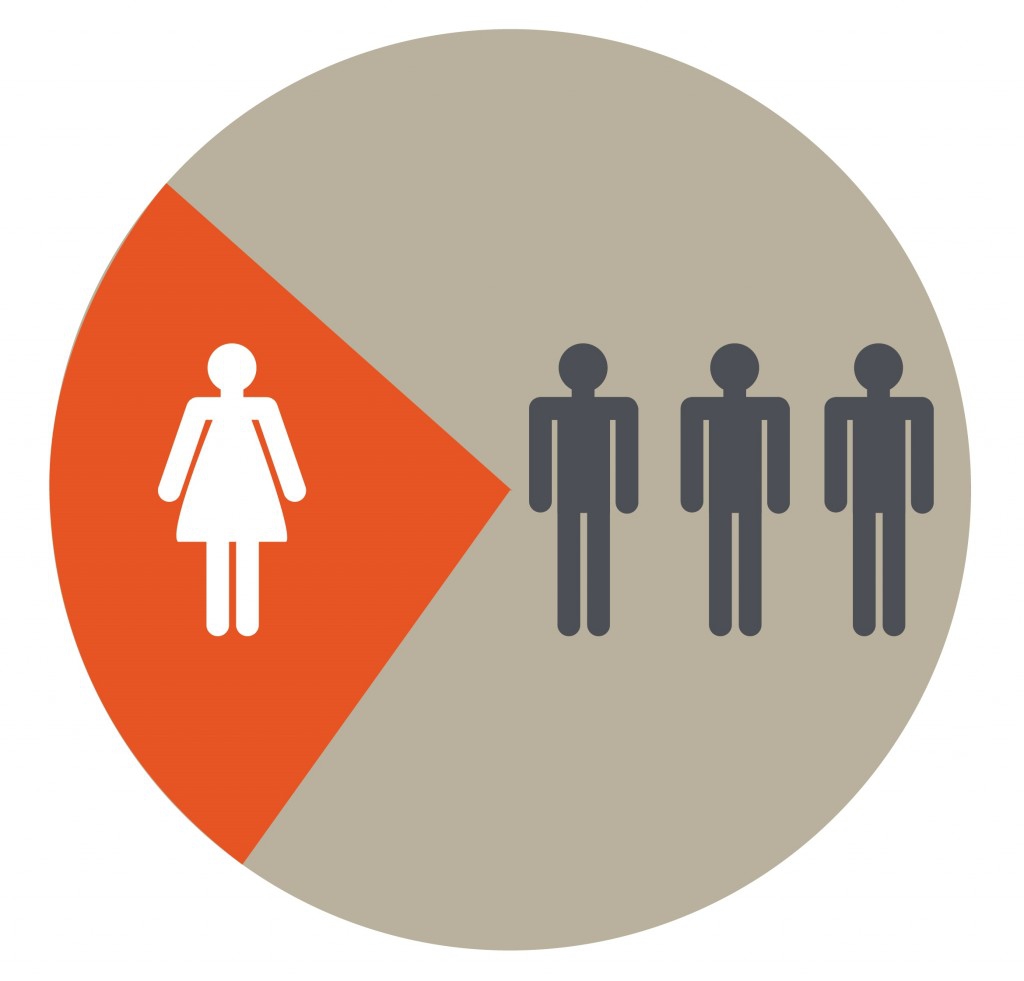
    The survey also found that there is one woman engineer against three male engineers. This leads to the fact that Indian tech companies have only 26 per cent women in engineering roles.

    Findings suggest that science, technology, engineering and math (STEM) jobs attract less women.

    The survey was done with all ITES companies, which have more than 50 employees and the data was collected from around three lakh women.

    A difference was also seen in the career trajectories of women engineers compared to male engineers. It was found that on an average, men move to managerial positions after six years of experience, whereas women make such moves after eight years of experience.

    The survey also revealed that women do not stick to core engineering roles and shift to other roles after some years. 45 per cent of women moved from core engineering roles after eight years and joined marketing, product management or consulting.

    More women engineers exist in software-testing roles compared to core programming roles. This is despite the fact that in software testing there is a significantly lesser number of jobs compared to programming, and the skill level sought is also lesser.

    For every 100 testing jobs, there are 34 women compared to 66 men, but this ratio changed in hardcore programming roles with 25 women compared to 75 men.

    Over the years, the percentage of women working in a company drops. If 29 per cent women start working in a given year then this drops to seven per cent after 12 years. Also, the biggest drop is observed in the first five years.

    The major reason for this drop is women taking a break to start families, and many not returning to work.

    Recently, a lot of initiatives and programmes have been launched by tech companies to bring back women on a career break by giving them training and providing incentives.

    Belong Gender Gap Indian IT Companies
    Share. LinkedIn Twitter Facebook WhatsApp
    mm
    Dr. Prajjal Saha | HRKatha

    Dr. Prajjal Saha is a business journalist and the editor-publisher of HRKatha. He writes on the realities of work and organisations, offering a clear-eyed view of how companies translate intent into action—often revealing the gap between the two. With over 25 years of experience, he focuses on interpreting workplace trends and leadership decisions in a way that is both insightful and accessible. He founded HRKatha in 2015 to create a platform for credible, insight-driven analysis of the evolving workplace.

    Leave A Reply Cancel Reply

    Related Posts

    20% of managers say AI is cutting their need for empathy. Just 12% see the opposite

    September 30, 2026

    Same company, 81 percentile points apart: what ‘best employer’ lists don’t measure

    September 23, 2026

    Rich countries use ChatGPT 36 times more than poor ones. Job exposure explains only part of the gap

    September 16, 2026

    AI now shapes hiring at 85% of Indian firms. Only 35% report new early-career roles or skill needs

    September 9, 2026
    zoha
    Editorial

    The two-job job is becoming the new normal

    A colleague leaves. The position is not immediately filled. The work, however, does not wait…

    GCCs are not shrinking, the jobs that made them are

    The numbers that describe India’s GCC story in 2026 are impressive. More than 2,100 centres.…

    EDITOR'S PICKS

    The two-job job is becoming the new normal

    October 4, 2026

    Case-in-Point: The employee who doesn’t want to become a manager

    October 1, 2026

    herSTORY: Sonal Jain, Global Chief HR & Transformation Officer, EPL

    October 1, 2026

    HR Perspectives by Sharad K. Sharma: “We focus on making people decisions with clarity and fairness”

    September 30, 2026
    Latest Post

    The two-job job is becoming the new normal

    Editorial October 4, 2026

    A colleague leaves. The position is not immediately filled. The work, however, does not wait…

    From power stations to corporate HR: Panigrahi becomes ED – HR at NTPC

    Movement October 2, 2026

    Surya Narayan Panigrahi has spent more than 36 years with one employer. He has hardly…

    After Asia-wide roles, Kripa Krishnamoorthy takes charge of HR for Visa’s INSA market

    Movement October 2, 2026

    Kripa Krishnamoorthy has spent much of her HR career moving between two worlds: running people…

    BMW to cut 20% of senior management roles by 2027 as AI reshapes organisation

    Brief News October 1, 2026

    German luxury carmaker BMW AG plans to eliminate around 20 per cent of its senior…

    Asia's No.1 HR Platform

    Facebook X (Twitter) Instagram LinkedIn WhatsApp Bluesky
    • Our Story
    • Partner with us
    • Career
    • Reach Us
    • Exclusive Features
    • Cover Story
    • Editorial
    • Dive into the Future of Work: Download HRForecast 2024 Now!
    © 2026 HRKatha.com
    • Disclaimer
    • Refunds & Cancellation Policy
    • Terms of Service

    Type above and press Enter to search. Press Esc to cancel.