

Close Menu
    Facebook X (Twitter) Instagram
    • Our Story
    • Partner with us
    • Reach Us
    • Career
    Subscribe Newsletter
    HR KathaHR Katha
    • Exclusive
      • Exclusive Features
      • Perspectives
      • Friday Features
      • herSTORY
      • Case-In-Point
      • Point Of View
      • Research
      • HR Pops
      • Dialogue
      • Movement
      • Profile
      • Beyond Work
      • Rising Star
      • By Invitation
    • News
      • Global HR News
      • Compensation & Benefits
      • Diversity
      • Events
      • Gen Y
      • Hiring & Firing
      • HR & Labour Laws
      • Learning & Development
      • Merger & Acquisition
      • Performance Management & Productivity
      • Talent Management
      • Tools & Technology
      • Work-Life Balance
    • Special
      • HR Forecast 2026
      • Cover Story
      • Editorial
      • HR Forecast 2024
      • HR Forecast 2023
      • HR Forecast 2022
      • HR Forecast 2021
      • HR Forecast 2020
      • HR Forecast 2019
      • New Age Learning
      • Coaching and Training
      • Learn-Engage-Transform
    • Magazine
    • Reports
      • Whitepaper
        • HR Forecast 2024 e-mag
        • Future-proofing Manufacturing Through Digital Transformation
        • Employee Healthcare & Wellness Benefits: A Guide for Indian MSMEs
        • Build a Future Ready Organisation For The Road Ahead
        • Employee Experience Strategy
        • HRKatha 2019 Forecast
        • Decoding and Driving Employee Engagement
        • One Platform, Infinite Possibilities
      • Survey Reports
        • Happiness at Work
        • Upskilling for Jobs of the Future
        • The Labour Code 2020
    • Conferences
      • Leadership Summit 2025
      • Rising Star Leadership Awards
      • HRKatha Futurecast
      • Automation.NXT
      • The Great HR Debate
    • HR Jobs
    WhatsApp LinkedIn X (Twitter) Facebook Instagram
    HR KathaHR Katha
    Home»Exclusive Features»Research»Only 1% organisations in India in the ‘transformative’ maturity level of talent health
    Research

    Only 1% organisations in India in the ‘transformative’ maturity level of talent health

    mmBy Liji Narayan | HRKathaNovember 16, 20234 Mins Read11253 Views
    Share LinkedIn Twitter Facebook WhatsApp
    Share
    LinkedIn Twitter Facebook WhatsApp

    Twenty per cent of organisations in India are at the ‘foundational’ maturity level of talent health. What does this mean? It means that these organisations are focused on the building blocks of talent programmes and are managing to fulfil the basic talent needs of their business and employees. For those who are new to the term, ‘foundational’ talent programmes are impromptu in nature and compliance driven. The processes in place may be manual and far from formal. Foundational talent programmes are potentially interested in the role skills can play in talent management across the organisation, but they are yet to prioritise the identification of skills that exist or are required. The human resource (HR) departments in such establishments give more importance and weightage to basic and essential HR programmes such as hiring and compliance.

    Only one per cent of organisations in India are at the transformative level of maturity. In other words, these establishments have created talent programmes that promote a highly self-driven learning culture and have adopted skills as a common language across the organisation. They identify, analyse and leverage skills to support workforce planning and make strategic business decisions. Transformative talent programmes implement automated processes that are integrated with people, job roles and skills data to inform workforce decisions. The HR and talent leaders in such organisations are looked up to as strategic partners and their teams facilitate achievement of organisational and business outcomes.

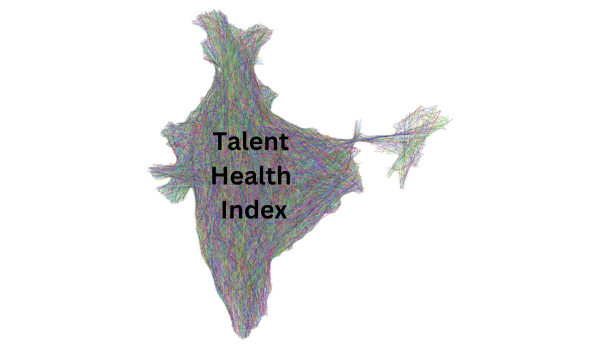
    As per the Cornerstone Talent Health Index India Report, 38 per cent of organisations in the country are in the sophisticated level of talent health, while 41 per cent are in the administrative level. That means, 38 per cent of the organisations have really advanced in terms of creating a strategic talent programme and have put in place processes and adopted tools to drive optimisation.

    Sophisticated talent programmes promote a strong learning culture and use certain analytics to fulfil the developmental requirements of their employees. These organisations have begun speaking the language of skills across the business to spot the skills gaps, yet, they lack skills data to make strategic workforce decisions. Talent programmes at the sophisticated level of maturity consist of automated processes. The chief learning officers and the chief HR officers of such organisations are looked up to as strategic business partners. Such organisations make valuable investments in talent in a democratic manner.

    Organisations at the administrative level of maturity in talent health have already laid down the foundation for their talent programmes and are now looking at strategic initiatives that are becoming successful. Administrative talent programmes are not limited to compliance but go on to offer some skill-building opportunities for employees. However, skills have yet to become a common language across the organisation. While the programmes and processes within administrative talent are often manual, the process of automating them has already begun. The HR departments in such organisations are well on their way to becoming strategic partners for the business, despite the majority of the budget decisions being taken top-down.

    Globally, the average talent health index (THI) score is 88.1, while for India the score is 82.9! Spain has amonst the highest scores, of 88.9, followed by the UK at 87.6, Germany at 86.9, and Australia and N Zealand at 86.7. Japan has a THI score of 86, while Singapore and Hong Kong have a score of 85.4 and France of 84.

    The seven dimensions of talent health, as per the Cornerstone report are: talent reporting, data and analytics; culture and technology; skills strategy; learning and development; content strategy; performance management; talent mobility

    The three weakest dimensions for organisations in India are talent reporting, data and analytics, followed by learning and development, and finally, technology and culture.

    administrative Cornerstone foundational maturity level sophisticated Talent Health Index THI transformative
    Share. LinkedIn Twitter Facebook WhatsApp
    mm
    Liji Narayan | HRKatha

    HRKatha prides itself in being a good journalistic product and Liji deserves all the credit for it. Thanks to her, our readers get clean copies to read every morning while our writers are kept on their toes.

    Leave A Reply Cancel Reply

    Related Posts

    The $9.6 trillion shrug

    July 15, 2026

    One in three entry-level tasks are now done by AI. The first job is being reinvented

    July 8, 2026

    Cybersecurity doesn’t have a hiring problem. It has a capability problem!

    July 1, 2026

    Global talent mobility in retreat: AI is the exception

    June 24, 2026
    zoha
    Editorial

    The interview was never measuring what we thought it was

    I was speaking recently to the HR Head of a mid-sized IT company about hiring.…

    You outsourced the creche. Not the responsibility

    There is a particular kind of trust between an employer and an employee who leaves…

    EDITOR'S PICKS

    herSTORY: Shruthi Sudhanva, Chief People Officer, Excelsoft Technologies

    July 16, 2026

    Case-in-Point: The AI replacement conversation

    July 16, 2026

    The $9.6 trillion shrug

    July 15, 2026

    HR Perspectives by Kundan Kumar: “Diversity creates real value only when it is underpinned by inclusion”

    July 15, 2026
    Latest Post

    Kerala launches hiring, reskilling initiative for 600 laid-off CorroHealth employees

    News July 16, 2026

    The Kerala government has partnered with the Group of Technology Companies (G-Tech) to help around…

    OpenAI employees back rival AI policy group, highlighting differing views within workforce

    News July 16, 2026

    A group of OpenAI employees has donated more than $215,000 to a political action committee…

    Novartis promotes Pankhuri Garg as director, talent & development

    Movement July 16, 2026

    Novartis has elevated Pankhuri Garg to director, talent & development, where she will now shape…

    Cognizant to hire 1,500 US graduates by end of 2026, expand AI talent pipeline

    News July 16, 2026

    Cognizant plans to hire 1,500 college graduates across the US by the end of 2026,…

    Asia's No.1 HR Platform

    Facebook X (Twitter) Instagram LinkedIn WhatsApp Bluesky
    • Our Story
    • Partner with us
    • Career
    • Reach Us
    • Exclusive Features
    • Cover Story
    • Editorial
    • Dive into the Future of Work: Download HRForecast 2024 Now!
    © 2026 HRKatha.com
    • Disclaimer
    • Refunds & Cancellation Policy
    • Terms of Service

    Type above and press Enter to search. Press Esc to cancel.