


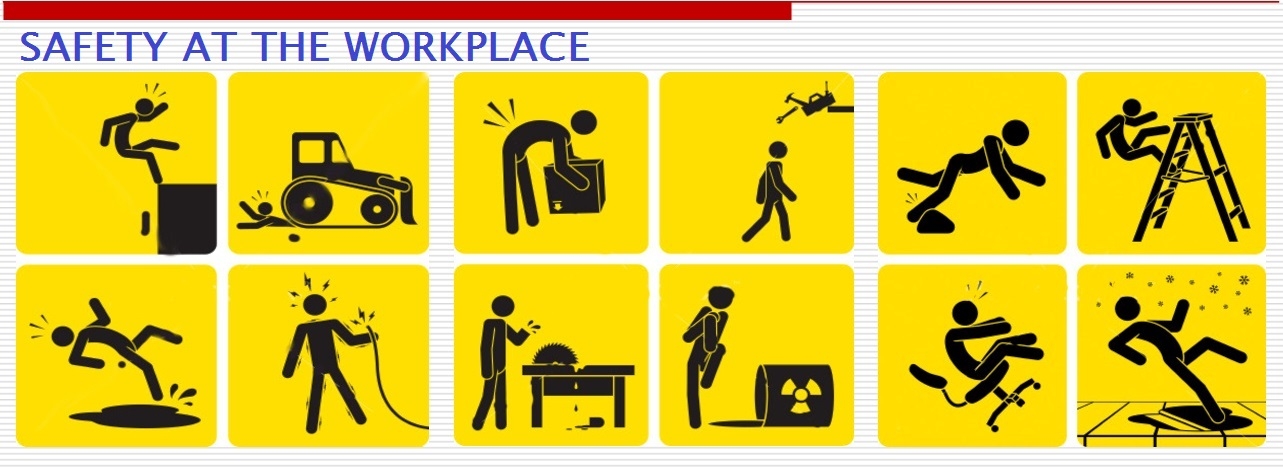
World Safety Day was observed on April 28, followed by the UN Global Safety Week scheduled from May 4–10. Organisations across the nation used this as an opportunity to review their organisational safety measures and reinforce among their employees and business associates the need to be safe and well.
The word ‘safety’ is no longer a safe word, anywhere, whether indoors or outdoors. We leave our homes everyday hoping that we would return home safely at the end of the day, but, there is always a fear that it may not be so. Things are not so safe after all—on the roads, inside our homes or at our workplaces.
For most organisations today, running a business is not interpreted as just a matter of attractive bottomlines, but the welfare of those who lead them towards securing those bottomlines. It is an employee-driven industry today and huge compensatory packages are not enough. Corporate houses ensure that their employees are well looked after in every way, and above all, are healthy and safe.
So, on World Safety Day, which was observed on April 28, 2015, organisations across the country saw an opportunity to reinforce safety norms and review their organisational safety procedures. Although most companies already have stringent and well-formulated safety systems in place, the global safety week was a good occasion to reinforce the importance of safety measures in organisations.

Vodafone India, one of the pioneers in the service sector to observe the HSW (Health Safety and Wellness) policy, commemorated World Safety Day on April 29, with a special campaign that revolved around the need to wear helmets while riding two-wheelers. Leading pharmaceutical company, Abbott India, undertook, a nationwide awareness drive across clinics and hospitals in the country on ‘Road Safety, on April 29.
Says Ashok Ramchandran, director, human resources, Vodafone India, “As a value-based organisation, Vodafone India is passionate about people. We are committed to achieving the highest standards in HSW (Health Safety and Wellness), with the aim of providing and maintaining a safe and healthy working environment for employees, associates, customers, partners, contractors, visitors and the public. The goal of HSW programmes is to foster a safe work environment.”
The leading telecommunications service provider has formed the Absolute Safety rules (ASR), a set of safety measures for the health and safety of its employees, which focusses primarily on three key risk areas—electrical safety, height work and road safety. The ASR includes rules, such as wearing a seat belt while driving, not exceeding speed limits, not using the mobile phone while driving, always wearing a helmet while riding, using of suitable personal protective equipment and safety harnesses while working at heights and allowing only qualified workers to fix electrical problems, among others. The eight Absolute Safety Rules have prevented 233 probable fatal incidents during the FY 2013–2014. Senior Management Tours (SMT) led by the CEO and senior leadership team members are regularly conducted at Vodafone India with the objective of assessing the status of HSW initiatives and providing suggestions for improvement.
Vodafone India has Safety Councils at its various circles, as well as at the corporate level, to monitor the annual HSW plan and also ensure that employees are not injured or taken ill at work. It also conducts annual training programmes. In fact, in FY 2013–14, about 1,908 such sessions were conducted.
For Abbott India, World Safety Week was observed on April 29, with a nationwide awareness drive across clinics and hospitals in the country on ‘Road Safety’. The drive, which was called ‘Police Yourself’, was launched with the aim of making people aware of the causes that lead to road accidents and reinforcing public commitment towards safe driving.
According to a company source, Abbot India is the first healthcare company to launch an initiative of this kind. The company’s field force will visit various hospitals and healthcare clinics and promote awareness among doctors and patients about safe two-wheeler driving.
With a growing awareness towards employee safety, most organisations today have developed their own safety processes. The Bengaluru-based IT major, Infosys, the Health Assessment & Lifestyle Enrichment plan (HALE), which deals with employee health issues. The organisation has its own safety week programmes, such as the HALE Health Week and HALE Safety Week, which address several safety and health-related issues of its employees.
In accordance with the ‘UN Global Road Safety Week’ (May 4–10), Shell, the multinational energy and petrochemical company, plans to observe today, May 6, 2015, as Safety Day in its company, globally. Shell, which takes the issue of safety very seriously, has kept aside one day in a year to assess its safety norms. The company ensures that facilities are well-designed and maintained, and operations are safe and reliable.
Shell addresses several important issues in its safety programme, such as safe road transport while delivering fuel to a customer, equipment to construction projects, or while travelling to meetings. The safety system also has something called Goal Zero, which ensures that the company operates without fatalities, while improving the safety leadership skills of the staff, simplifies requirements, and rewards successful performance.
Shell’s mandatory 12 life-saving rules are also regularly reinforced. These include prevention of serious injury or fatality by implementing simple measures, such as the use of seat belts, maintaining speed limits, and not using mobile phones while driving. In case of violation of these rules, disciplinary action, which can include termination of employment and removal of contractors from the site, is taken.
The company, has installed Health, Safety, Security and Environment (HSSE) compliant hoarding facility in all its forecourts in India, like in the Telescopic Canopy Column, where all work on changing the flex is done at the ground level. This minimises the risks involved in the process of putting up a hoarding. The company has also started a road safety awareness initiative in Surat, called the Road Safety Education programme. It is a five-city, road safety programme targeted at school students of Class VI and VII. The company has also organised a Road Safety Solidarity Walk, a programme which is being implemented by Fleet Forum (an International NGO) and which will be conducted in Mumbai, Bengaluru, Chennai, and Delhi NCR in a phased manner. It involves students who walk up to the nearest traffic junction from their school with Road Safety placards to spread the message of road safety to the public.

Like Shell, many companies have extended their safety measures beyond the workplace. Vodafone, for instance, discourages its employees from travelling on business after dark, especially from one town to another. The company does not hire any vehicle which is more than four years old. It has also launched initiatives, such as the Flash Mob, where ASR fliers are distributed and Nukkad Nataks are held within the city to educate people on the issue of road safety. Employees have to fasten seat belts and have a valid driving license. The use of mobile phones is not allowed while driving a vehicle and helmets for two-wheeler drivers are mandatory.
Similarly, Infosys keeps a check on the all round health of its employees and the impact of stress on them and their families. Its HALE programme primarily addresses four —stress, health, safety and leisure.
For this, the company has developed tools, to monitor the well-being of its employees and their families, such as the HALE Tool through which employees can assess their mental and physical status; the HALE Hotline, a 24-hour confidential hotline facility, which provides instant access to a trained professional, and the HALE Health Week, which is observed every year across Infosys locations, when employees get their medical check-ups done.
When it came to extending safety measures beyond the workplace, Vodafone went one step further. It sent a special safety kit, to the homes of all the employees recently. Each kit contained a pair of rubber gloves for protection from electrical hazards, an electric socket cover to prevent children from accidentally putting their fingers into a live socket, a first aid kit, a fridge magnet with a safety message as well as space to write down all emergency numbers, such as those of the ambulance, doctor, police and the fire brigade.

The company, in its bid to contribute towards society, has joined hands with the traffic police departments in many cities to organise safety weeks. Helmets are distributed to two-wheeler drivers and special helplines, and vehicle check-up camps are set up across the country.
It is indeed heartening to see corporate houses considering the issue of safety as important as their businesses. Organisations have learnt that for businesses to continue charting the growth curve, it is imperative that their employees not just remain safe but feel safe. This will ensure a marked reduction in the number of accidents and injuries, both at the workplace as well as outside, and thus, help in the overall growth of businesses.