


Indo National has been manufacturing batteries in India for more than five decades under the Nippo brand, with Japanese discipline and process rigour deeply embedded in its operating culture. It is not a sector that attracts headlines. Batteries sit quietly inside devices, noticed only when they fail. Yet the workforce challenges facing the business are anything but quiet. Long-serving plant employees work alongside younger professionals entering with very different expectations around technology, careers and growth. At the same time, automation, AI and newer battery technologies are reshaping how work gets done.
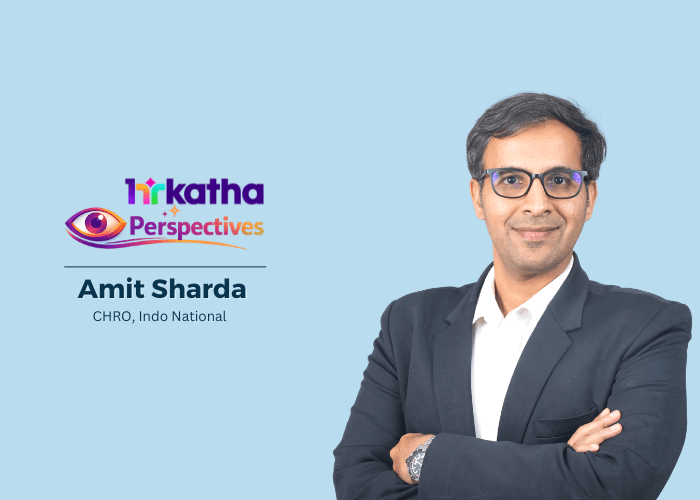
Amit Sharda, CHRO at Indo National, sits at the centre of that transition. In conversation with HRKatha, he explains why talent pipelines require deliberate construction, why succession planning is often tested only when it is too late to fix, and why manufacturing’s future depends as much on trust as it does on technology.
Looking beyond the obvious
How do you think about diversity in a manufacturing organisation, and what barriers still persist?
Diversity in manufacturing is often discussed through the lens of gender, but the conversation needs to be broader than that. The most impactful diversity in a manufacturing environment is often the kind that does not appear in representation dashboards. Diversity of experience, thought, background and problem-solving approaches can be just as important.
Diverse teams challenge assumptions in ways that homogeneous ones do not. In manufacturing, where process improvement and operational innovation are constant requirements, that challenge function is genuinely valuable.
The barriers are not always explicit. Sometimes they are embedded in longstanding assumptions about who fits particular roles or what a successful career path should look like. Progress requires organisations to question those assumptions continuously and create opportunities for people from different backgrounds to contribute and grow.
Representation matters, but inclusion matters more. Representation without inclusion is a headcount exercise. The goal is inclusion, not representation alone.
“The most successful labour relations are those where common goals outweigh differences.”
The pipeline excuse
Many organisations say they would hire more diverse talent if the pipeline existed. When is that a genuine constraint, and when is it simply a failure of effort?
Talent pipelines do not appear automatically. They need to be actively built.
There are genuine constraints in some specialised areas. Certain technical skills in battery manufacturing are scarce and take years of hands-on experience to develop. But in most cases, pipeline shortages are less about market availability and more about where organisations choose to look and how early they start building relationships.
What works is moving beyond passive recruitment. Partnerships with educational institutions, outreach programmes aimed at underrepresented groups, and structured pathways for people from non-traditional backgrounds all help widen access to talent. None of these interventions is particularly complicated. What they require is consistency.
Organisations that wait for talent to find them often end up competing for the same small pool of candidates. Those that actively build talent communities create options for themselves over time.
Diversity outcomes improve when companies stop treating the pipeline as something external and start treating it as something they can influence.
“The risk is that when leaders leave, the organisation discovers its culture was a personality rather than an institution.”
Succession planning beyond the PowerPoint
Most succession plans look impressive on PowerPoint. How do you know whether your leadership pipeline is genuinely real before a critical transition forces you to find out?
Succession planning reveals itself during transitions, not before them.
That is the moment when organisations discover whether their pipeline is real or whether it exists mainly on paper.
The difference rarely comes down to documentation. It comes down to the investments made years earlier. Meaningful role rotations, exposure to critical business challenges, honest development conversations and mentoring relationships that go beyond formality all contribute to leadership readiness.
Our objective is to ensure that key positions have multiple ready or near-ready successors. External hiring will always have a place, but organisations cannot rely on it as the default response whenever leadership gaps emerge. When that becomes the pattern, it usually signals that internal development has not received sufficient attention.
The true test is not whether you have names in a succession plan. It is whether leadership transitions happen without significant disruption to performance, culture or continuity. That outcome is built gradually and deliberately. It cannot be assembled at short notice.
“The underlying question is the same: where does my value fit in the future?”
Technology as colleague
How are you helping employees see AI and automation as enablers rather than threats, and where do the biggest confidence gaps still exist?
The conversation around AI needs to move away from replacement and towards augmentation.
Manufacturing has lived through multiple waves of automation. Each wave changed the nature of work, but not necessarily the need for skilled people. Automation on the shop floor did not remove the need for skilled operators; it changed what skill meant. AI is following a similar path.
The concern on a factory floor is often different from the concern in an office. Shop-floor employees may worry about automation replacing tasks they have spent years mastering.
Knowledge workers may wonder how AI will influence decisions traditionally made through experience and judgement. The underlying question is the same: where does my value fit in the future?
Our approach is to make the technology tangible. When employees see AI helping them reduce repetitive work and spend more time on quality improvement, problem-solving and innovation, confidence grows. Anxiety usually increases when technology feels abstract or imposed.
Reskilling therefore cannot be treated as a one-off programme. It has to become part of everyday work. The organisations that navigate this transition best will be those that position people and technology as complementary rather than competing forces.
“Sustainable organisations cannot rely on external hiring as the default response to leadership gaps.”
The founder’s shadow
When an organisation’s culture has been shaped by a handful of influential leaders over decades, how do you stop that culture becoming dependent on their personalities?
Founders and long-serving leaders influence culture in ways that often become visible only after they leave.
The risk is that when they leave, the organisation discovers its culture was a personality rather than an institution.
Building culture is one challenge. Institutionalising culture is another.
Institutionalisation happens when values become embedded in systems rather than personalities. Decision-making processes, leadership development, performance management and succession planning all play a role. When those mechanisms reinforce the same principles consistently, culture becomes more durable and less dependent on individual leaders.
At Indo National, the organisation benefits from decades of accumulated discipline around quality, process and operational excellence. The challenge is ensuring those strengths continue to evolve with the business. Legacy becomes an asset when it guides progress. It becomes a constraint when it prevents adaptation.
“Diversity outcomes improve when companies stop treating the pipeline as something external and start treating it as something they can influence.”
Common ground with the union
In industries with a strong union presence, how has the union-management dynamic changed, and where do you find common ground today?
The relationship has evolved significantly over the past decade.
The traditional adversarial model has gradually given way to something more collaborative. Both management and unions increasingly recognise that productivity, employee well-being and business sustainability are interconnected rather than competing objectives.
What makes that shift meaningful is transparency. Employees respond positively when organisations communicate openly about business realities and demonstrate a willingness to listen seriously to concerns. Trust builds when communication remains consistent during difficult periods, not just during stable ones.
Disagreements do not disappear. Nor should anyone expect them to. What changes is the ability to work through those differences constructively.
The strongest labour relations are not built on the absence of conflict. They are built on the presence of trust and a shared understanding of what both sides are trying to achieve.
“Talent pipelines do not appear automatically. They need to be actively built.”