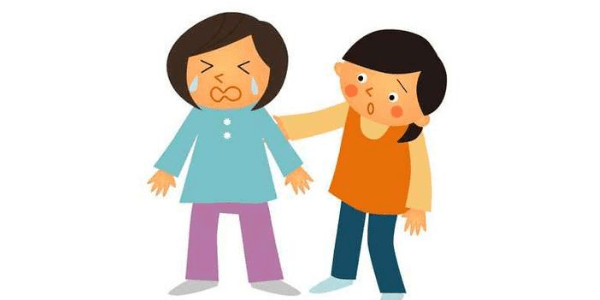
Empathy is more critical today than ever before. During the current crisis, the workforce across the globe is under additional stress of job instability, dealing with health issues, especially mental health and safety, and hence, it has become important for organisations to practise empathy.
According to studies carried out by Development Dimensions International (DDI), empathy is the biggest single leadership skill needed today.
Rising expectations
As organisations have come out effortlessly to stand behind employees and ensure their safety and wellbeing during the pandemic, there will be similar expectations from the employees once they are back to offices. Similarly, organisations must prepare now to facilitate the same level of collaboration and cooperation in the future when employees return.
Karan Makhania
“Companies have come up with new policy changes, including allowing more flexibility, which will continue even when employees return to office. This will only improve efficiency, effectiveness and work-life balance for employees.”
Those who will be able to excel at empathy in the post COVID-19 workplace will be quicker to build trust and relationships even virtually. If colleagues and customers know their leaders care about them, they will reciprocate and care about those leaders too. This will create a working dynamic of mutual loyalty and dedication. It will inspire both sides to put in extra effort to achieve ambitious goals, and adapt to the ever-changing economic landscape. Those who will lead with empathy will eventually win.
Rohit Thakur, CHRO, Paytm, believes, “It is empathy that helped us understand and address the needs of our colleagues and simultaneously stay on the growth track. In the post-COVID world, it will be more important than ever to have the same level of empathy organisations are showing right now. One needs to understand and listen to employees so that they can develop solutions that will help companies transition into the post-COVID world.”
Udbhav Ganjoo
“Organisations today are focused on being employee friendly and more empathetic, especially when it comes to taking care of employees. This is the most important element now. The pandemic has increased the empathy quotient between employees and employers.”
Going deeper, leaders will now make it a point to acknowledge and show emotions; to let others know that they are attentive to them and care about their well-being. Helping others label their emotions not only shows how much one cares for them, but it allows them to process their own emotions deeper and cope better with uncertainty.
For Karan Makhania, head – business HR and talent acquisition, Aegon Life, “The pandemic has given a reality check. Now that everyone is working from home, managers and leaders have realised how much employees have on their plates apart from official work. This realisation will reflect in the behaviour of the managers in the coming times.”
Adding further, he says, “Many organisations have done a good job of enabling ease of work while working from home. There is no chance of looking back from this journey of being an empathetic employer. Without any hesitation, employees will look up to their managers and leaders with higher expectations and hope.”
There are leaders who believe that empathy will be the only most important element in the workplace after things are back to normal. It will be bigger than any monetary reward or benefit.
Udbhav Ganjoo, head-HR, Mylan Laboratories Limited alludes, “Organisations today are focused on being employee friendly and more empathetic, especially when it comes to taking care of employees. This is the most important element now. The pandemic has increased the empathy quotient between employees and employers.”
Every organisation has rewards, such as increments, bonuses, incentives and benefits. However, Ganjoo states that while the softer elements, such as empathy existed before, the focus has now completely shifted to employee wellness — emotional and physical.
Stronger bonds and connections
Talking about emotional wellness, Ganjoo opines, “In the current context, emotional wellness means taking care of employees, and having a stronger connection with them across all hierarchies than there was earlier. This means, more attention from the manager — other than on just work and output— which will build a stronger connection.”
As we move forward, being empathetic will determine how well connected a manager is with the employees at every level. Apart from the workplace needs, it will be more about the holistic wellbeing of the employees, which will ensure better performance and management.
For instance, Ganjoo explains, “Employees will now expect that certain work be allowed to be done from home, and similarly, the managers will not mind considering such an option. It will be a challenge to meet the expectations of employees.”
Makhania holds a similar opinion. “Companies have come up with new policy changes, including allowing more flexibility, which will continue even when employees return to office. This will only improve efficiency, effectiveness and work-life balance for employees.”
Earlier, interviews used to take an entire day. Some candidates used to even commute for hours or even travel to different cities, spending days. However, the pandemic has made several things easier for organisations.
“In the past, for outstation candidates, travelling to cities for interviews was common. COVID has made us realise what a sheer waste of time, money and effort that was. Now, employers will consider the possibility of virtual interviews as an option, and a lot of other things will get eased out. Here, the empathy factor will make employers question as to why somebody should be summoned from afar or required to be physically present only to be spoken to for just half an hour when the same can be done virtually,” explains Makhania.
‘Empathy’ may not be a new trait for many organisations. Many have been empathetic towards their employees in pre-COVID times as well.
“While empathy existed earlier, the focus is more during these current times, as compared to pre-COVID times. A lot of these things were happening in an informal way, where much was not talked about. The pandemic has simply made all of us conscious and vocal about it,” adds Makhania.
Adversities have a strange way of bringing people together. Over the last several months, the bonds between the management, employees and colleagues have strengthened. From just being there to help each other, they have all emerged stronger, not just as individuals but as an organisation.
Rohit Thakur
“It is empathy that helped us understand and address the needs of our colleagues and simultaneously stay on the growth track. In the post-COVID world, it will be more important than ever to have the same level of empathy organisations are showing right now. One needs to understand and listen to employees so that they can develop solutions that will help companies transition into the post-COVID world.”
In Thakur’s words, “One needs to understand that after staying indoors and working from home for so long, some may be more comfortable with the remote working setup while others may just want to go back to working from offices. Businesses need to consider these situations and help employees in the transition, instead of simply following set guidelines. Given the enhanced work-from-home situation, it will definitely change the way many companies have been working in the past. It is as much about a behavioural mindset change as it is about a physical change to do with how work typically happens.”
As mentioned, industry experts believe that this will continue even in the post-pandemic scenario.
From being an athlete to an avid writer, she has found a happy space in discovering new places and exploring new cuisines. An English graduate from Delhi University, she is a hungry rover, who has a passion for food and travel, and likes to maintain a healthy work-life balance.