


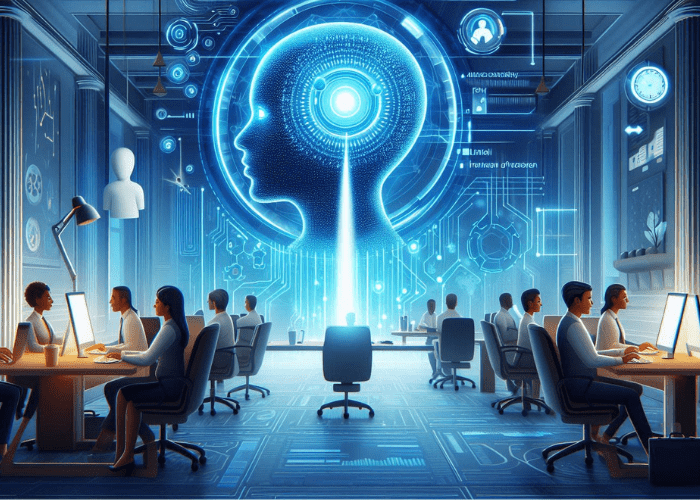
Forget the days of endless job board searches and serendipitous career moves. Artificial intelligence (AI) is ushering in a new era of internal mobility, powered by intelligent talent marketplaces. These platforms are fundamentally transforming how companies identify, develop, and deploy their most valuable asset: their people.
The power of AI matchmaking
The journey towards AI-driven mobility is driven by a powerful combination of vision and pragmatism. “A key area where AI is making significant strides is its ability to leverage skills data to match employees with the right internal opportunities,” says Vivek Tripathi, VP-HR NewGen Software. Imagine a world where, similar to LinkedIn recommendations, internal talent platforms use AI to suggest ideal roles that perfectly align with an employee’s expertise and career aspirations.
“AI not only enhances the efficiency of talent acquisition but also allows us to optimise our workforce distribution across locations based on skill concentrations.”
Sriharsha Achar, CHRO, Star Health and Allied Insurance
Gone are the days of relying solely on resumes. By analysing digital footprints encompassing experiences, skills, and potential, organisations can make informed decisions about internal talent deployment and development. AI’s ability to sift through vast datasets can even unearth hidden gems within the organisation, pinpointing individuals with exactly the right competencies for specific roles – a game-changer for talent management.
“This not only enhances the efficiency of talent acquisition but also allows us to optimise our workforce distribution across locations based on skill concentrations,” emphasises Sriharsha Achar, CHRO, Star Health and Allied Insurance. The benefits are clear: a more efficient talent allocation system and a workforce strategically positioned to leverage its collective expertise.
Fairness, personalisation, and engagement
One of the most critical advantages of AI is its ability to combat bias, a persistent challenge in traditional talent management. “AI algorithms evaluate employees based on objective criteria, reducing the influence of subjectivity in decision-making,” explains Atul Mathur, EVP & Head-Learning and Development, Aditya Birla Capital. “This ensures opportunities are distributed fairly, fostering a more inclusive work environment where everyone has a shot at advancement.”
“A key area where AI is making significant strides is its ability to leverage skills data to match employees with the right internal opportunities.”
Vivek Tripathi, VP-HR NewGen Software
But AI’s impact goes beyond fairness. It personalises the employee experience, boosting engagement and satisfaction. Imagine using augmented reality (AR) platforms to take virtual tours of potential assignment locations, getting a first-hand feel for the work environment before making a decision. AI can even create tailored assessment scenarios, allowing candidates to showcase their problem-solving skills in simulated environments relevant to the target role.
A holistic approach
The impact of AI extends far beyond just recruitment and placement. “It facilitates smarter hiring decisions by leveraging data analytics to assess performance, skills, career aspirations, and preferences,” asserts Achar. This empowers internal recruiters to build targeted talent pools and match the right candidates with the right roles, optimising workforce utilisation from day one.
“AI algorithms evaluate employees based on objective criteria, reducing the influence of subjectivity in decision-making.”
Atul Mathur, EVP & Head-Learning and Development, Aditya Birla Capital
Furthermore, AI is intricately linked with learning and development. “Recognising that employees may not possess all the necessary skills for a role, AI algorithms recommend personalised learning pathways to bridge those skill gaps,” explains Mathur. This could include e-learning courses, instructor-led programmes, or other developmental opportunities tailored to the specific needs of the individual and the position they’re aiming for.
By promoting continuous learning and upskilling, AI-driven talent mobility enhances the overall capability and resilience of the organisation. It can also significantly reduce employee attrition by empowering employees to explore internal opportunities for growth. Mathur adds, “Employees often leave due to a lack of perceived growth prospects. AI-driven mobility helps retain top talent by providing visibility into internal opportunities and encouraging career development within the company.”
Breaking down silos
AI fosters collaboration between talent and hiring managers, breaking down the silos that can often impede internal mobility. By facilitating transparent communication and alignment on talent strategies, AI creates a win-win scenario for all stakeholders. Talent managers gain access to a wider pool of qualified candidates, while employees have a clearer path for career advancement, ensuring the organisation remains agile in a dynamic business landscape.
To harness the power of AI-driven mobility, companies are integrating AI capabilities into their HR information systems (HRIS). These comprehensive employee profiles empower talent managers to identify high-potential employees for targeted training and deployment in both current and future roles.
However, widespread adoption remains a challenge. As Tripathi points out, “Such implementations are still rare, primarily confined to forward-thinking organisations, particularly MNCs.” This underscores the nascent stage of AI adoption in internal talent mobility.
Cultural acceptance and behavioural change also pose hurdles. The human element remains crucial, with both candidates and organisations valuing the importance of personal connections. Overcoming this resistance will be pivotal to realising the full potential of AI-driven solutions.
The reality is that AI holds immense promise for the future of internal mobility, but its full integration will take time. As Tripathi aptly concludes, “There’s a lot of promise, but it’s still going to take some time before AI does all these things seamlessly. The future of internal mobility lies in leveraging the strengths of AI – objectivity, personalisation, and data-driven insights – while preserving the human touch that is fundamental to successful talent management. Striking this balance will allow organisations to unlock the true potential of their workforce and navigate the ever-changing talent landscape with agility and foresight.”