



“
Talent decisions have long been shaped by proxies.

The institution on a CV. The marks on a transcript. The brand on a resume.
These shortcuts helped organisations process volume quickly, but at a cost.
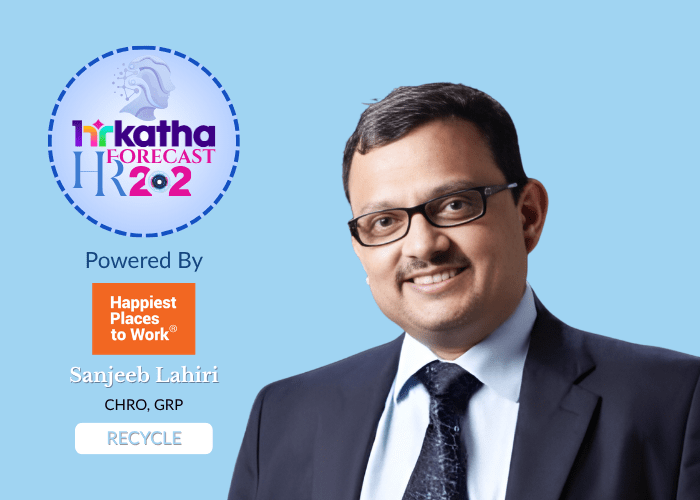
Sanjeeb Lahiri, CHRO at GRP, believes 2026 must mark a clear break from perception-led systems.
“Talent decisions based on perceptions must stop,” he says. “We need to move towards strength-based systems, data-backed decisions and hiring for the future, not like replacing a part in a machine.”
Several signals suggest how this shift may unfold.
Signal 1: Degrees will remain gatekeepers, but competencies will determine outcomes
The debate around skills versus degrees is often framed as a binary choice. Lahiri sees a more nuanced reality.
“Degrees will continue to indicate knowledge levels, acting as a gatekeeper,” he notes.
Beyond that initial filter, however, the focus is shifting decisively toward functional and behavioural competencies.
Capabilities are being validated through methods such as psychometrics, simulations and structured assessments.
“I see a more holistic view of candidates being taken, as humans, with fitment to the organisation given priority over marks or even skills.”
This marks an important shift. Degrees may open doors, but they no longer determine who succeeds.
The emphasis is moving from credential-led selection to human-centred assessment, evaluating how individuals think, adapt and align with organisational context, not just what they studied.
Signal 2: Continuous feedback will grow, but annual reviews will persist
The dominant narrative suggests annual performance reviews are becoming obsolete. Lahiri takes a more pragmatic view.
“Organisations are moving towards objective-based performance tracking, quicker feedback and target-based rewards,” he observes.
Real-time conversations, shorter goal cycles and immediate recognition are becoming standard practice.
However, the end-of-year appraisal is unlikely to disappear.
“The end-of-year note will continue for some time and form the base of talent development and annual rewards.”
This reflects operational reality. Continuous feedback addresses day-to-day performance, while formal reviews support compensation decisions, career progression and talent calibration.
The future is not one replacing the other, but both coexisting with clearer roles.
Signal 3: Compliance will become easier through digitalisation
Regulatory expectations around data privacy, workplace safety and employment standards continue to expand.
Yet Lahiri does not see compliance becoming significantly more burdensome.
“With the digital support available today, and regulatory agencies open to digital reporting, compliance workload is much easier.”
Digital frameworks are bringing transparency to processes that earlier relied on manual workarounds.
“Recalibrating processes to meet compliance needs is a periodic activity. Organisations need to keep doing the right things and reporting as part of standard practice.”
The implication is clear. Compliance becomes difficult primarily for organisations that relied on shortcuts.
For those operating with discipline, digitalisation simplifies rather than complicates.
As reporting becomes more standardised and auditable, baseline expectations across industries will rise.
Signal 4: Sustainable manufacturing will compete on talent and technology
In sectors such as sustainable manufacturing, growth is accelerating.
The defining HR challenge, according to Lahiri, lies in two areas: attracting talent and adapting to intelligent technologies.
“At GRP, our teams are committed to the organisation’s aspirations and we are rapidly adapting to smarter, sustainable technologies.”
This sector requires a blend of technical capability, operational discipline and commitment to sustainability goals.
Purpose is emerging as a differentiator. Professionals increasingly seek work that contributes to environmental outcomes, making such sectors more attractive to values-driven talent.
At the same time, automation, AI-driven processes and smart manufacturing demand continuous capability building.
For organisations in this space, talent strategy and technology strategy are no longer separate. They are interdependent.
The perception problem
Across these shifts, one theme stands out: the need to move beyond perception-based decisions.
“Every individual has strengths and areas for improvement,” Lahiri notes. “As people practitioners, we should be the first to move away from judging based on CVs, institutions and surface indicators.”
This is not just philosophical. It is operational.
When decisions rely on proxies such as pedigree or brand names, organisations miss capability, overlook potential and reinforce bias.
“We need to move to strength-based systems, data-backed decisions and hiring for the future.”
The shift required is as much cultural as it is technical.
It demands that HR challenges its own instincts, moves away from convenient shortcuts and invests in assessment systems that reveal actual capability.
“Much easier said than done,” Lahiri acknowledges. “But the change must begin.”
Three Strategic Imperatives
Move to Holistic Assessment: Evaluate candidates as whole individuals, prioritising behavioural competencies, potential and organisational fit over credentials.
Integrate Continuous and Formal Feedback: Combine real-time performance conversations with structured annual reviews that support development and rewards.
Adopt Strength-Based Talent Decisions: Replace perception-driven judgments with data-backed assessments that identify capability and future potential.
The Data-Driven Humanity Test
The question for 2026 is not whether organisations will abandon credentials entirely.
It is whether they can look beyond them, assessing people for what they can actually do, how they think and how they fit.
Because talent systems built on perception were never designed for accuracy.
They were designed for speed.
And as competition for capability intensifies, speed without accuracy becomes a liability.
The organisations that succeed will combine data-driven assessment with human judgment, using technology to reveal strength and potential rather than relying on assumptions.
Because hiring is not about replacing a part in a machine.
It is about identifying individuals who can adapt, contribute and grow.
And that requires seeing people clearly, not through pedigree, but through evidence of capability.