


Not waiting for an invitation
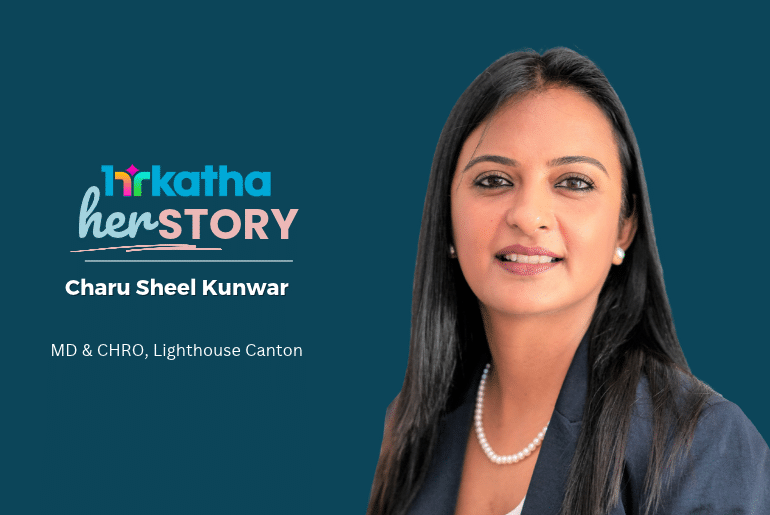
For Charu Sheel Kunwar, managing director and chief human resources officer at Lighthouse Canton, building the organisation’s people function from scratch over the past seven years has been something of an entrepreneurial journey.
It has also reinforced a conviction she developed earlier in her career: The HR function does not need to wait for an invitation to participate in business strategy.
Kunwar had noticed that HR was often considered important, but not necessarily central to business growth, particularly in leadership teams dominated by men.
Rather than wait for that perception to change, she began framing people issues in commercial terms, connecting them directly to growth, productivity, risk and leadership effectiveness.
People may not always agree with you, but they respect consistency, fairness and authenticity.
She recalls a team experiencing high attrition. The immediate response was to accelerate hiring and replace departing employees. But a closer examination revealed that the underlying problem was leadership. Employees felt disconnected from the wider business and had limited visibility and engagement with senior leaders.
The response shifted from recruitment to strengthening leadership presence and cross-functional connections. Within a couple of quarters, engagement improved and productivity began moving in the right direction.
A similar lesson emerged from promotion decisions. When leaders applied different standards, even well-intentioned decisions could appear inconsistent. Introducing a criteria-based framework made the process more transparent and gave managers a common basis for difficult conversations.
These experiences reinforced Kunwar’s belief that issues frequently dismissed as “soft” can have direct consequences for business performance.
For her, HR’s contribution lies not merely in representing employees, but in connecting people decisions to commercial outcomes.
Redesigning HR
If Kunwar could redesign HR from scratch, the first thing she would remove is the mindset that treats it as a collection of standalone activities.
Hiring, she believes, should be inseparable from the organisation’s growth strategy. Performance management should be anchored in business outcomes and ongoing conversations rather than reduced to an annual appraisal exercise.
The same applies to technology. As AI changes the way organisations operate, HR must help determine how employees are prepared for that change, rather than treating reskilling as a separate initiative introduced afterwards.
Kunwar believes the function belongs in strategic conversations from the beginning, when decisions about growth, structure and capabilities are still being shaped.
That is what turns HR from a support function into a business enabler.
Choosing respect over approval
One of Kunwar’s non-negotiable principles is performance meritocracy.
She believes growth and rewards should reflect contribution and results, rather than relationships or tenure. But that promise can only be credible when organisations apply transparent criteria, consistent processes and honest feedback.
When employees begin to feel that rewards are disconnected from merit, trust in the organisation can erode quickly.
The same concern for fairness shapes her approach to difficult leadership decisions.
Whenever Kunwar has faced a choice between being liked and being respected, she has consciously chosen respect.
“Leadership isn’t about making decisions that please everyone. It’s about having the courage to stand up for what you believe is right, particularly when the easier option is to go along with what people want to hear,” she says.
There have been occasions when she has challenged senior leaders, defended unpopular positions or made difficult people decisions knowing they would not necessarily make her popular.
Her approach is to remain grounded in values, facts and what she believes is right for the organisation and its people.
That does not mean refusing to reconsider a position.
“I listen, I understand different perspectives and I’m very open to changing my mind when the facts or the circumstances warrant it. However, I don’t believe in compromising on principles simply to avoid discomfort or to win approval,” she says.
Over time, Kunwar has found that people may not always agree with a leader, but they can still respect consistency, fairness and authenticity.
AI literacy tells you what’s possible, emotional intelligence tells you what’s worth doing, and the future belongs to people who can hold both without picking a side.
AI and the changing workplace
At Lighthouse Canton, AI is already becoming part of how employees work.
The organisation has established a dedicated AI Labs team to lead its AI initiatives, employee education and adoption strategy. Employees have access to Claude for day-to-day work, with compliance remaining an important consideration.
For Kunwar, HR has two responsibilities in this transition.
The first is to examine how AI can improve its own processes. Her team is exploring applications in onboarding, employee support and people analytics, including dashboards that could provide more timely insights into attrition, engagement and workforce planning.
The second is to work with AI Labs on a structured learning roadmap that prepares employees to use the technology effectively.
She believes AI adoption should be deliberate rather than reactive, with employees across functions developing practical understanding instead of leaving the subject entirely to technical teams.
The challenge for HR is to embrace the efficiencies technology offers without losing the human judgement and personal connection that remain essential to people decisions.
Quick fire round
Glass ceiling breaker, policy changes or personal grit?
Personal grit.
Culture shift lever, storytelling or data dashboards?
Storytelling, as it explains why something matters, and culture only shifts when people understand why.
Future skill bet, AI literacy or emotional intelligence?
Both. AI literacy tells you what’s possible, emotional intelligence tells you what’s worth doing, and the future belongs to people who can hold both without picking a side.
Tougher challenge, retaining women leaders or building diverse pipelines?
Building diverse pipelines.
Workplace power tool, mentorship circles or flexible work design?
Mentorship circles, as they help build a scalable connection to share experiences and learn together.
An unfinished conversation
Kunwar believes conversations about women in finance deserve greater attention.
While women in STEM have been the subject of sustained discussion, she feels the representation and progression of women in financial services have received comparatively less attention.
“Within our own wealth management team across Singapore, Dubai and India, some of our most successful bankers are women, and I do not believe this is incidental,” she says.
She associates their success with the ability to manage pressure, handle competing demands and sustain client relationships, qualities she considers particularly valuable in wealth management.
For Kunwar, the larger question is how organisations recognise and develop such capabilities as leadership becomes less dependent on hierarchy and more reliant on judgement, relationships and influence.
Her own experience in leadership environments where HR was not always considered central to business decisions has made her particularly conscious of the importance of credibility.
She believes women leaders need to demonstrate their contribution through business outcomes rather than wait for conventional perceptions of leadership to change.
Shaped by stretch experiences
Kunwar describes her leadership style as transformational and entrepreneurial.
Building the people function at Lighthouse Canton has given her considerable freedom to shape systems and processes, but she traces much of her approach to experiences earlier in her career.
She actively sought assignments outside her comfort zone, taking on responsibilities that required her to learn quickly and establish credibility.
Mentors also played an important role. Several business and HR leaders encouraged her initiative and helped shape her understanding of leadership.
“I understood the importance of building credibility by delivering consistently on commitments, bringing structure and clarity to the way work was executed,” she recalls.
Those experiences strengthened her belief in mentorship and in the value of assignments that stretch people beyond familiar responsibilities.
Looking back, however, there is something she would tell her younger self to do differently: Trust herself more, and worry less.
She remembers spending considerable energy stressing about outcomes she could not fully control. With experience, she has come to appreciate the importance of working with conviction and integrity while also enjoying the journey.
Her advice is not to become less ambitious, but to avoid allowing the pursuit of the next outcome to overshadow everything learnt along the way.