

Close Menu
    Facebook X (Twitter) Instagram
    • Our Story
    • Partner with us
    • Reach Us
    • Career
    Subscribe Newsletter
    HR KathaHR Katha
    • Exclusive
      • Exclusive Features
      • Perspectives
      • Friday Features
      • herSTORY
      • Case-In-Point
      • Point Of View
      • Research
      • HR Pops
      • Dialogue
      • Movement
      • Profile
      • Beyond Work
      • Rising Star
      • By Invitation
    • News
      • Global HR News
      • Compensation & Benefits
      • Diversity
      • Events
      • Gen Y
      • Hiring & Firing
      • HR & Labour Laws
      • Learning & Development
      • Merger & Acquisition
      • Performance Management & Productivity
      • Talent Management
      • Tools & Technology
      • Work-Life Balance
    • Special
      • HR Forecast 2026
      • Cover Story
      • Editorial
      • HR Forecast 2024
      • HR Forecast 2023
      • HR Forecast 2022
      • HR Forecast 2021
      • HR Forecast 2020
      • HR Forecast 2019
      • New Age Learning
      • Coaching and Training
      • Learn-Engage-Transform
    • Magazine
    • Reports
      • Whitepaper
        • HR Forecast 2024 e-mag
        • Future-proofing Manufacturing Through Digital Transformation
        • Employee Healthcare & Wellness Benefits: A Guide for Indian MSMEs
        • Build a Future Ready Organisation For The Road Ahead
        • Employee Experience Strategy
        • HRKatha 2019 Forecast
        • Decoding and Driving Employee Engagement
        • One Platform, Infinite Possibilities
      • Survey Reports
        • Happiness at Work
        • Upskilling for Jobs of the Future
        • The Labour Code 2020
    • Conferences
      • Leadership Summit 2025
      • Rising Star Leadership Awards
      • HRKatha Futurecast
      • Automation.NXT
      • The Great HR Debate
    • HR Jobs
    WhatsApp LinkedIn X (Twitter) Facebook Instagram
    HR KathaHR Katha
    zoha
    Home»News»Jobs gap for women is 15%; for men,10.5%: Report
    News

    Jobs gap for women is 15%; for men,10.5%: Report

    HRK News BureauBy HRK News BureauJanuary 17, 2023Updated:January 18, 20234 Mins Read10434 Views
    Share LinkedIn Twitter Facebook WhatsApp
    Share
    LinkedIn Twitter Facebook WhatsApp

    Worldwide, the year 2022 saw more working-age women outside the labour force than men. Last year, there were 750 million more women of working age outside the labour force than men. This is because, the labour force participation rate or LFPR of women was 24.9 percentage points below that of men.

    Labour force participation: Gender gaps in LFPR, though not uncommon, are unequal across the globe. For instance, in North Africa, the Arab countries and South Asia, women are only one third as likely as men to be economically active. This is because, the social norms in these areas cause barriers that keep women from actively participating in the labour force, explains the World Employment and Social Outlook Trends 2023 report by the International Labour Organisation (ILO).

    zoha

    Four out of five jobs created in 2022 for women were informal, versus only two out of three for men.

    Jobs gap: The global jobs gap — a new measure of the unmet need for employment in the world — stood at 473 million people in 2022, corresponding to a jobs gap rate of 12.3 per cent. The global jobs gap comprises the 205 million unemployed – corresponding to an unemployment rate of 5.8 per cent – and 268 million people whose need for a job has not been fulfilled, and hence, are part of the labour force, as they do not satisfy the criteria to be considered unemployed.

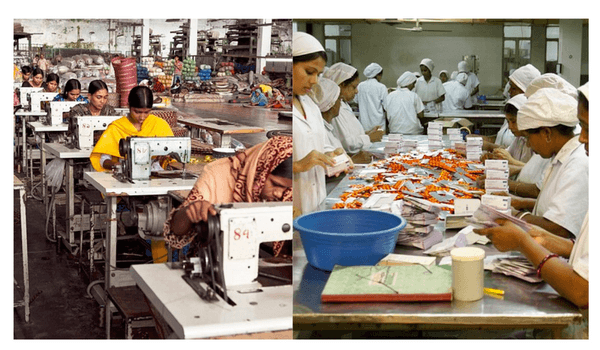
    This jobs gap is huge, especially for women and in developing countries. Even though men and women presently have similar global unemployment rates, the jobs gap for women is 15.0 per cent, compared to 10.5 per cent for men. Personal and family commitments and responsibilities (including care-giving work for which there is no payment), the dearth of decent job opportunities, and absence of possibilities for (re)training keep many people from taking up jobs, thus, limiting their availability to work at short notice. Job gap rates are high in low-income and lower-middle-income countries, that is, in the range of 13 to 20 per cent. On the other hand, in the upper-middle-income countries, the gap is about 11 per cent and high-income countries post a gap of only eight per cent.

    Employment growth: The ILO report predicts that in the coming years, employment growth will see a pause and workers will find it difficult to get quality jobs. Real incomes are expected to drop, due to the dynamics of labour supply and demographic change. Additionally, the structure of labour markets will vary from country to country, and so will the rate / pattern of job creation and job loss. The labour market outcomes will vary too depending on the demand and supply of labour and differences in worker remuneration.

    Long-term effects of COVID: As per estimates by the World Health Organisation (WHO), about 20 per cent of those infected by COVID-19 will suffer some form of longer-term health consequence (Cox 2021; Stulpin 2022; Van Beusekom 2022). Some studies suggest that 300,000–600,000 workers (Sheiner and Salwati 2022) or even 2–4 million people (Bach 2022) in the US, that is, about 0.2 to 2.2 per cent of the labour force has been jobless because of COVID and its long-term effects.

    Inequalities in the workforce: The fact that inequalities exist in the workforce is clear because women and youth have had a worse deal in the labour markets, in most countries. Globally, the labour force participation rate of women stood at 47.4 per cent in 2022, compared with 72.3 per cent for men. There is a significant gap of 24.9 percentage points between genders. That means, there are two economically inactive women for every economically inactive. Young people between the age of 15 and 24, find it tough to obtain jobs. Their unemployment rate is three times as high as that of adults, that is, those aged 25 or more. More than one in five – 23.5 per cent – of youth are not in education, employment or training (NEET).

    zoha
    ILO International Labour Organisation jobs gap jobs gap rate labour force participation rate LFPR unemployment rate WHO World Health Organisation
    Share. LinkedIn Twitter Facebook WhatsApp
    HRK News Bureau

    Leave A Reply Cancel Reply

    Related Posts

    Nintendo confirms employee survey data exposure through third-party platform

    June 19, 2026

    Laid off after 4.5 years, employee lands job with over 100% salary hike

    June 19, 2026

    Employee unions push for 5 assured promotions under 8th Pay Commission

    June 19, 2026

    PM to roll out Rs 2,400-crore job incentive scheme for fresh hires, companies

    June 19, 2026
    Editorial

    The two cultures inside the same multinational

    Someone I know works with one of the world’s largest technology and consulting firms. Based…

    Why HR becomes conservative when hiring HR

    Hire for potential, not just pedigree. Look beyond industry boundaries. Avoid groupthink. Value transferable capability.…

    EDITOR'S PICKS

    POV: Does rapid hiring during growth phases create long-term cultural risks?

    June 22, 2026

    Lessons from the youngest person in the room

    June 19, 2026

    Case-in-Point: Exit interview truth vs managerial reputation

    June 18, 2026

    herSTORY: Girija Kolagada, VP HRBP & India Country Leader, Progress Software

    June 18, 2026
    Latest Post

    BASF picks Maumita Sarkar to lead HR for Global Digital Hub at BASF

    Movement June 22, 2026

    Maumita Sarkar has joined BASF as HR head – Global Digital Hub in Hyderabad, starting…

    Volvo Group India’s ‘Run with Pride’supports LGBTQIA+ inclusion

    Diversity Equity & Inclusion June 22, 2026

    As part of its commitment to diversity, equity and belonging, Volvo Group India hosted its…

    POV: Does rapid hiring during growth phases create long-term cultural risks?

    Point Of View June 22, 2026

    Periods of rapid growth are often celebrated as signs of business success. New markets, larger…

    Zepto gets Sushant S as dir. & India head-people experience, enterprise workforce transformation & ops strategy

    Movement June 22, 2026

    Zepto, the Indian quick commerce startup, has appointed Sushant S as director & India head-people…

    Asia's No.1 HR Platform

    Facebook X (Twitter) Instagram LinkedIn WhatsApp Bluesky
    • Our Story
    • Partner with us
    • Career
    • Reach Us
    • Exclusive Features
    • Cover Story
    • Editorial
    • Dive into the Future of Work: Download HRForecast 2024 Now!
    © 2026 HRKatha.com
    • Disclaimer
    • Refunds & Cancellation Policy
    • Terms of Service

    Type above and press Enter to search. Press Esc to cancel.