


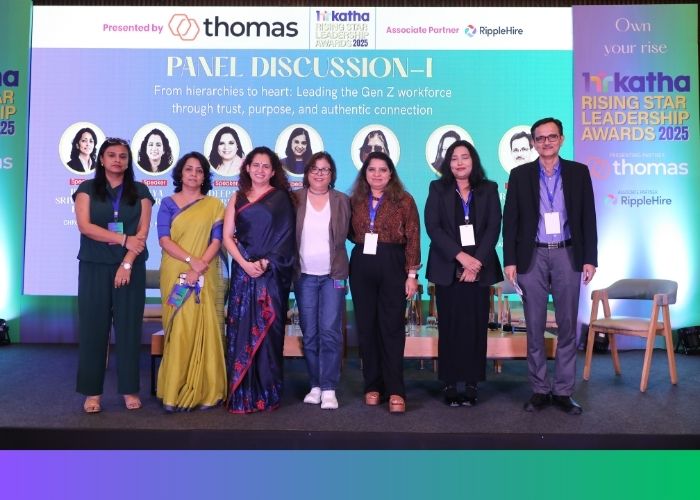
The panellists at HRKatha’s Rising Star Leadership Awards had a confession to make. They’re not managing Gen Z. Gen Z is managing them.
On October 31st, at Aloft Aerocity in New Delhi, six accomplished women HR leaders gathered for what promised to be a discussion about “leading” the youngest workers.
Instead, it turned into something more radical: an admission that perhaps the real problem isn’t Gen Z at all. It’s everyone else.
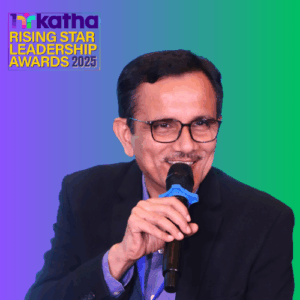
Dr Rajorshi Ganguli, who moderated the panel and literally wrote the book on Gen Z (Winning with Gen Z), knew what he was doing when he assembled this group. He set the tone early: “Gen Z comes with its own expectations and soon they will be joined by Gen Alpha and Beta, and none of them can be managed with structure, command or control.”
“Gen Z comes with its own expectations and soon they will be joined by Gen Alpha and Beta, and none of them can be managed with structure, command or control.”
Dr Rajorshi Ganguli
president & global HR head, Alkem Laboratories
It was a warning shot. The old playbook is obsolete. And there’s no going back.
The panellists—Irani Srivastava Roy (CHRO, Signify), Anuradha Das (CHRO, Jeh Aerospace), Jaya Suri (CHRO, Kimbal), Geetika Mehta (CHRO, Ananta Capital), Deepali Bhardwaj (regional HR director for SW Asia at IHG Hotels & Resorts), and Shilpa Sharma (director-sales, RippleHire)—weren’t there to complain about avocado toast or TikTok. They came with battle scars and hard-won wisdom.
The demonisation stops here
Geetika Mehta didn’t mince words. Older generations have “demonised” Gen Z, she said. It’s lazy thinking dressed up as management insight. Her financial firm is 90 per cent Gen Z. They’re doing just fine, thank you very much.
Deepali Bhardwaj went further. She calls her Gen Z employees her “gurus.” With 70 per cent of her hotel staff under 25, she’s learned that digital fluency isn’t just about Instagram filters. It’s about reimagining how work gets done. “They make me look good,” she admitted with refreshing honesty.
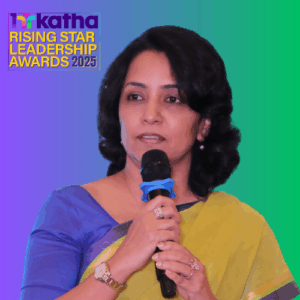
“Gen z wants to move away from ‘a brand that attracts me’ to ‘a brand that attracts society at large’.”
Irani Srivastava Roy
CHRO, India Subcontinent, Signify
This wasn’t false modesty. It was strategic clarity. When was the last time a generation taught their bosses more than their bosses taught them? That’s not a crisis. That’s an opportunity.
Hierarchy hasn’t died. It’s just been fired from its old job
Here’s the twist that many leaders miss: Gen Z doesn’t hate hierarchy. They hate pointless hierarchy.
Irani Roy explained it perfectly. Gen Z evaluates authority based on value, not title. Can you teach them something? Great, you’re the boss. Can’t you? Then the org chart is just expensive wall decoration.
She called it “servant leadership,” but it’s simpler than that. It’s leadership that actually leads. Gen Z gravitates toward brands that serve society, not just shareholders. If your company’s mission statement could be swapped with any other company’s mission statement, don’t expect loyalty.
“Give them the ‘why’ and let them figure out the ‘how’.”
Anuradha Das, chief people officer, Jeh Aerospace
Anuradha Das, whose aerospace firm is 37 per cent Gen Z, has learned that policies are where enthusiasm goes to die. Her team doesn’t want handbooks. They want context. Her mantra: “Give them the ‘why,’ and let them figure out the ‘how’—and witness the magic!”
This isn’t chaos. It’s trust. And it works.
“Basic values are helping the older and younger cohorts work well together.”
Jaya Suri
CHRO, Kimbal

The hospitality industry figured it out first
Perhaps it’s fitting that some of the clearest insights came from hospitality, an industry where hierarchy traditionally ruled with an iron fist—and a white glove.
At Deepali Bhardwaj’s IHG hotels, Gen Z employees enjoy the same perks as guests. Gym access. Gourmet meals. The message is clear: you’re not servants. You’re part of the experience.
The result? Sustainability initiatives driven by young minds who feel valued. Innovation that comes from the ground up, not the boardroom down.
Jaya Suri described a similar culture at Kimbal, where titles don’t dictate respect and values bind everyone together. Manufacturing and tech teams, boomers and Gen Z—all thriving because the culture doesn’t ask them to choose between structure and humanity.
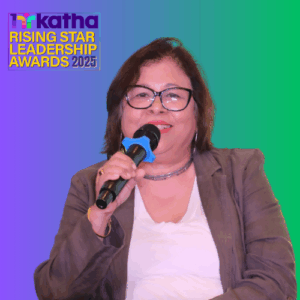
“Do not demonise them. They are not bad. Just remove all hierarchies in communication.”
Geetika Mehta
CHRO, Ananta Capital

Transparency isn’t optional anymore
Geetika Mehta’s CEO sits with employees. Not occasionally. Not for photo ops. Regularly. The message: we’re in this together.
Shilpa Sharma distilled it to one word: honesty. If leaders are honest, everything else falls into place. If they’re not, no amount of ping-pong tables or free snacks will bridge the gap.
This generation grew up with Wikipedia, not Encyclopaedia Britannica. They fact-check in real time. They can spot corporate spin from across a WeWork. Authenticity isn’t a nice-to-have.
It’s table stakes.
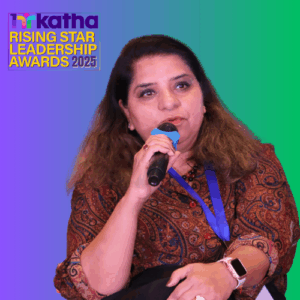
“Don’t supervise, just coach in the moment”
Deepali Bhardwaj
regional HR director, SW Asia, IHG Hotels & Resorts
What 2030 looks like
When Dr Ganguli asked the panel to imagine leadership in 2030, they painted a picture that would have seemed radical a decade ago and obvious a decade from now.
Honesty. Vulnerability. A people-first philosophy. Learning agility. The ability to unlearn and relearn.
Notice what’s missing? There’s no mention of “managing” anyone. No talk of “controlling” outcomes. No fantasy about commanding respect through corner offices.
Anuradha Das’s Gen Z team at Jeh Aerospace embodies this with their motto: “Show up. Stand up.” It’s accountability without hierarchy. Ownership without micromanagement.
“Genz wants to bring their true authentic self to work, and we should be there ready to work with them.”
Shilpa Sharma
director-sales, RippleHire
The real lesson
Perhaps the most important insight came not from what the panellists said, but from who they were. Six women leading diverse organisations, from manufacturing to hospitality to aerospace, all arriving at the same conclusion through different paths.
Gen Z isn’t asking to be managed. They’re asking to be partnered with. They’re not rejecting leadership. They’re rejecting bad leadership. The kind that mistakes position for competence. The kind that confuses control with effectiveness.
The question isn’t whether we need to change our leadership style. That ship has sailed. The question is whether we’re brave enough to admit that perhaps Gen Z has been right all along.
Evolution, as Irani Roy reminded everyone, isn’t optional. It’s a law of nature. The workplace has changed. Leaders can evolve with it, or become fossils.
The good news? The roadmap is clear. The playbook has been written. Gen Z isn’t the problem to be solved.
They’re the solution we’ve been waiting for.
The HRKatha Leadership Summit and Rising Star Awards ceremony took place on 31 October, 2025, at Aloft, Aerocity, New Delhi. Nominations were open for two months, with jury evaluation conducted over two weeks by an eleven-member panel. Around 20 CHROs and CEOs participated in discussions on leadership transformation, with support from Thomas Assessments (Presenting Partner) and Ripplehire (Associate Partner).