

Close Menu
    Facebook X (Twitter) Instagram
    • Our Story
    • Partner with us
    • Reach Us
    • Career
    Subscribe Newsletter
    HR KathaHR Katha
    • Exclusive
      • Exclusive Features
      • Perspectives
      • Friday Features
      • herSTORY
      • Rising Stars
      • Case-In-Point
      • Point Of View
      • Research
      • HR Pops
      • Dialogue
      • Movement
      • Profile
      • Beyond Work
      • By Invitation
    • Brief News
      • Global HR News
      • Compensation & Benefits
      • Diversity
      • Events
      • Gen Y
      • Hiring & Firing
      • HR & Labour Laws
      • Learning & Development
      • Merger & Acquisition
      • Performance Management & Productivity
      • Talent Management
      • Tools & Technology
      • Work-Life Balance
    • Special
      • Editorial
      • HR Forecast 2026
      • Cover Story
      • HR Forecast 2024
      • HR Forecast 2023
      • HR Forecast 2022
      • HR Forecast 2021
      • HR Forecast 2020
      • HR Forecast 2019
      • New Age Learning
      • Coaching and Training
      • Learn-Engage-Transform
    • Studio
      • The CHRO Playbook
      • Quick HR Insights
      • The Corner Office
    • Reports
      • Whitepaper
        • HR Forecast 2024 e-mag
        • Future-proofing Manufacturing Through Digital Transformation
        • Employee Healthcare & Wellness Benefits: A Guide for Indian MSMEs
        • Build a Future Ready Organisation For The Road Ahead
        • Employee Experience Strategy
        • HRKatha 2019 Forecast
        • Decoding and Driving Employee Engagement
        • One Platform, Infinite Possibilities
      • Survey Reports
        • Happiness at Work
        • Upskilling for Jobs of the Future
        • The Labour Code 2020
    • Forums
      • HRKatha Inner Circle
      • HRKatha Futurecast
      • Leadership Summit 2025
      • Rising Star Leadership Awards
      • HRKatha Futurecast 2025
      • Automation.NXT
      • The Great HR Debate
    WhatsApp LinkedIn X (Twitter) Facebook Instagram
    HR KathaHR Katha
    Home»Technology»How cognitive computing is creating a new HR
    Technology

    How cognitive computing is creating a new HR

    mmBy Dr. Prajjal Saha | HRKathaNovember 28, 20174 Mins Read5046 Views
    Share LinkedIn Twitter Facebook WhatsApp
    Sourec:IBM
    Share
    LinkedIn Twitter Facebook WhatsApp

    With cognitive computing technologies bringing in the power to self-learn and adapt, just as humans do, HR can create a much larger impact.

    Human beings are dynamic, subjective and the most complex beings. The fact that HR deals with people in an organisation, makes it the most complex of all functions. Dealing with the subjectivities and complexities of human behaviour has never been easy. However, with cognitive computing technologies bringing in the power to self-learn and adapt, just as humans do, HR can create a much larger impact through their jobs.

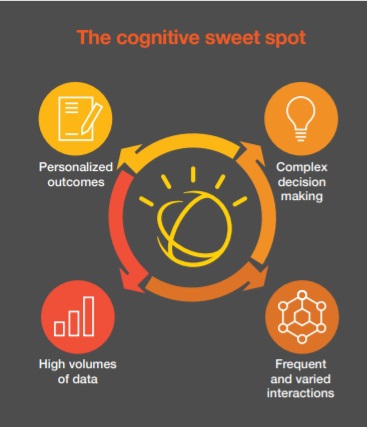
    As per a study by IBM, the unique capabilities of cognitive systems open the door to a very different approach to HR – one that meets the challenges of today’s workforce, benefiting both the organisation and its employees. We can term it as a new HR.

    Cognitive computing can analyse and learn from structured and unstructured data including photos, tweets, e-mails and natural language, both written and spoken. This means that it allows HR to understand people and their drivers and ambitions better, which can have various implications for HR.

    Sriharsha A Achar, executive director & chief people officer, Apollo Munich Health Insurance Company, shares three interesting ways in which cognitive computing could make the HR manager’s job better.

    Sriharsha Achar

    These are the sure signals that soon we will see use of cognition in many next-generation applications, as cognitive computing provides new tools that help create a more efficient and effective HR function and workplace.

    1. Cognitive computing could help manage employee queries and requests that may be currently undertaken by a contact centre or an HR administrator

    2. It could capture the expertise of top performers and then use this knowledge to accelerate the performance of other employees, which could have a wave effect across the business, enhancing the speed and accuracy of data-heavy work

    3. Cognitive computing could also help in talent acquisition. The data-driven search aspects of recruitment can be run by a system, which has a far greater ability to search for and track talent.

    Source: IBM

    “These are the sure signals that soon we will see use of cognition in many next-generation applications, as cognitive computing provides new tools that help create a more efficient and effective HR function and workplace.” Achar says.

    With its detailed insights, cognitive computing allows HR to make better people decisions and plan the right interventions, wherever required.

    Anil Misra, CHRO, Magicbricks opines that the three key challenges any HR professional faces are to do

    Anil K Mishra

    with attracting, developing and retaining talent. “While technology may be assisting us with all three, cognitive computing has helped us significantly with retention by helping us enhance our employee engagement drives,” he shares.

    Misra elaborates that running employee engagement surveys was a tedious, time-consuming task earlier, which is why it was mostly an annual activity controlled manually by HR.

    He says, “It could never really gauge the real mood of the people as it remained as a tick-in-the-box activity, while people’s perceptions and satisfaction levels would change across months or over the year.” On the other hand, with the help of an AI and cognitive computing-enabled tool, Magicbricks is now able to gauge its people’s engagement and satisfaction level every week.

    While technology may be assisting us with all three, cognitive computing has helped us significantly with retention by helping us enhance our employee engagement drives.

    The system runs a short weekly survey with just four to five questions, with demographically split groups of people in the company. It analyses the responses and shares a comprehensive weekly report along with the red flags and areas that need intervention, to the CEO.

    Source:IBM

    Based on the same, HR designs relevant and tailored interventions to deal with any concerns. “While HR always had a good intent for employee morale servicing, practically, it was not an easy job to do. However, cognitive computing made it possible for HR to do it on a periodic basis,” Misra opines.

    Achar is also of the view that cognitive computing can be used to improve employee experience and to customise employee touch-points as he concurs, “As the day-to-day business of HR is becoming increasingly information-heavy (in both a data and a data source variety), there is an increasing strain on HR to deliver information-based solutions into the business.”

    That said, the biggest hurdle that HR could face in doing so would be the lack of knowledge and skills to utilise optimally—IBM Watson being a case in point. “Capturing the process and documentation required by an organisation, and developing change management strategies to educate and train the workforce on how best to use the power of cognitive computing will be ever-present hurdles to overcome. This will take a lot of time to learn and implement,” Achar concludes.

    Anil Misra Cognitive computing Engagement Hiring Retention Sriharsha Achar
    Share. LinkedIn Twitter Facebook WhatsApp
    mm
    Dr. Prajjal Saha | HRKatha

    Dr. Prajjal Saha is a business journalist and the editor-publisher of HRKatha. He writes on the realities of work and organisations, offering a clear-eyed view of how companies translate intent into action—often revealing the gap between the two. With over 25 years of experience, he focuses on interpreting workplace trends and leadership decisions in a way that is both insightful and accessible. He founded HRKatha in 2015 to create a platform for credible, insight-driven analysis of the evolving workplace.

    Leave A Reply Cancel Reply

    Related Posts

    Case-in-Point: Should the highest-scoring candidate always get the job?

    November 26, 2026

    Boba Bhai facilitates Rs 3 crore ESOP cash-out for six early employees

    November 25, 2026

    TARIL to create over 1,000 jobs at Rs 1,000 crore Gujarat manufacturing complex

    November 25, 2026

    BPMS seeks 6% annual increment and five career upgrades under 8th Pay Commission

    November 25, 2026
    zoha
    Editorial

    Can Nvidia remain Nvidia without Jensen Huang?

    Jensen Huang co-founded Nvidia in 1993. For thirty-three years, he was its chief executive and,…

    Companies owe their people more than what is legal

    When Canva announced a restructuring affecting 1,271 employees, or 22 per cent of its workforce,…

    EDITOR'S PICKS

    Case-in-Point: Should the highest-scoring candidate always get the job?

    November 26, 2026

    herSTORY: Anuradha Das, CPO, Jeh Aerospace

    November 26, 2026

    Nearly 7 in 10 Indian businesses expect to spend more on AI. Only 25% report strong workforce readiness

    November 25, 2026

    HR Perspectives by Dhanashree Thakkar: “I often describe talent management as a game of musical chairs”

    November 25, 2026
    Latest Post

    Case-in-Point: Should the highest-scoring candidate always get the job?

    Case-In-Point November 26, 2026

    Company: Tessarion Technologies (fictitious), a multinational technology firm with 6,500 employees in India, building cloud,…

    herSTORY: Anuradha Das, CPO, Jeh Aerospace

    herSTORY November 26, 2026

    Delivering with precision For Anuradha Das, chief people officer at Jeh Aerospace, the people function…

    Tamil Nadu’s Rs 58,000-crore investment push to create nearly 66,000 jobs

    Brief News November 26, 2026

    Tamil Nadu has secured fresh investment commitments worth over Rs 58,000 crore from 78 companies,…

    Tripura signals possible salary revision for state employees

    Compensation & Benefits November 26, 2026

    The Tripura government has indicated that state employees and pensioners may see a salary revision…

    Asia's No.1 HR Platform

    Facebook X (Twitter) Instagram LinkedIn WhatsApp Bluesky
    • Our Story
    • Partner with us
    • Career
    • Reach Us
    • Exclusive Features
    • Cover Story
    • Editorial
    • Dive into the Future of Work: Download HRForecast 2024 Now!
    © 2026 HRKatha.com
    • Disclaimer
    • Refunds & Cancellation Policy
    • Terms of Service

    Type above and press Enter to search. Press Esc to cancel.