



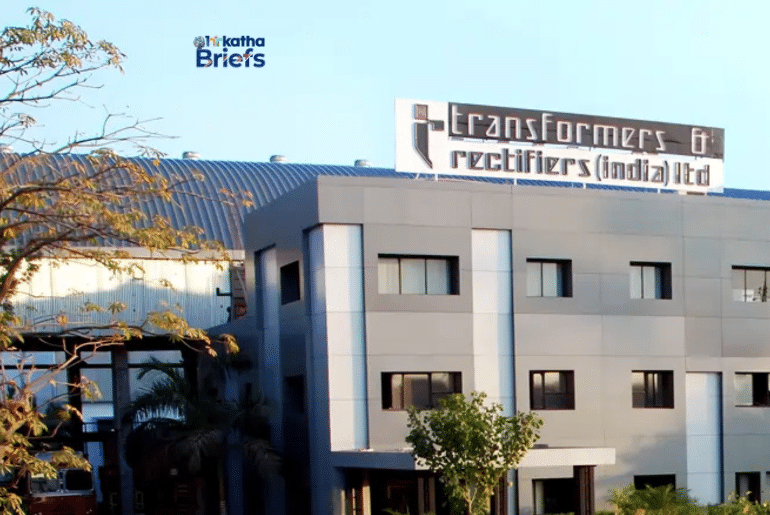
Transformers & Rectifiers (India) (TARIL) plans to create more than 1,000 direct jobs at its upcoming manufacturing complex in Chiyada, Gujarat, as the company expands its production capacity for critical power- transmission components.
The recruitment drive will cover engineers, experienced professionals, technicians, diploma holders and ITI graduates. Hiring will span both white-collar and blue-collar roles across engineering, manufacturing, quality assurance, research and development, high-voltage testing, automation, logistics and plant operations.
The workforce will support three greenfield manufacturing facilities being developed through TARIL’s wholly-owned ancillaries subsidiary. The units will manufacture continuously transposed conductors, pressboard and insulation materials, and high-voltage bushings of up to 800 kV for transformer applications.
The project involves a planned investment of Rs 1,000 crore and is scheduled for commissioning in the first quarter of FY28. At full capacity, the facilities are expected to generate an annual production value of Rs 2,000 crore.
Recruitment will take place in two phases, beginning in March 2027, followed by a second phase in September 2027. The company also plans to focus on technical training, workplace safety and skill development, while exploring partnerships with engineering institutions, polytechnics and ITIs to build a pipeline of skilled manufacturing talent.
Satyen Mamtora, managing director and CEO, TARIL, said, “The expansion of India’s power infrastructure requires not only advanced manufacturing capabilities but also a highly-skilled workforce. Through our Chiyada expansion, we aim to create over 1,000 direct employment opportunities while strengthening domestic capabilities in critical transformer components. Equally important is our focus on developing technical talent and building the skills required to support the next phase of India’s power equipment manufacturing sector. This investment reflects our commitment to building an integrated manufacturing ecosystem and contributing to India’s journey towards self-reliance in power equipment manufacturing.”
The project is expected to support India’s power equipment manufacturing ecosystem and contribute to the country’s push towards greater domestic production.
